
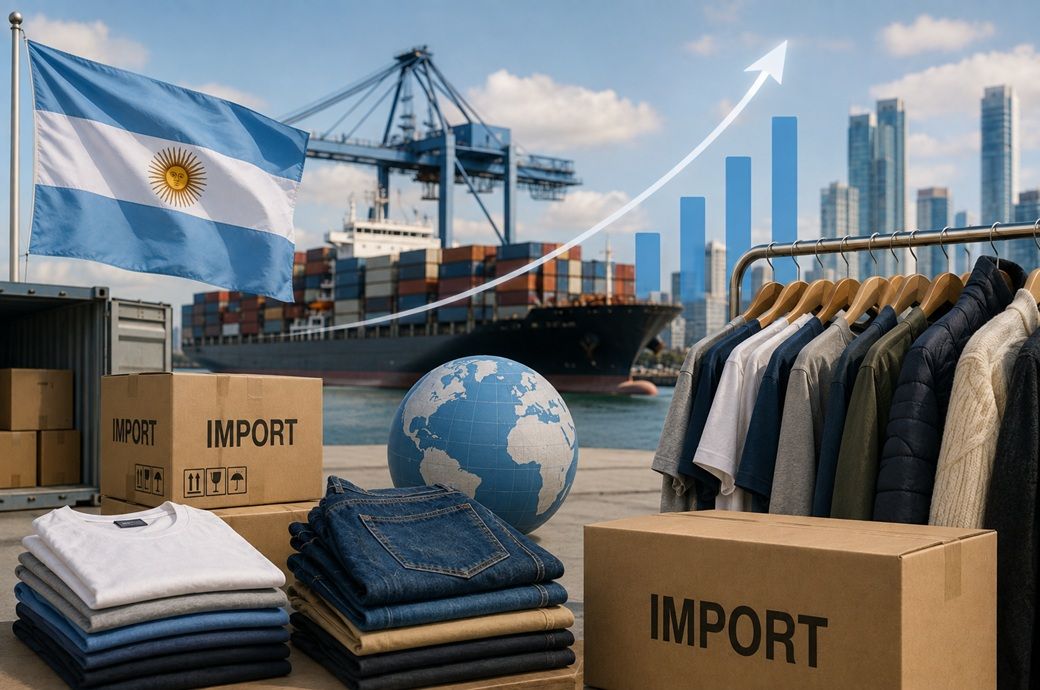
According to sourcing intelligence tool TexPro, Argentina imported **.** million kg of apparel during the period, resulting in an average import price of $**.** per kg. This was **.* per cent below the full-year **** average of $**.** per kg and substantially lower than the levels of around $** per kg recorded in **** and ****.
The increase followed Argentina’s decision in March **** to reduce import duties on clothing from ** per cent to ** per cent under Decree ***/****. The government also lowered duties on fabrics from ** per cent to ** per cent and on different yarn categories from ** per cent to between ** and ** per cent. The measures formed part of a wider effort to open the market, increase competition and reduce domestic clothing prices.
Although import duties are not directly included in the declared customs value, the reduction lowered the landed cost of overseas apparel and made lower-priced global sourcing commercially more attractive. Eased import controls, improved access to foreign currency and the expansion of cross-border e-commerce also enabled Argentine retailers and consumers to access a broader range of imported garments.