
(Photo Credit : AP)
 1 / 10
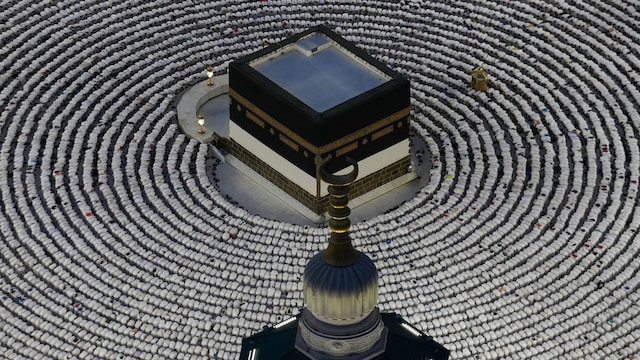
Muslims begin Hajj 2026: The Hajj pilgrimage, one of the Five Pillars of Islam, began Monday, May 25, with more than 1.5 million international pilgrims already in Saudi Arabia, according to Saleh bin Saad Al-Murabba, commander of the Hajj passport forces. Millions more are expected to join, with nearly two million total participants anticipated after the official crescent moon sighting confirms the dates. The pilgrimage runs from May 25 to 27, though pilgrims begin arriving weeks earlier.
(Photo Credit : AP)
2 / 10War shadows the faithful: This year’s Hajj is taking place against the backdrop of an active conflict. The United States and Israel struck Iran on February 28, prompting Tehran to close the Strait of Hormuz — a move that sent oil and gas prices sharply higher and rattled the global economy. Iran retaliated with strikes before a fragile ceasefire was reached in April. The US has maintained a naval blockade of Iranian ports for over a month.
 3 / 10
Trump’s peace memo: On Saturday, US President Donald Trump said a deal — including reopening the Strait of Hormuz — had been “largely negotiated” following calls with Israel and other regional allies. He described it as a “Memorandum of Understanding pertaining to PEACE” involving the US, Iran, and partner countries, though it has not yet been finalised. Trump added that the blockade of Iranian ports “will remain in full force and effect until an agreement is reached, certified, and signed.”
(Photo Credit : AP)
4 / 10Faith over fear: Despite the geopolitical uncertainty, pilgrims said their faith drove them forward. Egyptian pilgrim Samya Abdul Moneim, who had long saved for the journey, said she was grateful to have made it. “I am in a state of blessing and happiness,” she told reporters in Mecca on Sunday. “It’s an indescribable feeling. Thank God, I am in a blessing.” Many pilgrims said they leaned on faith as they prepared for the trip amid ongoing tensions.
(Photo Credit : AP)
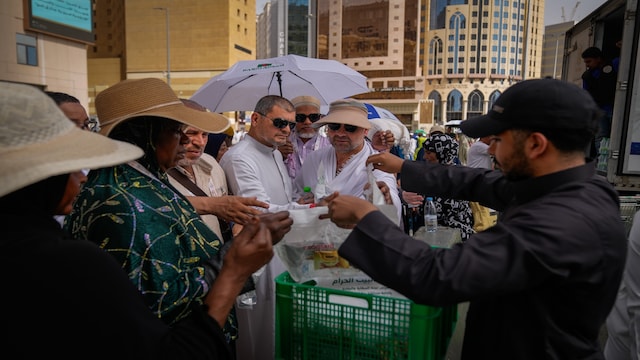
5 / 1047°C and climbing: Saudi Arabia’s National Centre for Meteorology has forecast daytime temperatures of 42°C to 47°C in Mecca during the Hajj period. Egyptian first-time pilgrim Inas Gamal abandoned her plan to pray at the Grand Mosque during the day, retreating to her air-conditioned hotel room instead. “It’s very hot, much hotter than I imagined,” she said. “I can’t adapt.” British pilgrim Imad Ahmed said he drinks large amounts of water and mineral-rich beverages constantly because pilgrims “sweat constantly and are always on the move.”
(Photo Credit : AP)
6 / 101,300 dead last year: Heat deaths at the Hajj are a recurring concern. In 2024, more than 1,300 pilgrims died after temperatures exceeded 50°C. This year, Saudi health authorities have deployed over 50,000 healthcare workers and 3,000 ambulances. By Saturday, medical teams had already treated 144 cases of heatstroke. Health ministry official Jameel Abualenain, speaking from a treatment facility at the Mina camp, said his primary concern was rising temperatures and urged pilgrims to drink enough water, use umbrellas, and avoid prolonged sun exposure.
(Photo Credit : AP)
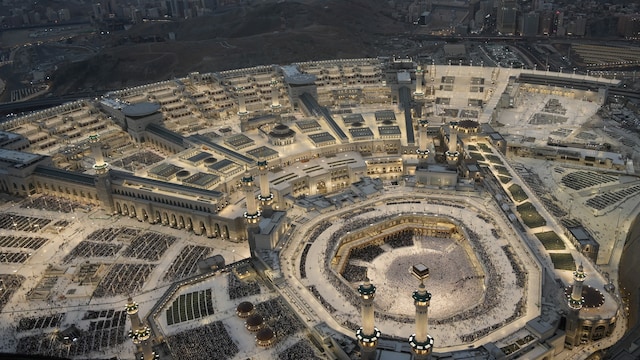
7 / 10Cooling the crowds: To protect pilgrims, the Grand Mosque runs one of the world’s most powerful air conditioning systems in its courtyards. Surrounding areas use giant fans, mist sprayers, and cooled flooring. Trucks continuously distribute free chilled water. Inside, many pilgrims lie on carpets beneath ceiling fans while waiting to pray. The Algerian professor Mohamed Nabil, from a city where current temperatures are around 25°C, said he pours water on his face to cope while logging 30,000 steps a day through Mecca.

(Photo Credit : AP)
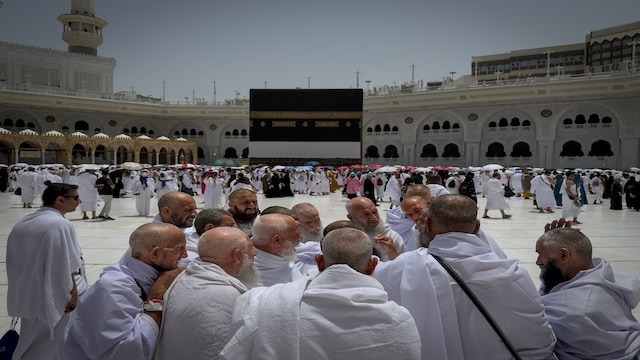
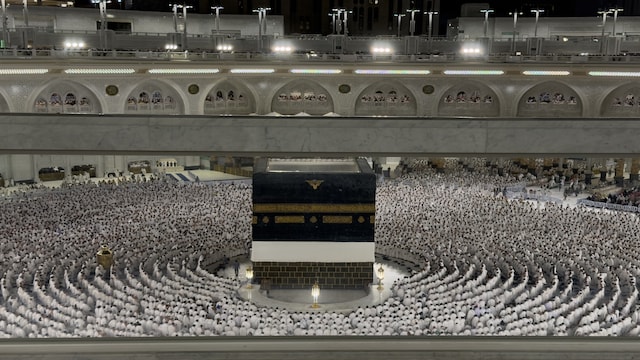
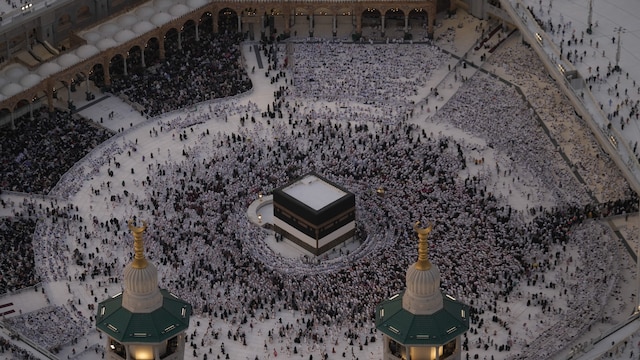
8 / 10What pilgrims do: On day one, pilgrims perform Tawaf — circling the Kaaba seven times at the Grand Mosque — followed by Sa’i, walking between the hills of Safa and Marwah. They then head to Mina, where they camp in a tent city and pray. On Tuesday — the most significant day — pilgrims will gather at the plains of Arafat from midday to sunset to pray, seek forgiveness, and make supplications. Many carry prayer requests from loved ones. That night, they move to Muzdalifah, pray under the open sky, and collect pebbles.
(Photo Credit : AP)
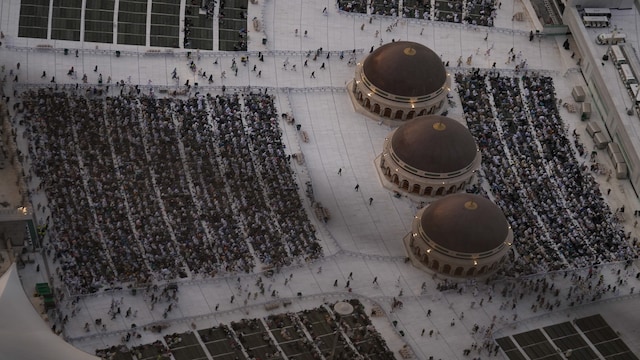
9 / 10Eid marks the end: Wednesday, May 27, coincides with Eid al-Adha. Pilgrims return to Mina to throw seven pebbles at the largest pillar — symbolising the rejection of evil — and perform an animal sacrifice in remembrance of Abraham’s act of faith. Men shave or trim their hair; women cut a small portion. This marks the formal end of Hajj rituals, with Eid celebrations continuing on May 28 and 29. Entry to Mecca is restricted to Muslims, with checkpoints maintained around the city throughout the season.
(Photo Credit : AP)
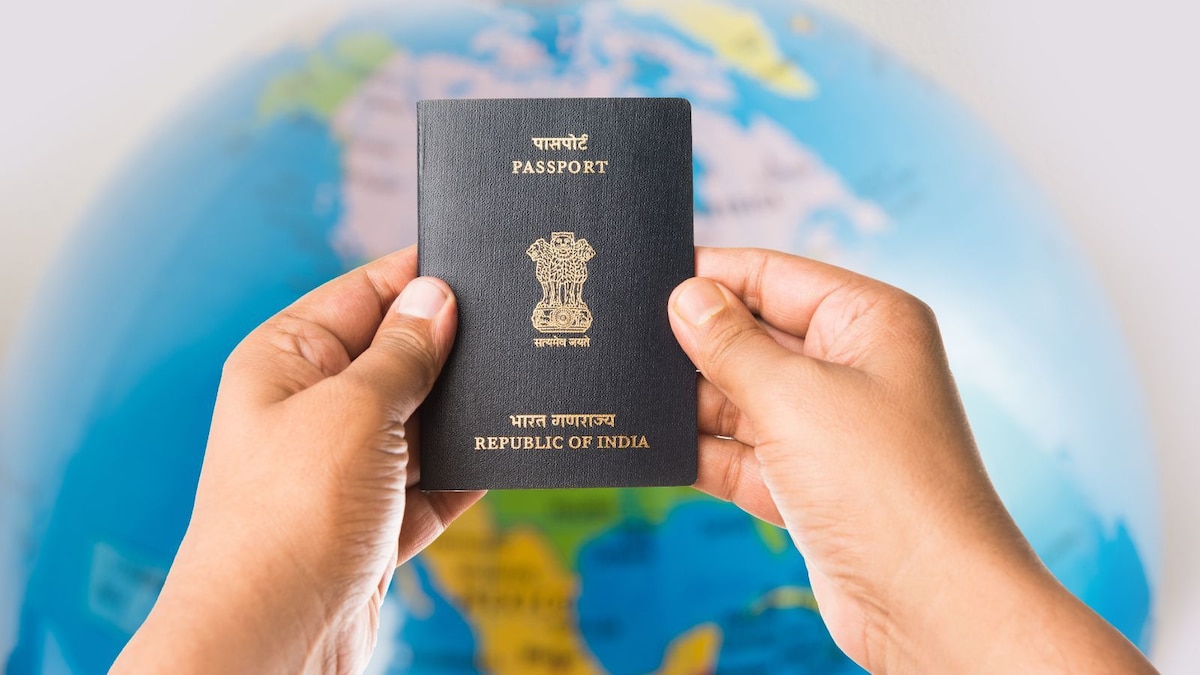
10 / 10War hits pilgrim costs: The Iran conflict’s economic fallout has affected Hajj logistics worldwide. Indonesia, home to the world’s largest Muslim population, has focused on contingency planning and directed authorities not to pass additional travel costs to pilgrims. In India, planning has continued broadly as normal, though higher fuel prices driven by the Strait of Hormuz closure have pushed up travel costs. A reopening of the strait, should Trump’s deal be finalised, would begin to ease the global energy crunch that has spiked prices for oil, gas, and related goods since February.