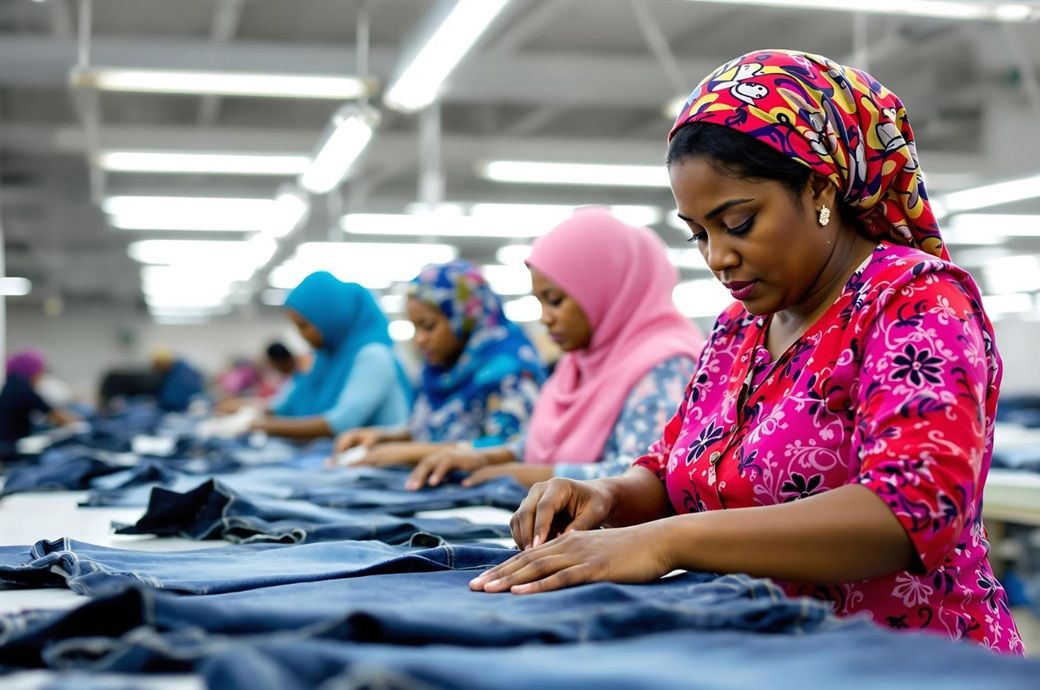

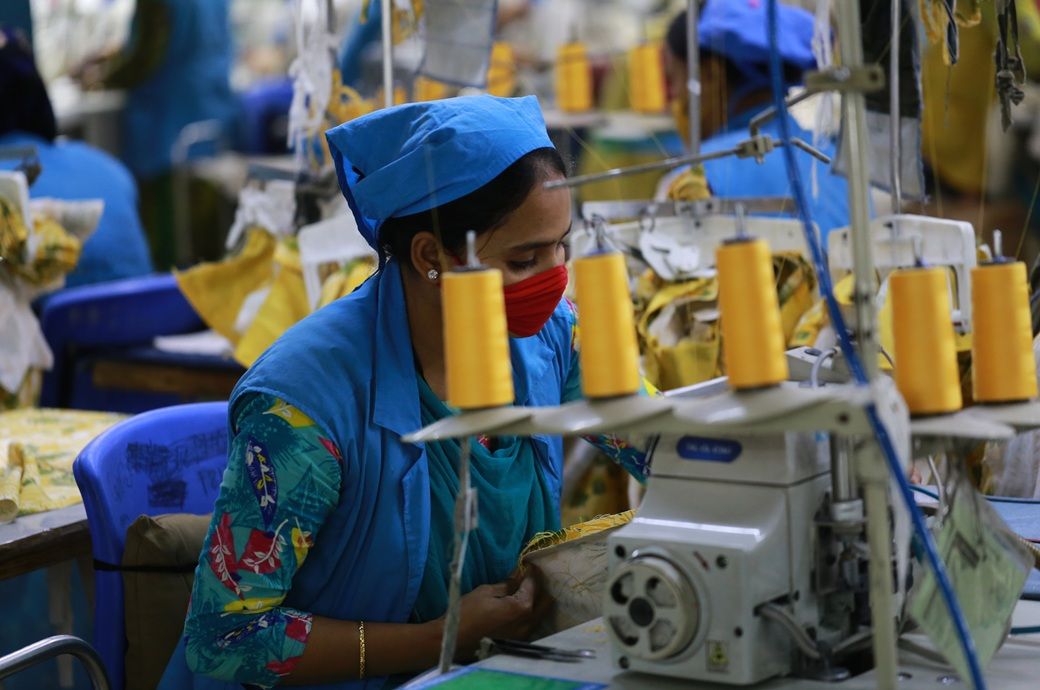
As prolonged power outages pose disruptions to factory operations, manufacturers are being forced to walk the tightrope between an unreliable electricity supply, production targets and cost and delivery deadlines.
Bangladesh garment factories could generate up to 1,768 MWp of rooftop solar using nearly 9.7 million square metres of roof space.
It could meet around 40 per cent of large factories’ power demand, 38 per cent for small units and 33 per cent for medium units.
Upfront costs, financing and technical barriers remain; BGMEA-Bidec fan trials saved 47 per cent to nearly 65 per cent electricity.
But above many of these factories lies a largely untapped resource that could ease the pressure significantly.
A recent study estimates that Bangladesh’s garment factories could generate up to 1,768 megawatt-peak (MWp) — MWp refers to the maximum theoretical power output of a solar system under ideal conditions, measured in megawatts—of electricity through rooftop solar systems using nearly 9.7 million square metres of available roof space.
Small factories could reportedly contribute around 485 MWp, medium-sized factories 637 MWp and large factories 646 MWp.
The potential impact could be substantial. As per the study, rooftop solar could meet roughly 40 per cent of a large factory’s electricity demand, compared with about 38 per cent for small factories and 33 per cent for medium-sized ones.
In an industry where even a few hours without power can disrupt production, reducing dependence on grid electricity could provide an important buffer against shortages.
This opportunity comes as Bangladesh’s conventional power system continues to face growing strain.
Although installed generation capacity stands at around 29,500MW, fuel shortages have at times pushed actual generation to roughly half that level, as per reports. Gas supply disruptions have further constrained gas-fired plants, highlighting the risks of heavy dependence on conventional fuels.
For the apparel sector, solar power could offer more than protection from blackouts. It could also strengthen Bangladesh’s position in a global fashion market increasingly focused on cleaner production, lower emissions, and responsible supply chains.
Factories demonstrating meaningful renewable-energy use could thus gain a valuable competitive edge.
However, turning rooftops into power plants will not be easy. High upfront costs, financing challenges, technical requirements, and limited access to suitable infrastructure can be significant barriers, especially for smaller manufacturers, according to the experts.
Nevertheless, energy efficiency continues to gain ground in the industry and rooftop solar could only be one part of the sector’s energy strategy. Reducing electricity demand can make renewable-energy investments more effective, and the industry is already pursuing efficiency measures.
The Bangladesh Garment Manufacturers and Exporters Association (BGMEA) and Bangladesh Industrial Development and Engineering Company (Bidec) have recently signed an MoU to replace energy-intensive capacitor ceiling fans with electricity-saving BLDC fans.
Trials across more than 42 member factories recorded electricity-use savings ranging from 47 per cent to nearly 65 per cent, according to BGMEA, as cited by media reports.
As Bangladesh’s power challenges intensify, rooftop solar systems, experts believe, could become an important part of the strategy to reduce grid dependence while also containing energy costs and cutting emissions, but for that, they called for addressing the financing and technical barriers.
Fibre2Fashion News Desk (DR)