

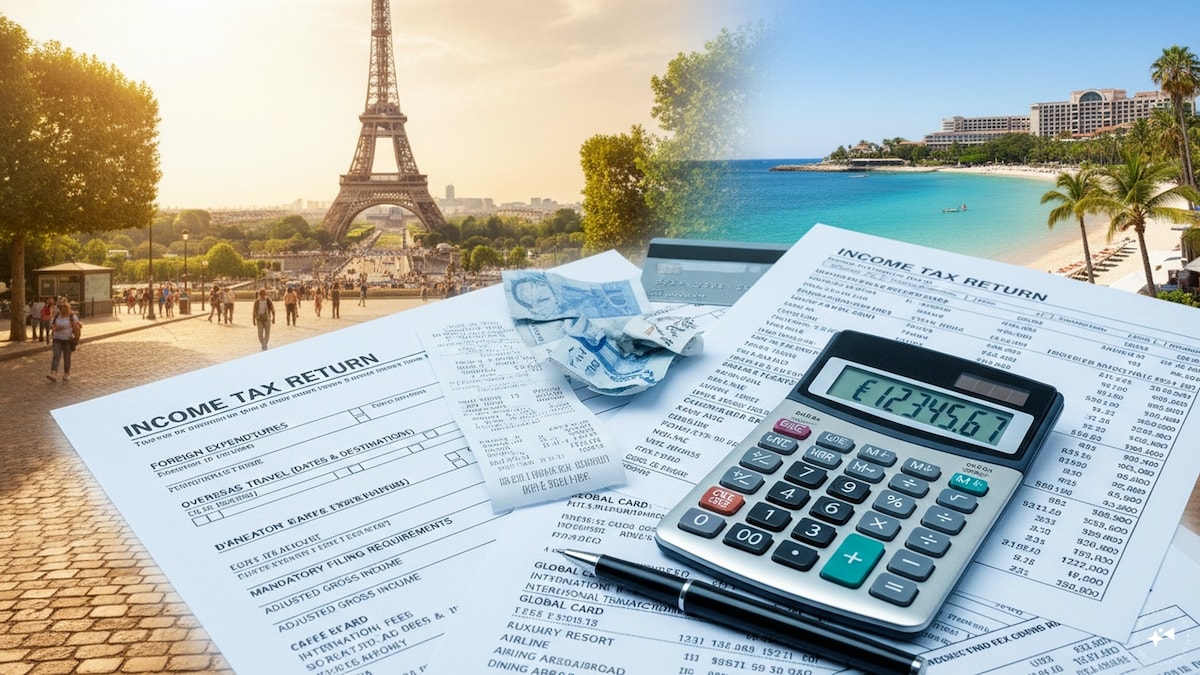
The rule is part of the government’s broader effort to monitor high-value spending through PAN-linked transactions. As overseas travel becomes more common among middle-income households, many taxpayers may unknowingly fall within the mandatory return filing framework.
When does foreign travel trigger mandatory ITR filing?
Under income tax rules, a person may be required to file an ITR if total spending on foreign travel exceeds ₹2 lakh during a financial year.
The condition is linked to expenditure rather than income. This means that even if an individual’s earnings are below the taxable threshold, filing an ITR could still become necessary once the spending limit is crossed.
The calculation generally includes expenses such as:
- International flight bookings
- Hotel accommodation abroad
- Visa charges
- Tour package costs
- Travel expenses paid on behalf of family members or others
The threshold applies on an aggregate annual basis. In practical terms, a single overseas vacation for a family can easily exceed the prescribed limit.
Which ITR forms are applicable?
The reporting requirement appears in:
- ITR-1 (Sahaj) — generally used by salaried resident individuals with income up to ₹50 lakh.
- ITR-4 (Sugam) — applicable to eligible individuals, HUFs, and small businesses opting for presumptive taxation.
These forms seek details relating to foreign travel expenditure above the specified threshold and may also require passport-related information.
How TCS applies to overseas tour packages
Another important aspect linked to foreign travel is Tax Collected at Source (TCS).
When an overseas tour package is purchased through an Indian seller or tour operator, TCS is collected at the time of payment and deposited against the buyer’s PAN.
The amount collected does not function as a separate final tax. Instead, it operates as an advance tax credit that can later be adjusted while filing the income tax return.
If the total tax liability is lower than the TCS already collected, the excess amount can be claimed as a refund through the ITR process.
Why these transactions matter more now
Foreign travel-related transactions are visible to tax authorities through systems such as:
- Annual Information Statement (AIS)
- Form 26AS
- PAN-linked financial reporting mechanisms
Because these records are digitally captured, high-value travel expenses may already be available with the Income Tax Department even if a taxpayer does not voluntarily disclose them.
Tax professionals say this is one reason individuals should review their AIS and tax statements carefully before deciding whether return filing is necessary.
Does this apply only to leisure travel?
No. The reporting condition is not limited to vacations or luxury tourism. The expenditure threshold may apply regardless of whether the foreign trip is for:
- Personal travel
- Business visits
- Education-related travel
- Sponsored trips for dependents or relatives
The focus remains on the amount spent rather than the purpose of travel.
What about domestic holidays?
Travel within India is treated differently under tax rules.
Eligible salaried employees may still claim tax benefits through Leave Travel Allowance (LTA) for domestic journeys, subject to prescribed conditions. However, the exemption is generally limited to travel fare and does not extend to hotel stays, meals, entertainment, or sightseeing expenses.