
Looking for coastal landscapes beyond the ordinary? Here are some stunning multi-coloured beaches around the world: from pastel pink shores to green a…

 1/7
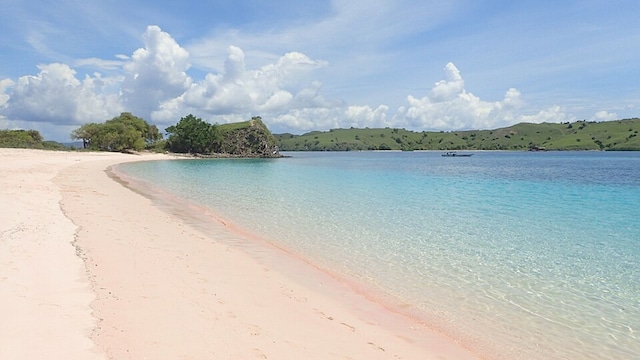
1/7Pink Beach, Komodo National Park, Indonesia | Tucked against the rugged volcanic terrain of Komodo National Park, this pastel-pink shoreline gets its dreamy rose hue from microscopic single-celled marine organisms called foraminifera, which produce crimson-red shells. When these shells wash ashore and naturally break down, the red fragments blend seamlessly with fine white coral sand to tint the entire beach, creating a striking contrast with the turquoise sea. Travellers can easily access the beach via guided day-boat tours and island charters departing daily from the gateway town of Labuan Bajo. (Image source: Wikimedia Commons)
 2/7
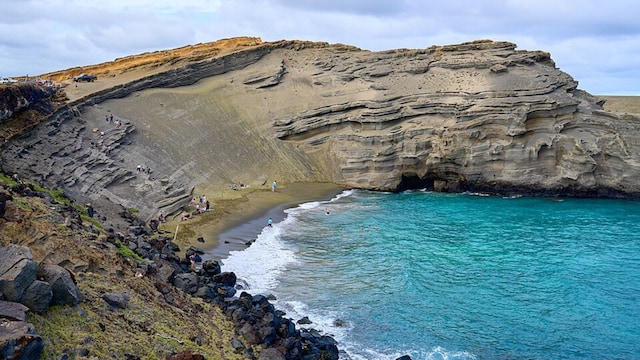
2/7Papakōlea Beach, Big Island, Hawaii, USA | Cradled inside the fractured wall of an ancient volcanic cinder cone, Papakōlea is one of only four green sand beaches in the world, taking its olive-green shade from dense deposits of olivine, a magnesium-iron crystal mineral known in gemstone form as peridot. As Pacific waves erode the enclosing volcanic cliffs, the heavy olivine crystals stay trapped along the surf while lighter rock and ash get swept out to sea. Reaching this rare shoreline requires an exposed four-kilometre coastal hike across open pastureland from the South Point parking area, and taking even a handful of sand is strictly illegal under local conservation laws. (Image source: Wikimedia Commons)
 3/7
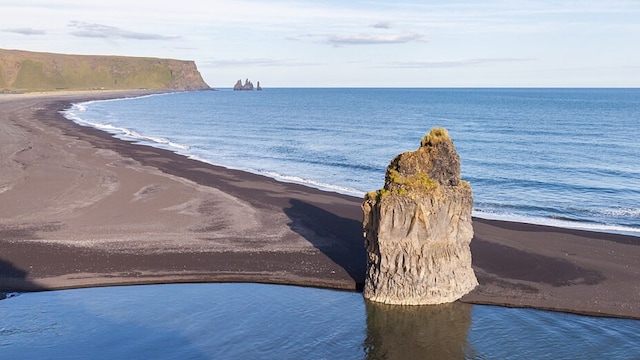
3/7Reynisfjara Beach, Vík, Iceland | Flanked by hexagonal basalt columns and roaring Atlantic waves, this midnight-black shoreline was formed when red-hot molten lava from nearby subglacial eruptions violently hit the freezing ocean, instantly shattering into tiny basaltic fragments that centuries of wave action polished into smooth black sand and pebbles. Located directly off Iceland’s paved South Coast Ring Road with a dedicated visitor car park and café, it is easily accessible on foot, though visitors must heed warning signs and stay well back from the waterline due to unpredictable, dangerous sneaker waves. (Image source: Wikimedia Commons)
 4/7
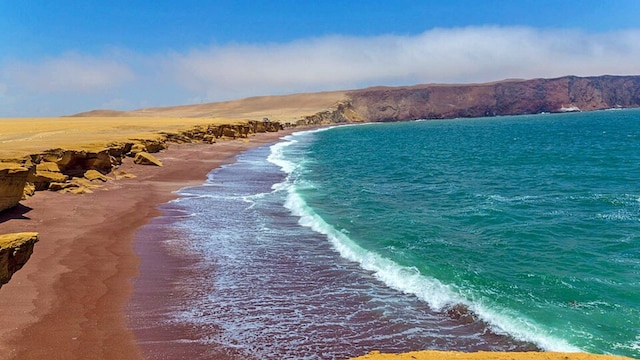
4/7Playa Roja, Paracas National Reserve, Peru | Set along the protected desert coast of the Paracas National Reserve, Playa Roja features a ruby-red shoreline created by the ocean erosion of nearby granodiorite cliffs, an ancient igneous rock containing high concentrations of pink and red feldspar minerals. When powerful Pacific swells grind down the crumbling cliffs, the dense reddish mineral grains settle along the surf line, creating a stark visual contrast between the golden desert bluffs and the dark ocean. Travellers can easily visit via paved roads from Paracas town and take in panoramic views safely from a designated clifftop lookout. (Image source: Wikimedia Commons)
 5/7
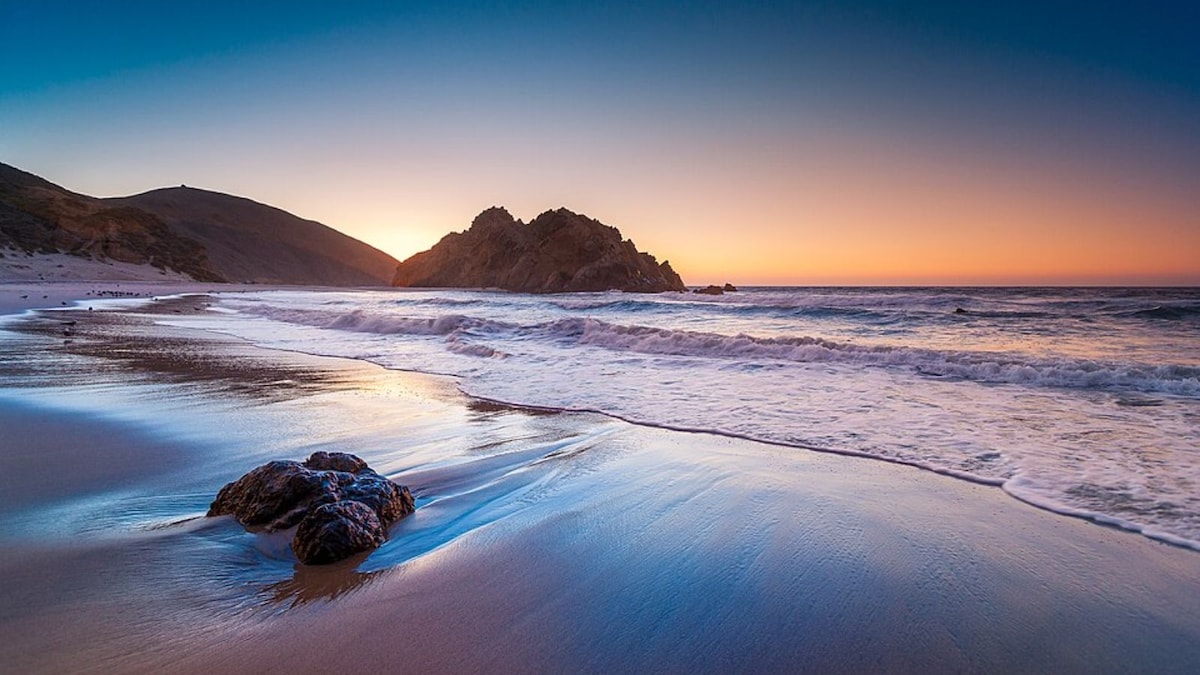
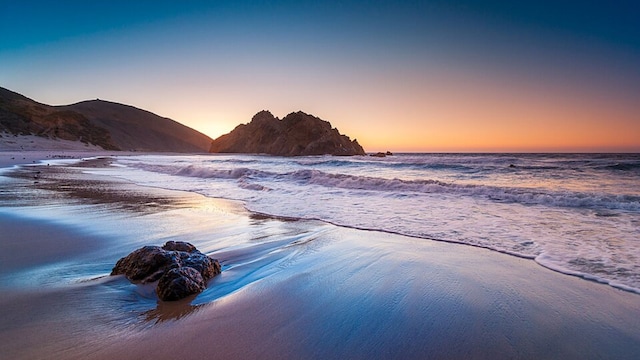
5/7Pfeiffer Beach, Big Sur, California, USA | Famous for its iconic Keyhole Rock arch, this wild Pacific cove features striking ribbons of lilac and deep royal-purple sand that appear in swirling patterns across the lighter shore. The colour is caused by heavy deposits of garnet minerals embedded in the towering bluffs above the beach, which wash down onto the sand whenever winter rains trigger coastal runoff. Located just off Highway 1 down Sycamore Canyon Road, it offers an easy short stroll from the parking area to the sand, with the purple hues appearing most vibrant immediately after winter storms. (Image source: Wikimedia Commons)
 6/7
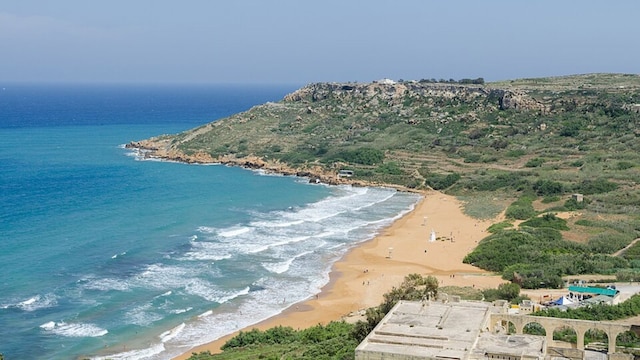
6/7Ramla Bay, Gozo, Malta | Set on the northern coast of the Mediterranean island of Gozo, Ramla Bay is celebrated for its warm, golden-amber and burnt-orange shoreline, which stands out vividly against the clear, shallow sea. The unique apricot hue is produced by weathered local Coralline limestone that contains naturally high concentrations of iron oxide, blended together with finely ground ancient seashell and coral fragments along the seabed. Fully accessible by car, public bus, and local taxis with full beach amenities and sunbed rentals, it is also overlooked by the mythical Calypso’s Cave from Homer’s Odyssey. (Image source: Wikimedia Commons)
 7/7
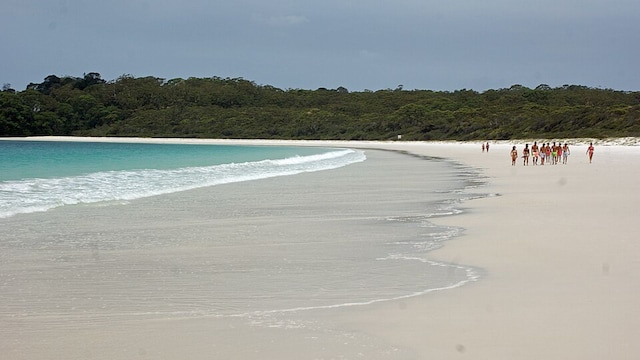
7/7Hyams Beach, Jervis Bay, Australia | Stretching along the coast of Jervis Bay just a three-hour drive south of Sydney, Hyams Beach features a bright, flour-soft shore that contrasts sharply with the deep sapphire waters of the Tasman Sea. This sand is composed of nearly 99% pure quartz silica, the result of millions of years of coastal weathering that stripped away all trace impurities to leave microscopic, clear crystals that reflect the full spectrum of natural sunlight. Situated directly adjacent to a quiet coastal village with direct boardwalk and beachfront parking access, polarised sunglasses are essential to handle the intense surface glare. (Image source: Wikimedia Commons)