
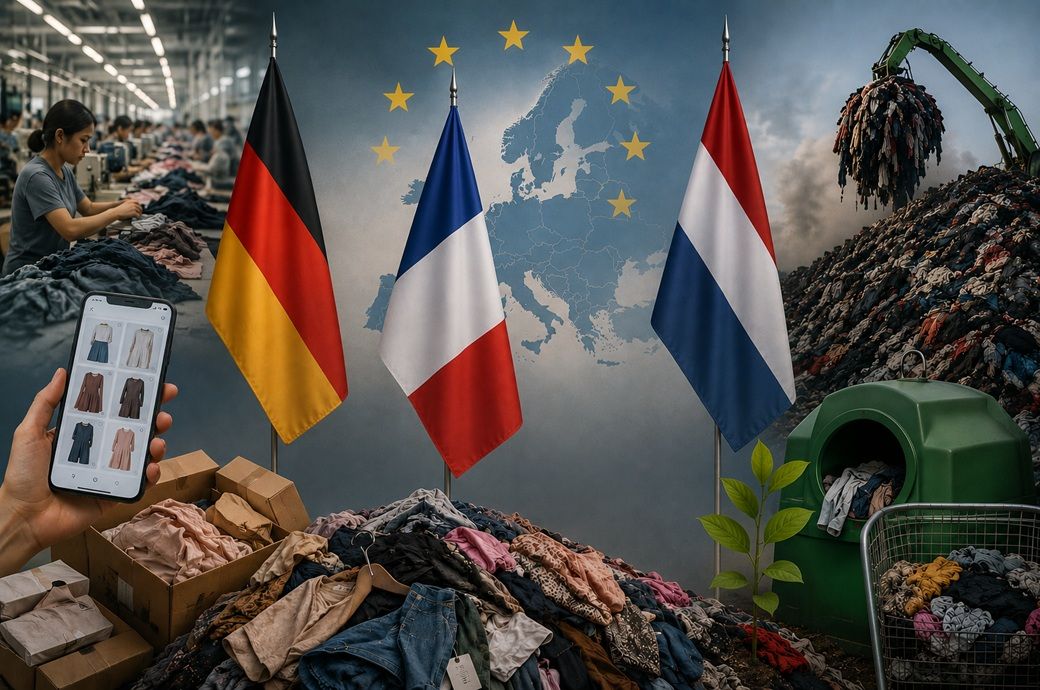
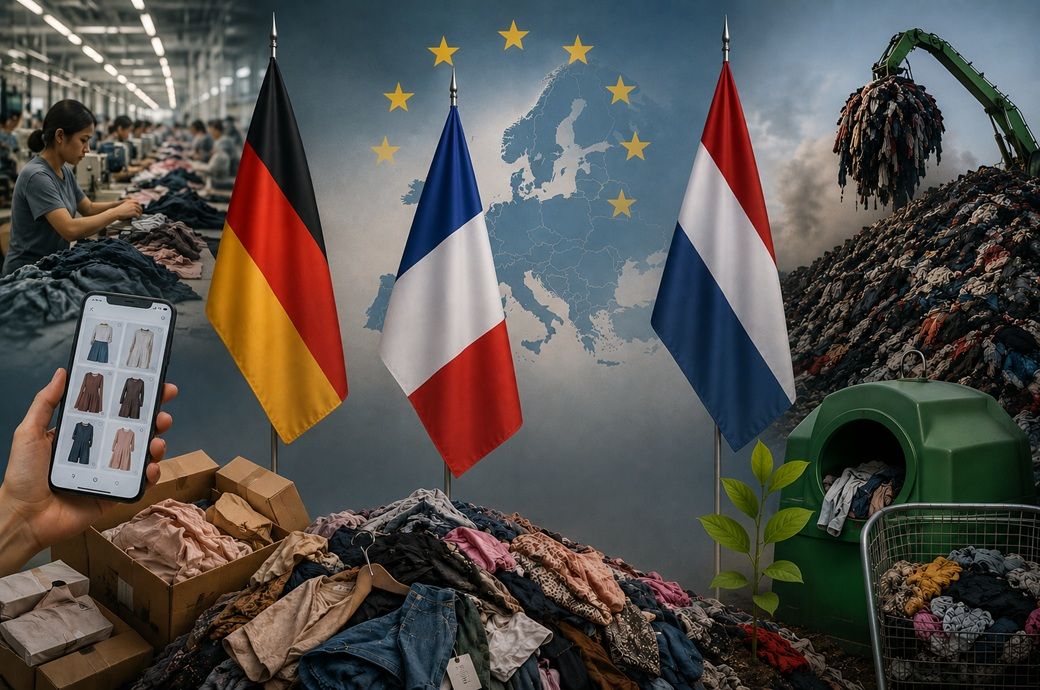
Under the ultra-fast fashion business model, large quantities of new and mainly low-priced textiles are produced at frequent intervals and marketed online. The goods are often short-lived and hard to reuse or recycle. They place a burden on collection and recovery systems for used textiles.
Germany, France and the Netherlands are advocating coordinated European action against ultra-fast fashion.
They raised the topic recently at the EU Environment Council in Luxembourg, and called on the European Commission to make existing and planned EU provisions more effective against short-lived, low quality textiles.
Germany favours stringent provisions for textiles under the EU Ecodesign Regulation.
The three European Union (EU) member states raised the topic recently at the EU Environment Council in Luxembourg, and called on the European Commission to make existing and planned EU provisions more effective against short-lived, low quality textiles.
Their call was supported by other member states, including Slovenia and Denmark, according to a release from the German Federal Ministry for the Environment, Climate Action, Nature Conservation and Nuclear Safety.
“…We are calling on the European Commission to set higher sustainability standards for manufacturers of ultra-fast fashion. Producing cheap disposable clothing can no longer be a competitive advantage,” State Secretary at the ministry Jochen Flasbarth said.
Germany is in favour of stringent provisions for textiles under the EU Ecodesign Regulation. These include requirements for recycled content, durability and recyclability.
At the same time, Germany feels clear criteria are needed to enable the business model of ultra-fast fashion to be precisely defined and regulated.
Another key instrument is extended producer responsibility for textiles. Companies placing large quantities of short-lived clothing on the EU market should also take on an appropriate share of the costs of collection, sorting, re-use and disposal.
Germany, France, the Netherlands and other supporters are also advocating better enforcement in relation to online platforms and direct sales from third countries. European environment and product standards must also apply to online retailers.
The EU has already adopted a number of measures to combat the flood of cheap products from non-EU countries. For example, from July 1, customs duties will be introduced for packages from non-EU countries. The previous exemption threshold of €150 will no longer apply. From then on, a fixed customs duty of €3 will be levied per product group in the package. Import value-added tax (VAT) must also be paid.
Also, an amendment to the Ecodesign Regulation already bans large companies from destroying certain unsold consumer goods. This provision will apply from July 19 this year.
Fibre2Fashion News Desk (DS)