

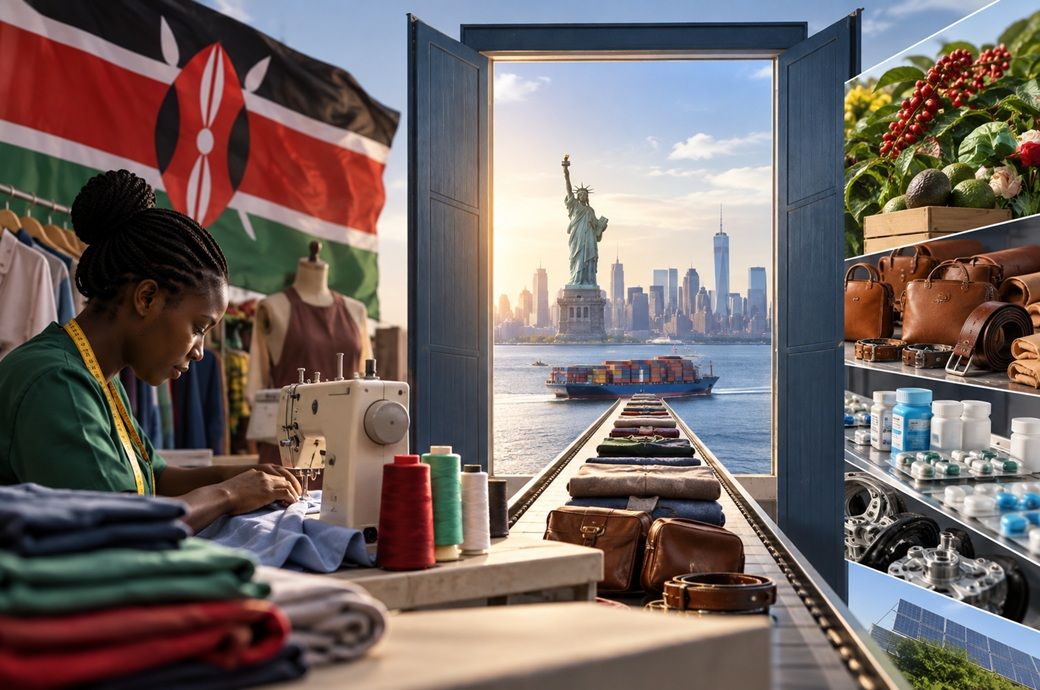
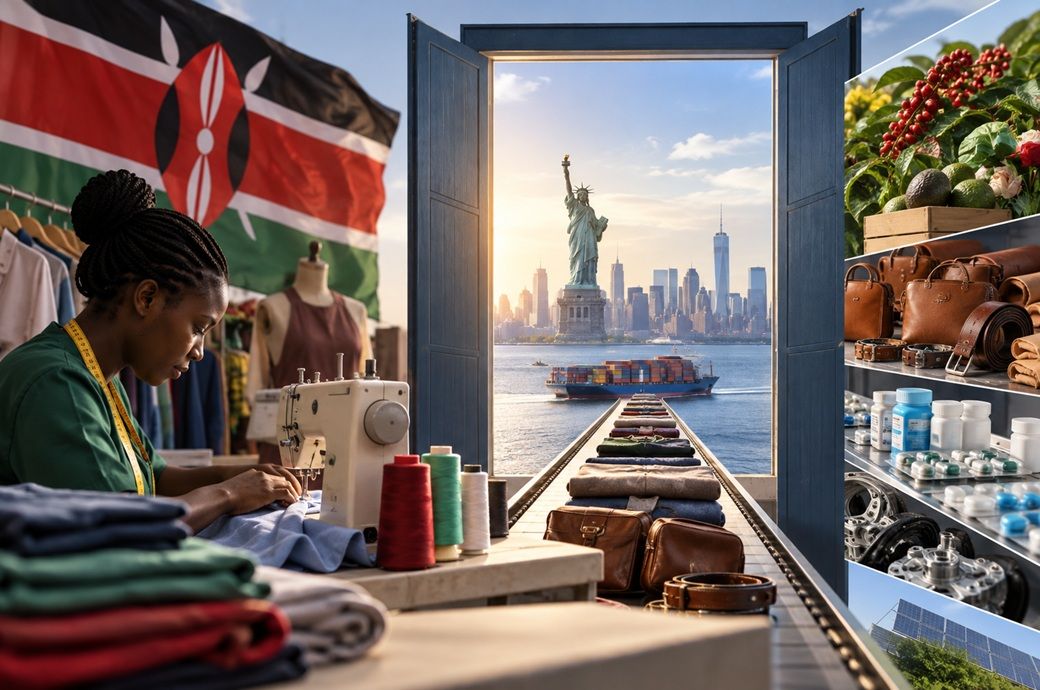
For years, apparel has been one of Kenya’s clearest AGOA success stories, generating foreign exchange, supporting tens of thousands of jobs and helping establish an export-oriented manufacturing base.
Apparel exports to the US under AGOA, as per some estimates, reached about KSh60.6 billion ($466.6 million) in 2024, up 19.2 per cent from the previous year. Employment in AGOA-accredited enterprises also rose sharply, underscoring the importance of preferential access to the US market.
Kenya welcomes AGOA’s extension to December 2028, with apparel exports to the United States under AGOA estimated at KSh60.6 billion in 2024, up 19.2 per cent.
Employment in AGOA-accredited enterprises rose sharply, showing the importance of preferential US market access.
Experts say Kenya should diversify beyond garments while strengthening higher-value T&A and local supply chains.
As Investment, Trade and Industry Cabinet Secretary Lee Kinyanjui put it, the extension provides “much-needed certainty” for exporters, manufacturers and investors.
However, experts believe apparel’s success also highlights a vulnerability: Kenya’s AGOA use remains heavily concentrated in one sector. Continued dependence on garments leaves exporters exposed to sector-specific shifts in US demand, competition and pricing pressures, as well as broader changes in trade policy. Diversifying the export basket would not necessarily eliminate Kenya’s exposure to the US market, but it would reduce the risks associated with relying too heavily on a single sector.
“Beyond apparel, Kenya must use this extended window to diversify its export basket and expand both the range and value of products entering the US market,” Kinyanjui reportedly said recently, even as he highlighted value-added agricultural products, leather and leather goods, pharmaceuticals, and manufactured products as key sectors with potential to drive increased Kenyan exports to the US.
However, stakeholders hold that the objective should not be to move away from textiles and apparel. Kenya still needs to deepen the sector’s competitiveness by moving into higher-value products, improving productivity, strengthening local supply chains and capturing more value while, at the same time, building competitive capabilities in sectors beyond apparel.
The objective is not to weaken textile and apparel sector, but to reproduce its success across a wider manufacturing base.
Kinyanjui’s description of AGOA as a ‘catalyst for Kenya’s industrialisation, value addition, investment and job creation’ points to the broader ambition behind the strategy. Apparel has shown that Kenya can compete in the US market and the government’s latest position signals a push to replicate that success across other sectors.
Fibre2Fashion News Desk (DR)


