
You do not need a spacesuit to step onto terrain that looks like a distant exoplanet. From steaming sulfur valleys high in Ladakh to glowing sapphire …
 1/8
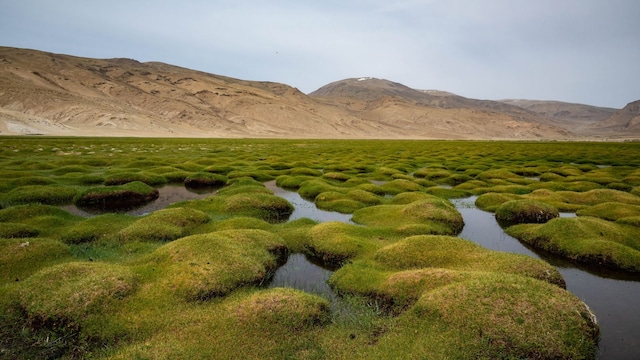
Puga Valley, Ladakh, India | Tucked into Ladakh’s high-altitude Changthang region en route to Tso Moriri, this geothermal valley looks more like a volcanic exoplanet than the Himalayas. Set at over 14,000 feet against stark brown mountains, the valley floor is crusted in chalk-white borax and yellow sulfur deposits, punctuated by steaming hot springs and bubbling mud pools. It is a rare chance to witness geothermal activity in the middle of a cold mountain desert, with the best time to visit being between May and September when the mountain passes remain clear. (Image source: Shutterstock)
 2/8
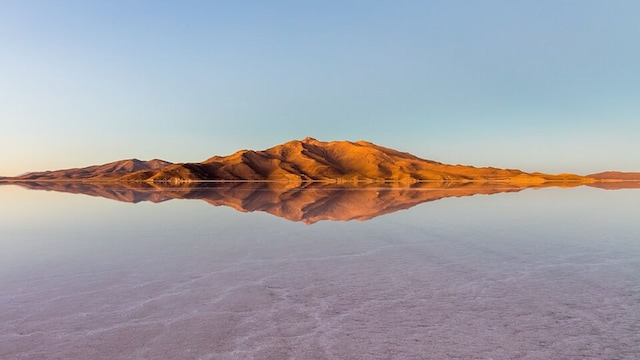
Salar de Uyuni, Bolivia | Spanning more than 10,000 square kilometres across the southwestern Bolivian Altiplano, Salar de Uyuni is the largest salt flat on Earth, left behind by prehistoric lakes that evaporated tens of thousands of years ago. Its endless expanse of geometric white salt polygons erases the horizon completely, offering surreal forced-perspective photography and pristine stargazing under some of South America’s clearest skies. Visit between December and April during the rainy season to see a thin layer of water transform the flat into the world’s largest natural mirror, or between May and November for crisp, dry salt patterns. (Image source: Wikimedia Commons)
 3/8
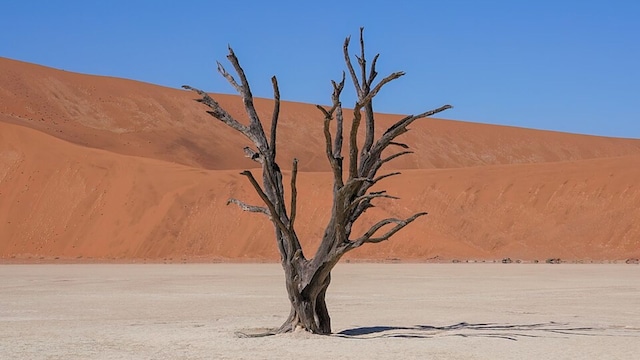
Deadvlei, Namibia | Tucked inside Namibia’s Namib-Naukluft Park, Deadvlei looks like a surrealist painting frozen in time. Centuries ago, shifting sand dunes cut off the Tsauchab River from this bleached-white clay pan, leaving behind 900-year-old camel thorn trees that were scorched pitch-black by the sun rather than decomposing in the bone-dry air. Framed by towering rust-red dunes and a cobalt-blue sky, this stark contrast of colours makes it one of the most photogenic desert landscapes on the planet, best visited during the cooler, dry winter months from May to October. (Image source: Wikimedia Commons)
 4/8
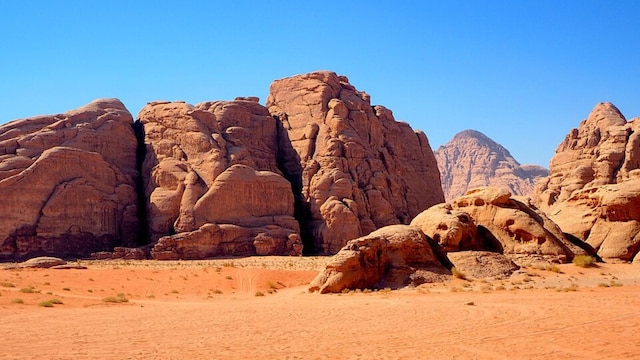
Wadi Rum, Jordan | Located in southern Jordan, Wadi Rum looks so convincingly like the Red Planet that Hollywood filmmakers regularly use it as a stand-in for Mars in movies such as The Martian and Dune. Wind-carved sandstone and granite monoliths rise abruptly out of vast crimson sand valleys, glowing deep orange and violet at sunset before giving way to virtually zero light pollution after dark. Travellers come for the otherworldly desert silence and overnight stays in transparent dome camps, with spring (March to May) and autumn (September to November) offering the most pleasant daytime temperatures. (Image source: Wikimedia Commons)
 5/8
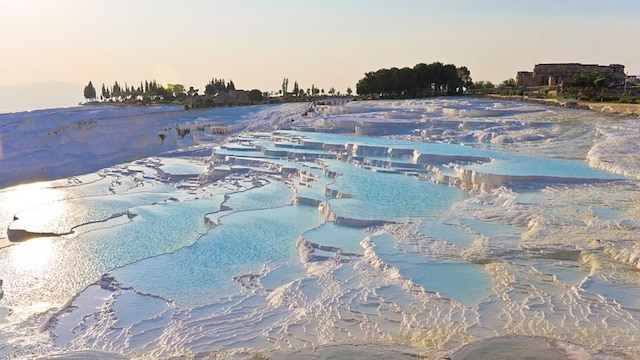
Pamukkale, Turkey | Translating to “Cotton Castle” in Turkish, Pamukkale looks like a frozen glacier cascading down a hillside in southwestern Turkey. In reality, the brilliant white shelves are travertine terraces formed over millennia by warm, calcium-rich thermal spring waters flowing down the slope and pooling into milky turquoise basins. Walking barefoot along the warm mineral pools right beside the ancient Greco-Roman ruins of Hierapolis creates an unforgettable blend of natural wonder and history, best experienced in spring (April to June) or autumn (September to October) to avoid peak summer heat and crowds. (Image source: Wikimedia Commons)
 6/8
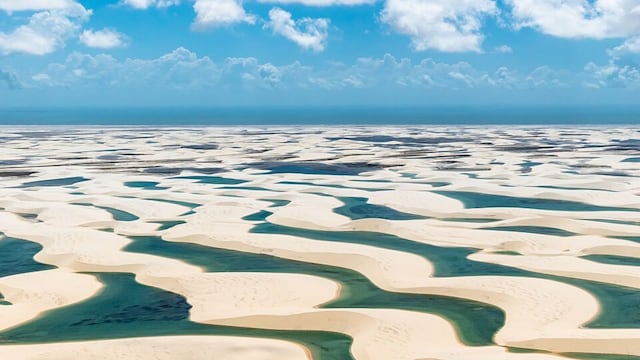
Lençóis Maranhenses National Park, Brazil | Set along Brazil’s northeastern coast in the state of Maranhão, Lençóis Maranhenses defies every rule of desert geography. Strong coastal winds push sweeping white sand dunes up to 50 kilometres inland, while regular seasonal rainfall collects in the valleys between them—creating thousands of crystal-clear emerald and sapphire freshwater lagoons. Swimming in warm, mirror-clear lagoons surrounded by endless white dunes is a bucket-list experience found nowhere else on Earth, best timed between June and September right after the rains fill the basins to their peak. (Image source: Wikimedia Commons)
 7/8
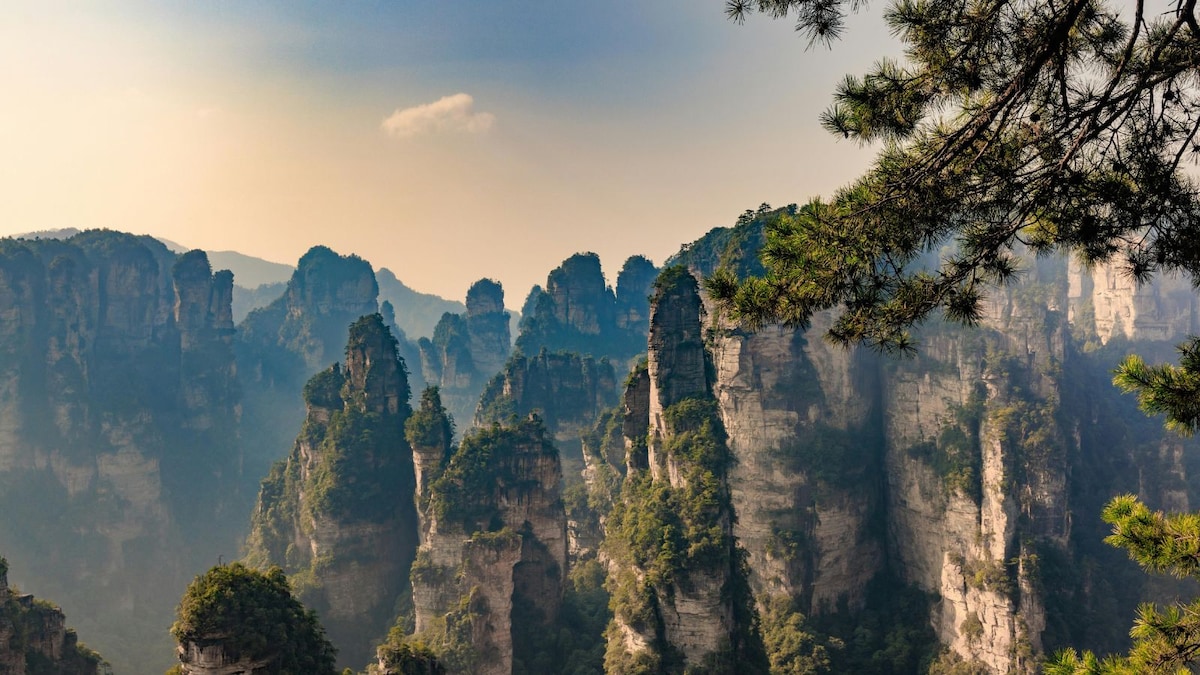
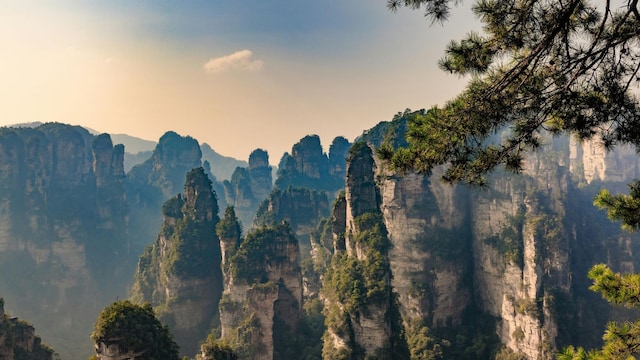
Zhangjiajie National Forest Park, China | Located in northwestern China’s Hunan Province, Zhangjiajie features more than 3,000 sheer quartz-sandstone pillars that inspired the floating Hallelujah Mountains in Avatar. Sculpted by centuries of physical erosion, these vertical stone spires shoot hundreds of metres out of subtropical mist, crowned with wind-swept pine trees. Watching the peaks emerge through rolling morning fog feels like stepping onto a floating world, with the ideal travel windows falling in spring (April to May) and autumn (September to November) for mild weather and dramatic cloud seas. (Image source: Canva)
 8/8
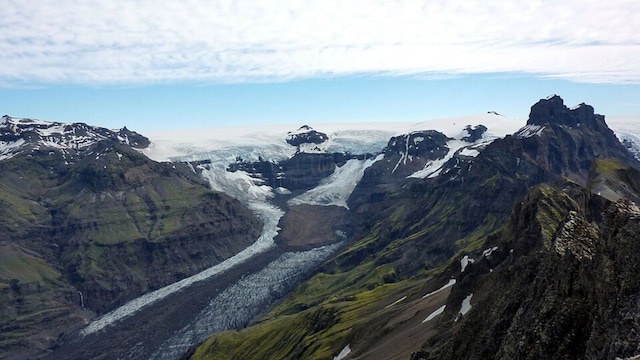
Vatnajökull National Park, Iceland | Covering Europe’s largest ice cap by volume in southeastern Iceland, Vatnajökull packs two distinct planetary landscapes into one stop: translucent sapphire ice caves hollowed out beneath the glacier, and Jökulsárlón, a lagoon of floating neon-blue icebergs drifting onto a black volcanic sand beach. Stepping inside dense, bubble-free blue ice tunnels or watching sculpted ice blocks glisten against pitch-black basalt sand feels genuinely extraterrestrial. Visit between November and March to explore the winter blue ice caves at their safest and brightest, or from June to August for long daylight hours along the glacier lagoon. (Image source: Wikimedia Commons)