
December brings peak holiday traffic to Himachal Pradesh. The route up National Highway 3 along the Beas River toward Kullu and Manali regularly sees multi-kilometre jams and packed town centres. For travellers seeking an alternative mountain route that avoids these bottlenecks, the turnoff to the Sainj and Tirthan valleys comes just before the main highway enters the Kullu gorge.
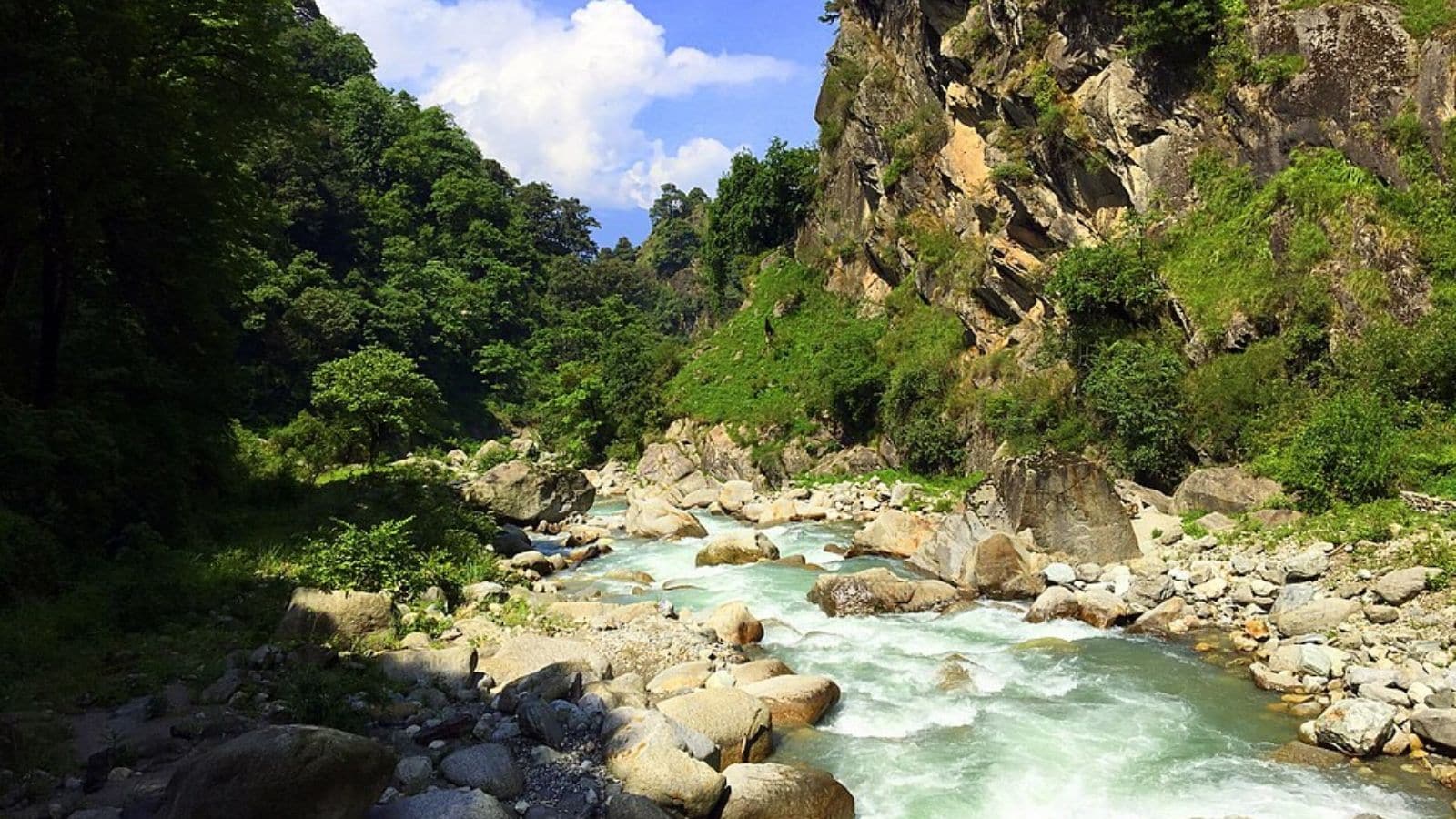
Driving north on NH3 from Mandi toward Kullu, vehicles reach the 2.8-kilometre Aut tunnel. The route to Sainj and Tirthan branches off right before the entrance to the tunnel, crossing toward the Larji reservoir. Past Larji, the road divides into two separate valleys: one follows the Sainj River toward Shangarh, and the other runs along the Tirthan River toward Banjar, Jibhi, and Gushaini. Both valleys serve as buffer zones and access points to the Great Himalayan National Park, located roughly fifty kilometres south of Kullu.
Source: Wikimedia Commons
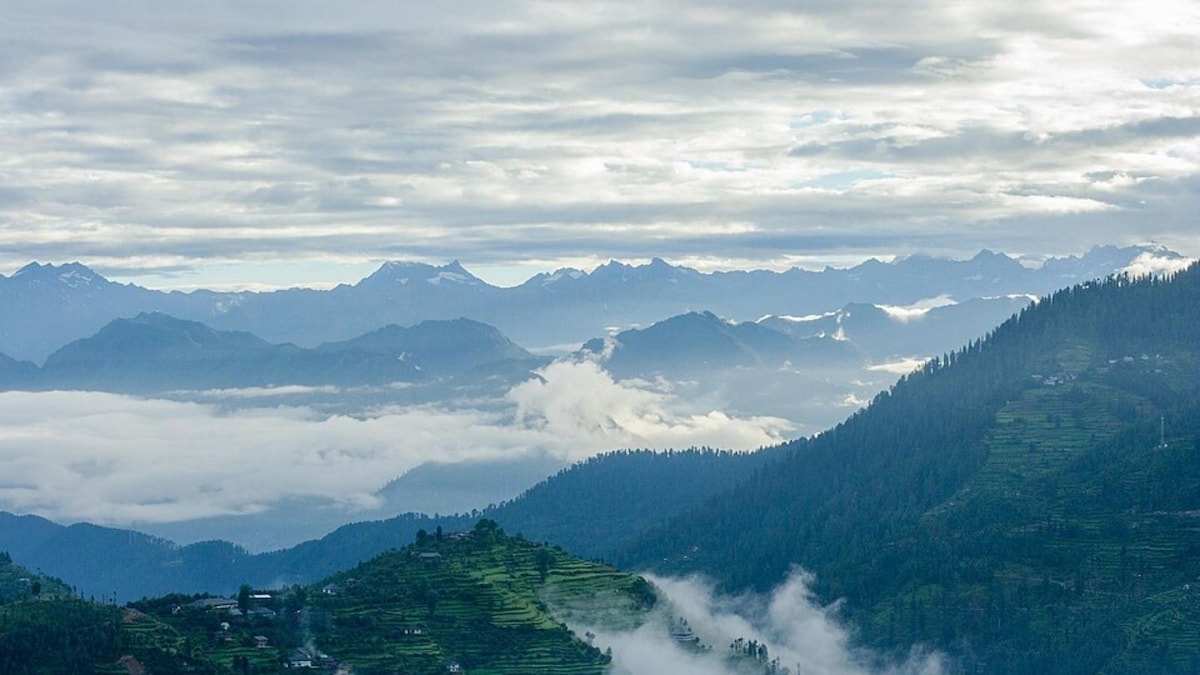
A major practical advantage of these valleys in December is their moderate altitude compared to northern destinations like Solang or Lahaul. The Tirthan valley floor sits at roughly 1,600 metres, Shangarh sits at roughly 2,100 metres, Shoja sits at roughly 2,300 metres, and Jalori Pass reaches 3,120 metres. Because the main settlements sit below 2,400 metres, roads generally stay free of heavy snowdrifts and black ice through December. Night temperatures range from 0°C to 5°C with morning frost, while daytime temperatures sit between 12°C and 16°C. Jalori Pass typically closes to vehicles following the first major snowfall in mid-to-late December, but the road up to Shoja usually stays open.
Also Read: Exploring Bihar during Chhath Puja? 8 places to visit beyond the festivities
In the Sainj valley, the road leads to Shangarh, a settlement centred on a wide natural meadow. The meadow is protected by local deity rules that prohibit motor vehicles, camping, and commercial stalls. The settlement is home to the Sangchul Mahadev temple, built in the traditional Kathkuni style. This regional technique uses dry-stacked stone interlocked with deodar timber beams without mortar, designed for structural flexibility during earthquakes and thermal insulation in winter.
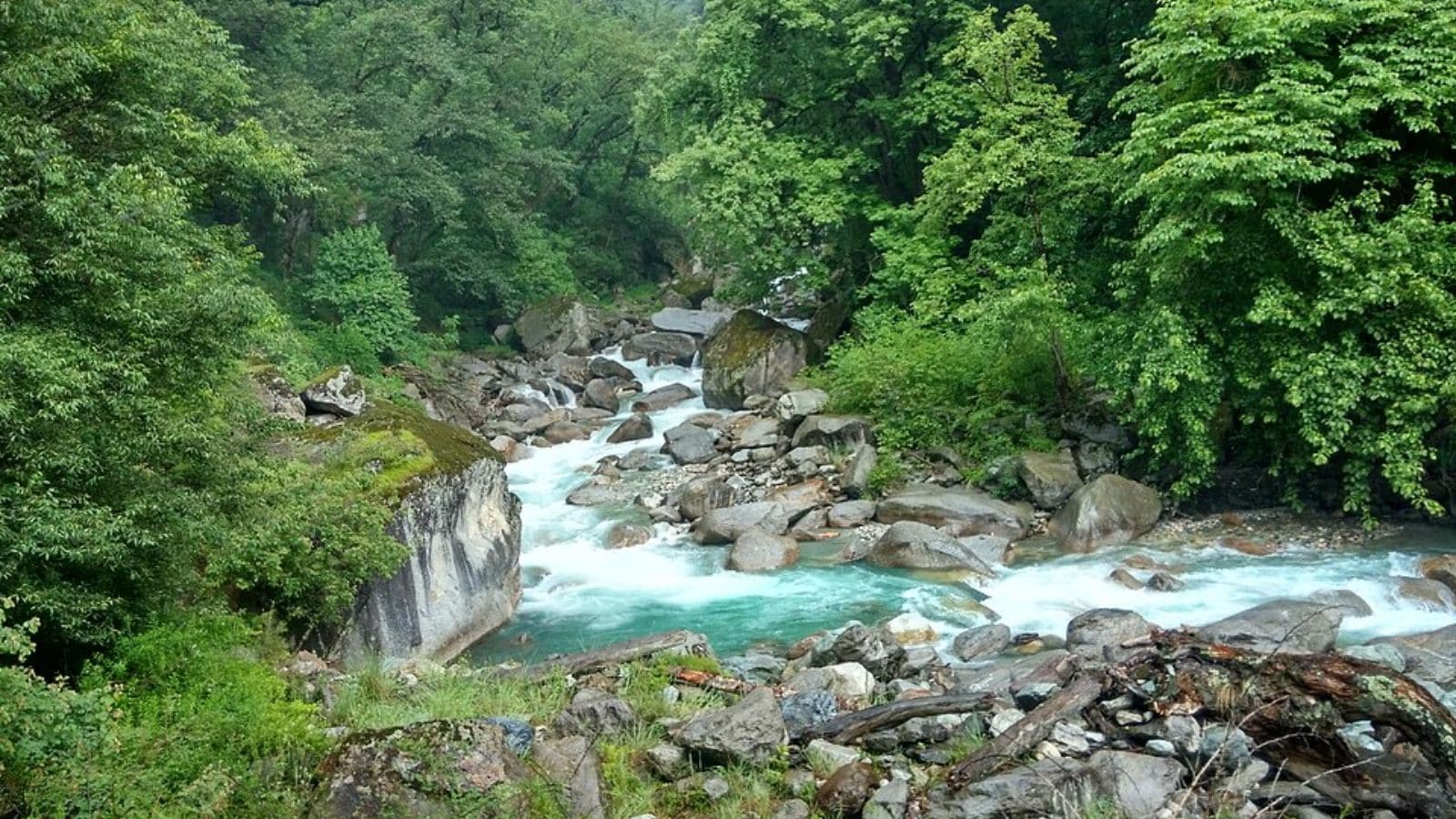
Image source: Wikimedia Commons
In the Tirthan Valley, the route passes Banjar before continuing to Gushaini. Gushaini is the starting point for day walks into the national park’s ecozone and short trails like the three-kilometre walk to Chhoie waterfall. Past Banjar and Jibhi, the road climbs to Shoja, located on the ridge below Jalori Pass, offering clear views across the higher ranges.
The Kiratpur–Nerchowk four-lane expressway has cut driving time between Chandigarh and Mandi to roughly four to four and a half hours. Drive time from Delhi to the Aut junction is roughly ten to twelve hours under normal traffic. Overnight Volvo buses running the Delhi–Manali route drop passengers at the Aut junction, where local taxis and HRTC buses connect to Banjar, Gushaini, and Sainj.
Accommodations across both valleys consist of homestays, guesthouses, and independent cottages. For December travel, key checks include confirming working room heating—such as wood-fired bukharis or electric heaters—and ensuring properties have insulated water lines against overnight pipe freezes. Thermal layers and wind-resistant jackets are standard requirements for mornings and nights.
Also Read: World’s 10 best beaches in 2026: Guess which Indian beach made the cut
The smart traveller’s alternative to the crowded Kullu–Manali corridor this winter