
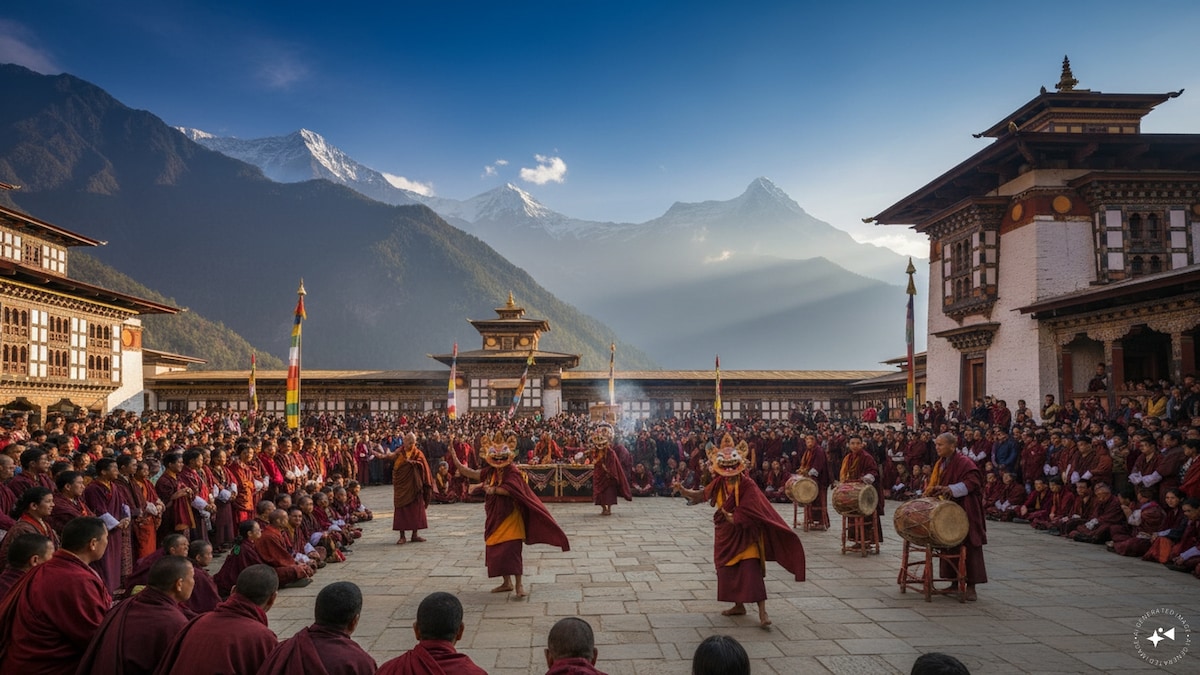
The festivals are among the most important cultural events in Bhutan. Monks and local performers wear colourful costumes and masks to perform traditional dances based on Buddhist stories and teachings. People also gather in traditional gho and kira to take part in the celebrations.
For Indian travellers, the festival season offers a chance to explore Bhutan while also experiencing some of its oldest religious and cultural traditions.
“From swirling brocade robes to dramatic masked dancers suspended mid-leap, Tshechu is a visual feast for photographers and Instagrammers alike. Against the backdrop of ancient Dzongs, fluttering prayer flags, and vibrant crowds in traditional attire, every frame feels timeless,” the press release stated.
Several major festivals will be held across the country in the coming months. Here are the dates:
Thimphu Tshechu: September 21-23
The Thimphu Tshechu is one of Bhutan’s biggest festivals. It will be held at Tashichho Dzong, where monks and lay dancers will perform traditional masked dances.
Jakar Tshechu: October 18-21
The Jakar Tshechu will be held in Bumthang. The festival is known for its traditional religious rituals and is held in one of Bhutan’s important cultural regions.
Jambay Lhakhang Drup: October 26-29
The Jambay Lhakhang Drup is known for its religious ceremonies and a dramatic fire dance that takes place at night.
Black-Necked Crane Festival: November 11
The festival will be held in Gangtey and Phobjikha to celebrate the arrival of black-necked cranes.
Druk Wangyel Tshechu: December 13
Also called the Dochula Pass Festival, it will be held at Dochula Pass. The festival honours Bhutan’s Fourth King and the Royal Bhutan Army.
Trongsa Tshechu: December 17-21
The Trongsa Tshechu will feature masked dances and religious rituals at Trongsa Dzong.
What happens at a Tshechu?
The main attraction at the festivals is the Cham dance. Performers wear large masks and colourful costumes while telling stories through their movements. The dances are based on Buddhist stories and legends. Some performances tell stories linked to Guru Rinpoche, while others focus on themes such as good winning over evil and compassion.
The rituals are also believed to bring blessings and good fortune. This makes Tshechu an important religious event for local communities.
One of the biggest events at the Thimphu Tshechu is the unveiling of the Thongdrel at dawn.
The Thongdrel is a large sacred silk scroll. Bhutanese people believe that seeing it can cleanse sins. The early-morning unveiling is therefore considered one of the most important moments of the festival.
Tshechu also gives visitors a chance to see local traditions outside the religious ceremonies.
People gather in their traditional clothes, while food stalls, handicrafts and folk performances add to the celebrations. Visitors can also join some of these activities and experience the festival alongside local communities.
For travellers looking to combine the festivals with a wider Bhutan itinerary, luxury hospitality properties such as Six Senses Bhutan also offer multi-valley journeys that combine cultural visits with stays across different parts of the country.