
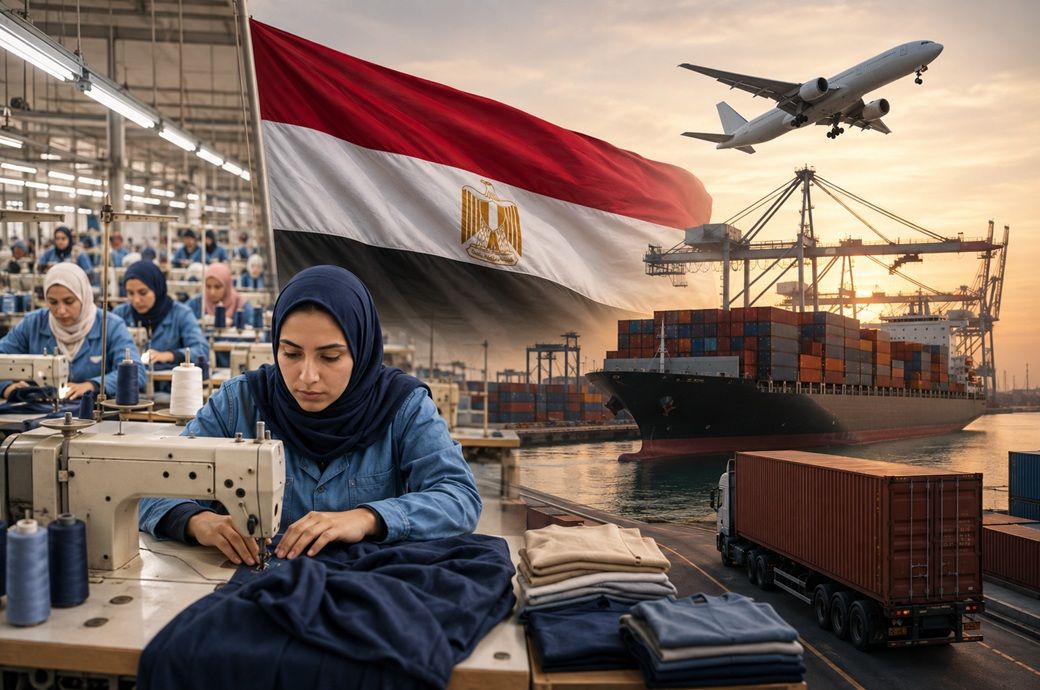
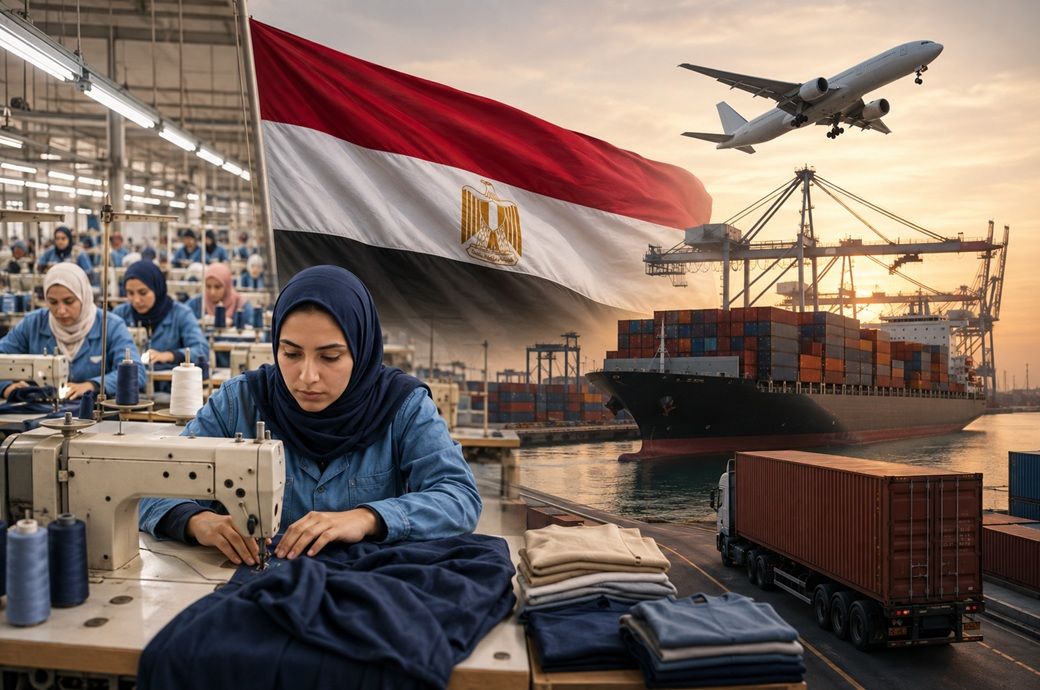
According to the Apparel Export Council of Egypt, Egypt**;s ready-made garment exports climbed ** per cent year-on-year to $*.** billion in the first four months of ****. April alone was the standout month, with exports up a striking ** per cent compared to the year before. For an industry that lives and dies by margins measured in cents per unit, those are not small numbers — they are the sound of a sourcing map being redrawn in real time.
A five-year bet
Egypt**;s apparel trade body is not treating this as a lucky quarter. The Apparel Export Council of Egypt has laid out a five-year plan to grow exports by **–** per cent annually, aiming to triple the sector**;s output to $** billion by ****. It is an audacious target for an industry that, a decade ago, barely registered on global sourcing maps dominated by Bangladesh, Vietnam, and Turkiye.
The bet is being backed with real capital. Chinese and Turkish manufacturers have been opening facilities across Egypt**;s industrial zones over the past two years, drawn by competitive labour costs and Egypt**;s preferential trade access — duty-free lanes into the US under the Qualifying Industrial Zones programme, plus favourable terms with the EU, the African Continental Free Trade Area, and COMESA. One recent example: Turkiye**;s Yesim Group opened a new **,***-square-metre garment plant, operated as Jade Textile, in Alexandria**;s New Borg El Arab City in June ****. The facility represents an investment of roughly EGP *** million (~$** million) and is projected to generate $***–*** million in annual exports once fully ramped up; it has created over *,*** jobs directly; part of the more than **,*** people Yesim Group now employs across its three Egyptian sites.