
Last Updated:
RK Chaudhary advocated for a greater push towards electric or gas crematoriums from wooden pyres, while the BJP labelled the comments as ‘insensitive’ and ‘culturally tone-deaf’


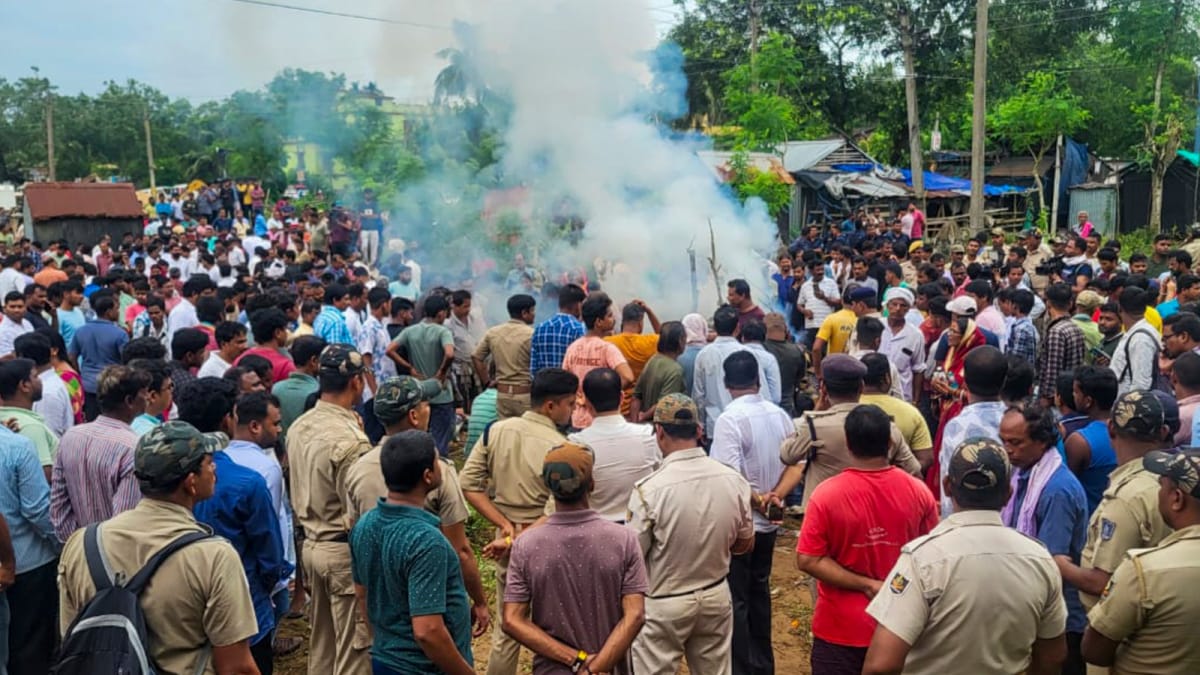
Samajwadi Party’s RK Chaudhary argued that the massive amount of wood required for traditional funeral pyres leads to deforestation, while the ash and residual remains released into rivers contribute to the degradation of the Ganga and other holy water bodies. (Representational image: PTI)
A fresh political row erupted on Thursday after a senior leader from the Samajwadi Party (SP) suggested that the traditional practice of cremating bodies is a significant contributor to air and water pollution. The remarks, made during a discussion on environmental sustainability in Lucknow, sparked immediate outrage and a sharp rebuttal from the Bharatiya Janata Party (BJP), which accused the opposition of attacking cultural sentiments and religious traditions under the guise of environmentalism.
Samajwadi Party’s RK Chaudhary argued that the massive amount of wood required for traditional funeral pyres leads to deforestation, while the ash and residual remains released into rivers contribute to the degradation of the Ganga and other holy water bodies. He advocated for a greater push towards electric or gas crematoriums, suggesting that the government should incentivise these “greener” alternatives to mitigate the carbon footprint of traditional rites. While the leader framed the argument as a scientific necessity to combat the worsening air quality in the Indo-Gangetic plains, the timing and phrasing of the statement were quickly seized upon by political opponents.
The BJP responded with a scathing critique, with a party spokesperson labelling the comments as “insensitive” and “culturally tone-deaf”. The ruling party argued that the SP leader’s focus on cremations was a deliberate attempt to deflect attention from larger industrial and vehicular pollution sources. They further contended that Hindu funeral rites are deeply personal and spiritually significant, and any attempt to regulate or stigmatise them would be seen as an interference in the freedom of religion. BJP leaders challenged the SP to focus on concrete policy failures rather than “politicising the dead” or targeting the traditions of a specific community.
Environmentalists have long debated the ecological impact of traditional cremations, noting that a single funeral pyre typically consumes between 400 and 500 kilograms of wood. Initiatives like “Green Cremation” and the installation of electric furnaces have been promoted by various municipal corporations across Northern India for over a decade. However, the transition has remained slow due to deeply ingrained cultural beliefs regarding the “Antyesti” (last sacrifice). By bringing this sensitive topic into the political arena, the SP has opened a new front in the ongoing “pollution politics” of Uttar Pradesh, where environmental concerns are increasingly clashing with traditional practices ahead of the upcoming local body elections.
December 19, 2025, 01:54 IST
Read More