
Last Updated:
Speaking during the Lok Sabha, Tharoor opposed the new bill, dubbed G Ram G, which offers 25 extra days of paid work but puts 40 percent of that financial burden on states.


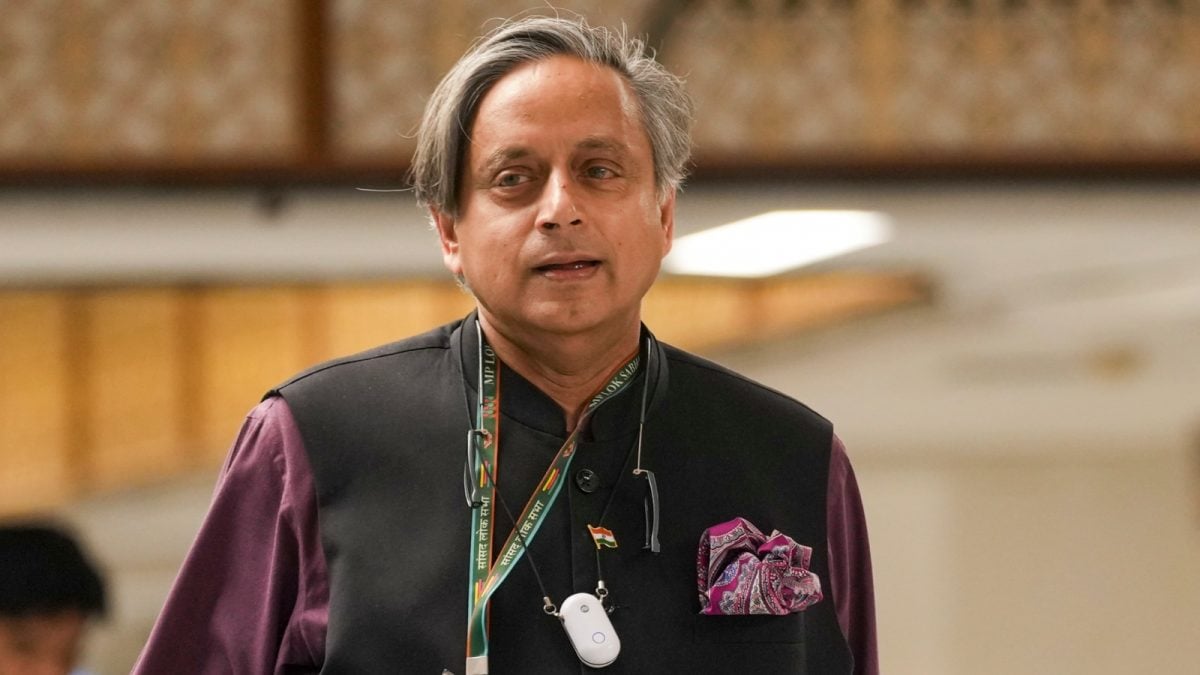
A file photo of Congress MP Shashi Tharoor (PTI Image)
In what is occurring rarely these days, Congress MP Shashi Tharoor on Tuesday came out against the Bharatiya Janata Party’s move to replace the Mahatma Gandhi National Rural Employment Guarantee scheme (MGNREGA) with the Viksit Bharat Guarantee For Rozgar And Ajeevika Mission.
Speaking during the Lok Sabha, Tharoor opposed the new bill, dubbed G Ram G, which offers 25 extra days of paid work but puts 40 percent of that financial burden on states.
Tharoor also called it “immoral” to remove Gandhi’s name and simultaneously urged the government not to “sully Ram’s name”.
Taking to X, Tharoor wrote, “Replacing the Mahatma’s name in a scheme for the rural poor ignores this profound symbiosis (between Gandhi’s vision for self-governing villages and that of ‘Ram Rajya’, or a period of idealised governance) …”
“Let us not dishonour his legacy by creating a division where none existed,” he added.
The Thiruvananthapuram MP wasn’t the only opposition leader to oppose the government’s move. Congress leader Priyanka Gandhi Vadra called for the bill to be withdrawn, questioning the ‘craze’ to change every scheme’s name and pointing to the money costs incurred each time.
“A bill should not be passed in haste… this bill must be withdrawn,” she said, pointing also to the fact MGNREGA had been running successfully for 20 years to strengthen the rural economy.
Priyanka Gandhi also demanded that the bill be sent to a standing committee.
MGNREGA vs G RAM G
In essence, the former is sponsored by the central government. That means 100 per cent of the wages paid to unskilled workers are from its pocket. States bear a fraction of total expenses.
The G RAM G bill changes that funding structure, requiring states to bear 40 per cent of the overall costs, and opposition leaders, including those from a key BJP ally – Andhra Pradesh’s ruling Telugu Desam Party – have objected to this, citing increased burden on state finances.
The ratio for northeastern and Himalayan states, however, will be 90:10, while union territories will be funded completely by the centre. This means that out of the total proposed expenditure – an estimated Rs 1.51 lakh crore annually – the central governemnt will now fund only Rs 95,692 crore.
 Click here to add News18 as your preferred news source on Google.
 December 16, 2025, 14:51 IST
Read More