
Last Updated:
The PM revealed that though he sleeps only about 3.5 hours a day, the quality of sleep matters more than duration


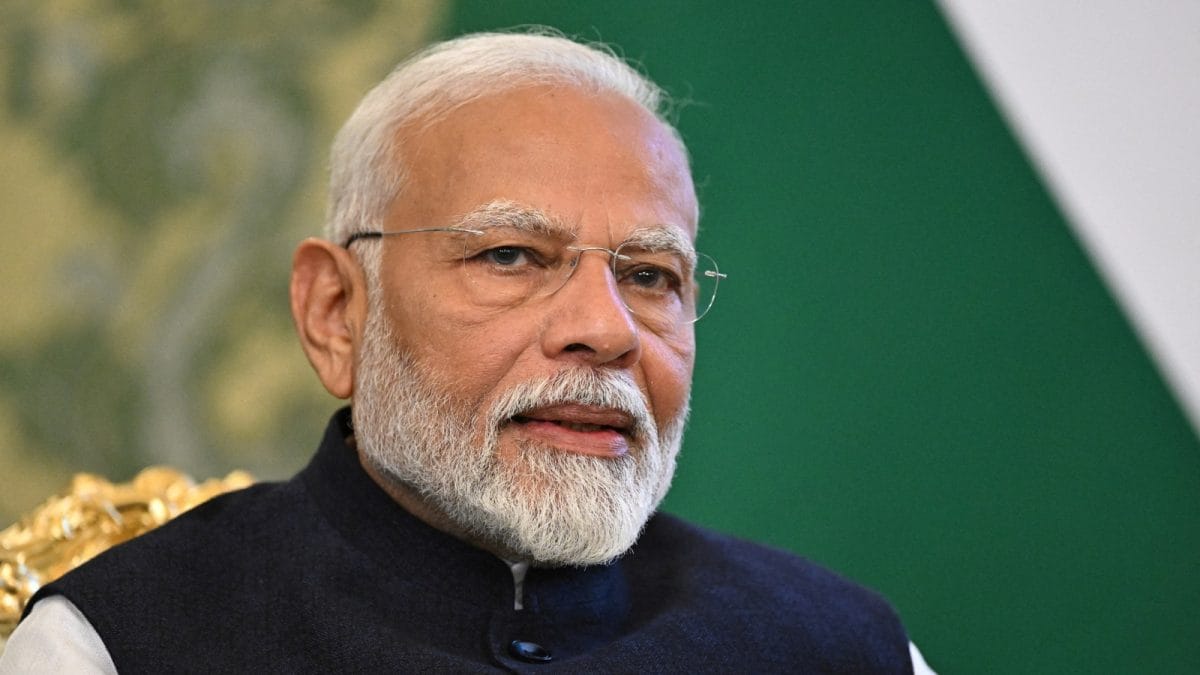
When questioned about One Nation, One Election, the Prime Minister said the concept allows more time for governance rather than constant campaigning. File pic
It was a cheerful Thursday evening for NDA parliamentarians who gathered at 7, Lok Kalyan Marg, the residence of Prime Minister Narendra Modi, for a special dinner. The MPs arrived in buses, a practice encouraged by the Prime Minister to promote carpooling during large gatherings.
PM Modi made it a point to stop at every table and greet MPs across parties, but he spent over 90 minutes at a particular table where a mix of young and first-time lawmakers were seated. What began as a formal interaction soon turned into a free-flowing conversation, with members saying they felt like they were speaking to a fellow MP rather than the Prime Minister.
According to sources, no topic was off-limits—from managing hectic schedules to handling pressure to dealing with stress. When asked how he remains calm, PM Modi said clarity of purpose helps eliminate stress. Recalling the Gujarat bomb blast, he shared how many advised him to avoid public interaction due to security concerns, but he chose to meet people because he was clear about his duty.
On staying healthy and energetic, he emphasised discipline and good sleep. He revealed that though he sleeps only about 3.5 hours a day, the quality of sleep matters more than duration. This surprised many members, who had asked how he maintains his health even at his age.
On anger management, the Prime Minister shared a personal practice: journaling. He said he has never yelled at a bureaucrat or staff member. Whenever he felt anger rising, he would write down the incident, the person involved, and the trigger—read it again, and then tear the paper. This, he said, helped him control reactions in the moment.
Talking politics, he told MPs that politics is a long-term profession that demands sustained commitment. Leaders who enter politics accidentally rarely last. He urged them to stay grounded, make frequent constituency visits, and rely on real-time feedback from people instead of assumptions.
On communication, PM Modi said nothing replaces direct communication with citizens. He cited how, as Gujarat Chief Minister, no call to his office ever went unanswered. He underscored the importance of using technology wisely—even though he doesn’t carry a phone, he knows how to stay connected. At the same time, he reminded members to regulate screen time.
A member asked about his fluency in Hindi, and Modi shared that working at the Mehsana railway station exposed him to people from northern India who brought their livestock, which helped him pick up the language.
When questioned about One Nation, One Election, the Prime Minister said the concept allows more time for governance rather than constant campaigning. On a lighter note, he added that it saves energy—both his and that of public representatives—while reducing the negativity that often accompanies campaign seasons.
Young MPs also sought book recommendations. The PM suggested Benjamin Franklin’s biography, explaining how Franklin used systematic journaling to organise his life, stay focused, and understand what truly mattered. The Prime Minister said the book could serve as a manual for anyone looking to structure their life and priorities.
Throughout the evening, the Prime Minister visited each table. However, he spent considerable time at Table No. 1, where senior BJP leaders Jagdambika Pal and Ravi Shankar Prasad were seated, along with NCP’s Praful Patel, TDP’s Lavu Krishna, Shiv Sena’s Shrikant Shinde, and first-time MP Shambhavi Choudhary of LJP.
 Click here to add News18 as your preferred news source on Google.
 December 12, 2025, 01:57 IST
Read More