
Last Updated:
During the debate on electoral reforms, Shah accused the opposition of attempting to shield infiltrators for the sake of vote bank politics


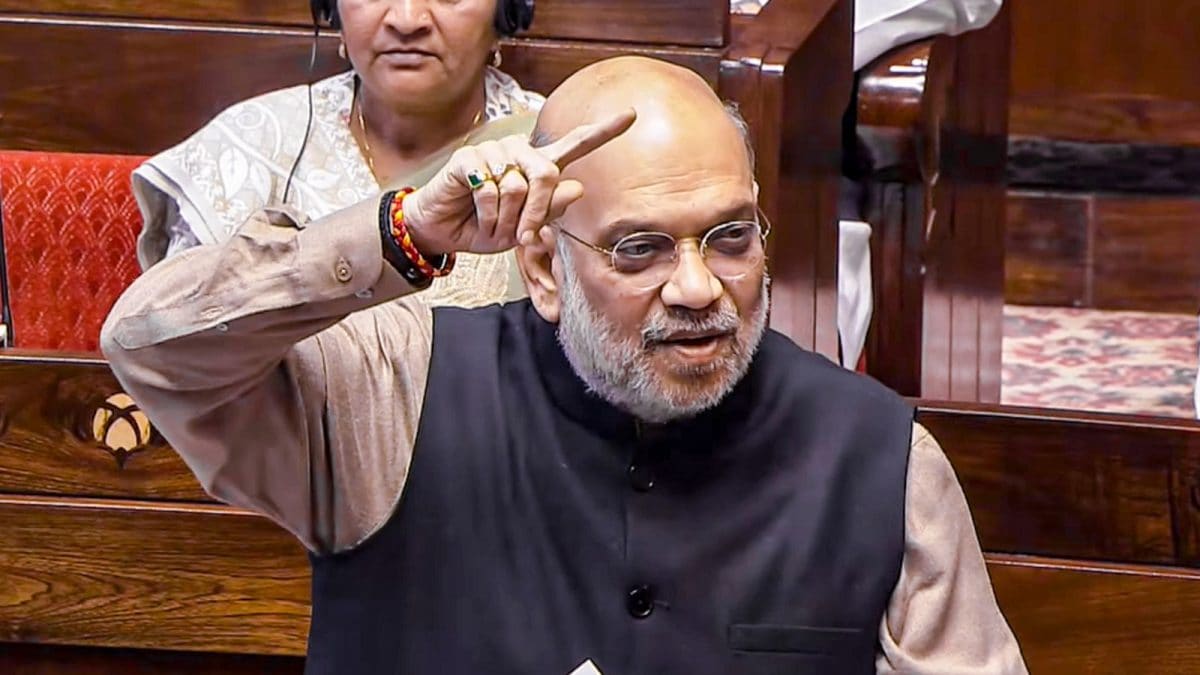
Union Home Minister Amit Shah speaks in the Lok Sabha during the winter session of Parliament, in New Delhi, on Wednesday. (Image: Sansad TV via PTI)
Union Home Minister Amit Shah delivered a fiery and wide-ranging speech in Parliament on Wednesday, with the issue of illegal infiltration forming the central pillar of his address. Speaking during a debate on electoral reforms, Shah accused the opposition of attempting to shield infiltrators for the sake of vote bank politics, leading to a dramatic walkout staged by the INDIA bloc members towards the close of his remarks.
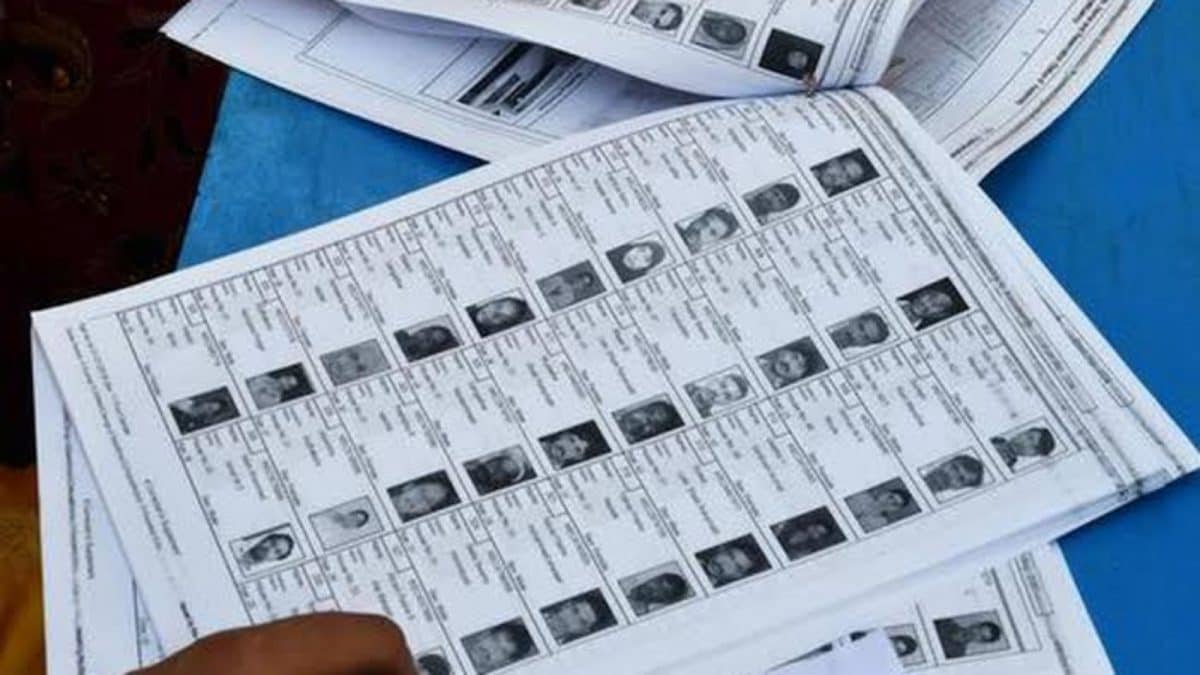
Shah was unequivocal, declaring that the government’s policy on illegal residents and intruders is clear: “detect, delete, and deport”. He argued that the opposition’s aggressive questioning of the Election Commission’s special intensive revision (SIR) exercise was motivated by a fear of losing the votes of illegal immigrants who had been allegedly added to the electoral rolls. Shah backed his claim with historical data, referencing the 2011 Census to highlight abnormally high decadal Muslim population growth rates in border districts of states like Assam and West Bengal, figures he claimed were impossible without infiltration.
The Home Minister used the opportunity to draw a clear distinction between refugees fleeing religious persecution, whom the Citizenship Amendment Act (CAA) aims to protect, and infiltrators who enter for economic gain or to create unrest. He asserted sternly that India is “not a dharamshala” (a shelter home) and would deal strictly with those who pose a threat to the nation’s security. He accused the Trinamool Congress government in poll-bound West Bengal of actively facilitating infiltration by delaying land acquisition for border fencing and facilitating the issuance of Aadhaar cards to illegal residents, adding that such political encouragement was the true reason why infiltration persists in those specific sectors, unlike Gujarat or Rajasthan.
Beyond the core issue of immigration, Shah launched a blistering attack on the Gandhi family and the Congress party, accusing them of a history of engaging in “vote chori” (electoral theft). He cited three instances: the elevation of Jawaharlal Nehru to Prime Minister despite less support than Sardar Patel, Indira Gandhi’s action in granting herself immunity after her election was set aside by the Allahabad High Court, and the latest dispute reaching civil courts regarding how Sonia Gandhi became a voter before officially acquiring Indian citizenship. This direct attack immediately triggered strong counter-protests from the Congress benches.
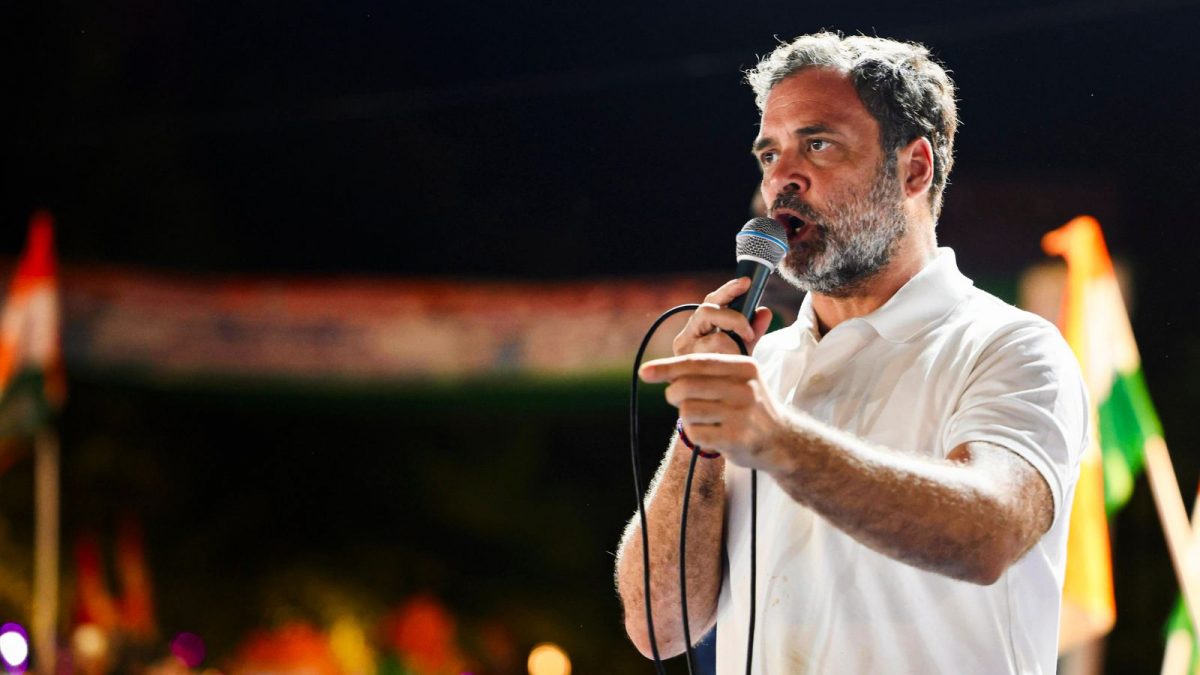
The Home Minister also had to contend with a sharp exchange involving the Leader of the Opposition Rahul Gandhi, who intervened to challenge Shah to a debate on his past allegations of institutional compromise. Shah retorted by stating that the opposition’s continuous, unfounded questioning of the fairness of elections, EVMs (introduced under Rajiv Gandhi), and VVPAT data has unfairly tarnished India’s image on the global stage. He pointed out that the BJP had lost elections without ever questioning the Election Commission’s integrity.
Furthermore, Shah waded into the debate surrounding the RSS, responding to a recent remark by Rahul Gandhi. The Home Minister staunchly defended the Rashtriya Swayamsevak Sangh, describing it as an organisation dedicated to making the “supreme sacrifice” for the nation, and criticised the Leader of the Opposition for his repeated, allegedly diversionary attacks on the socio-cultural body.
The minister also touched upon other ongoing controversies, including the Deepam row (a political storm over “judicial overreach” in a religious matter) and the opposition walkout during Vande Mataram recitation, criticising the INDIA bloc for disrespecting a national symbol and highlighting a perceived lack of commitment to democratic ethics. The tumultuous day in Parliament concluded immediately after Shah’s address, with the opposition walking out, indicating that the confrontation over national security and electoral integrity is set to dominate the remainder of the session.
 Click here to add News18 as your preferred news source on Google.
 December 10, 2025, 19:44 IST
Read More