
Last Updated:
Bhim Singh argues that these terms are not required and were inserted in an “undemocratic” fashion during the politically fraught period of the Emergency

The Supreme Court, in landmark judgments, has affirmed that the word ‘secular’ only makes explicit what was already implicit in the Constitution’s commitment to equality and freedom of religion. File image
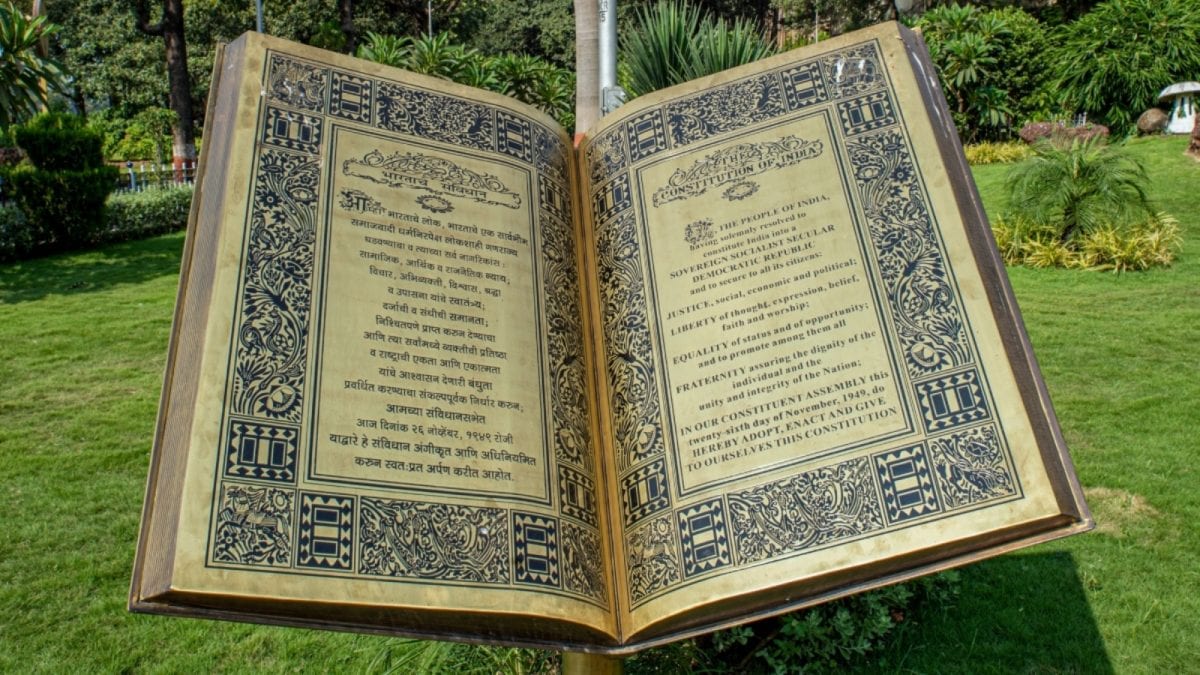
A new constitutional debate has been ignited in the Rajya Sabha by BJP MP Bhim Singh, who has introduced a Private Member’s Bill seeking to remove the words “secular” and “socialist” from the Preamble of the Constitution of India. The MP argues that these terms are not required and were inserted in an “undemocratic” fashion during the politically fraught period of the Emergency.
Bhim Singh contends that the insertion of these two words via the 42nd Constitutional Amendment Act of 1976 constituted an overreach by the executive. During the Emergency (1975-1977), key democratic processes, including parliamentary scrutiny, were severely curtailed, lending credence to the argument that the amendment lacked the necessary democratic mandate. The MP asserts that the essence of India’s constitutional structure—enshrined by its framers, including Dr BR Ambedkar—was already secular and democratic, making the explicit addition of these terms unnecessary and politically motivated.
This argument echoes a long-standing position held by certain sections of the political spectrum who view the 42nd Amendment, often dubbed the “Mini-Constitution” due to its sweeping changes, as illegitimate. They argue that the fundamental rights and directive principles already ensure social justice and religious freedom, rendering the specific words in the Preamble redundant.
Conversely, legal and constitutional experts widely regard the 42nd Amendment, despite its controversial timing, as fully integrated into the Basic Structure of the Constitution. Furthermore, the Supreme Court, in landmark judgments, has affirmed that the word “secular” only makes explicit what was already implicit in the Constitution’s commitment to equality and freedom of religion (Articles 14, 15, and 25). Any attempt to remove these words would require not only a constitutional amendment but would also almost certainly face rigorous judicial scrutiny under the Basic Structure doctrine established by the Kesavananda Bharati case.
The introduction of the Private Member’s Bill, while unlikely to be passed given the legislative process, succeeds in forcing a national conversation on the core ideological identity of the Republic of India, bringing the contentious legacy of the Emergency back into the political spotlight.
 Click here to add News18 as your preferred news source on Google.
 December 07, 2025, 01:00 IST
Read More