
As the southwest monsoon approaches its final stretch, India’s perennial river basins and highland catchments continue to deliver thunderous cascade d…
 1/8
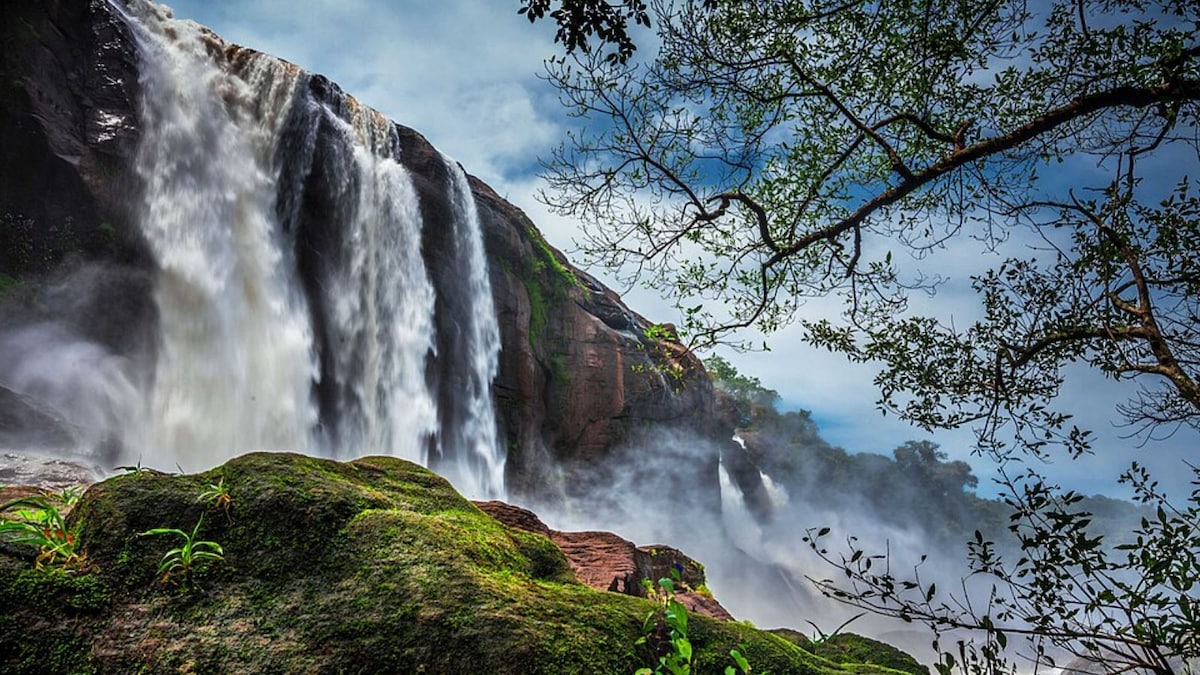
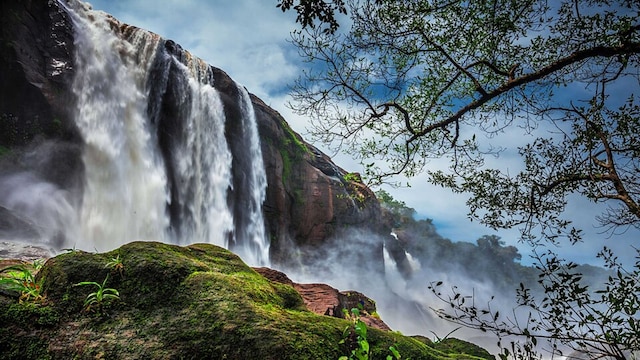
1/8Athirappilly Falls, Kerala | Famously featured as the real-world cinematic backdrop for the epic cliff ascent in Baahubali: The Beginning and Mani Ratnam’s ‘Barso Re’ in Guru, this roaring curtain cascade spans roughly 100 meters in width with a 25-meter vertical drop on the Chalakudy River in Thrissur district. Fed by steady reservoir releases from the upstream Poringalkuthu Dam, the river retains immense late-monsoon volume through October. It is located just 40 kilometres from Cochin International Airport and an easy taxi ride from Chalakudy Railway Station. (Image source: Wikimedia Commons)
 2/8
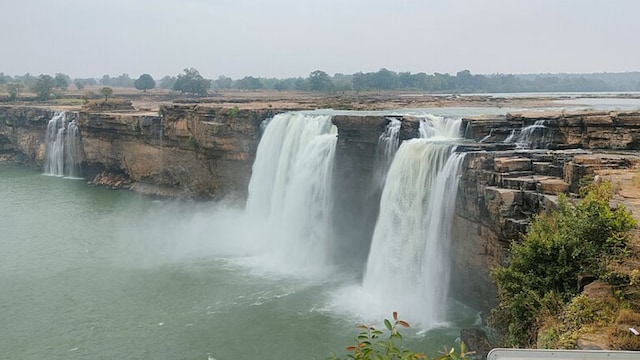
2/8Chitrakote Falls, Chhattisgarh | Often called the “Niagara of India” due to its sweeping horseshoe contour, Chitrakote stretches nearly 300 meters wide during late-season flood discharges as the Indravati River plunges 30 meters down a sheer cliff in Bastar district. Because it drains a massive central catchment across the Odisha and Chhattisgarh plateaus, the waterfall maintains its silt-laden, ochre roar well past mid-September. It is reachable via a smooth 38-kilometre highway drive west of Jagdalpur town and airport. (Image source: Wikimedia Commons)
 3/8
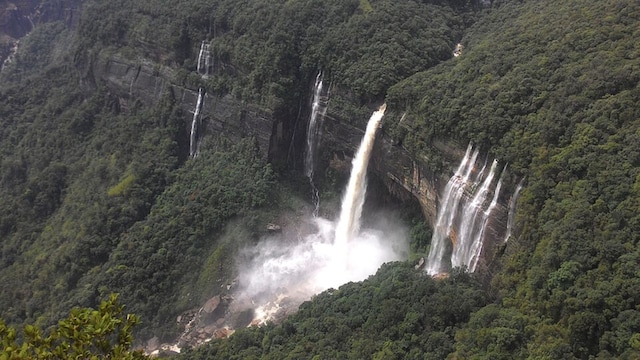
3/8Nohkalikai Falls, Meghalaya | Plunging 340 meters from a sheer limestone plateau into an emerald pool near Sohra in the East Khasi Hills, Nohkalikai is India’s tallest plunge waterfall and the setting of the tragic Khasi legend of Ka Likai. September is widely considered the sweet spot for visiting Sohra, as passing monsoon downpours keep the vertical white ribbon charged while clearer skies significantly reduce the dense fog that often conceals the gorge in July and August. The viewpoint is accessible by flying into Shillong or Guwahati Airport, followed by a scenic drive to Sohra and a short cab ride to the paved parking complex. (Image source: Wikimedia Commons)
 4/8
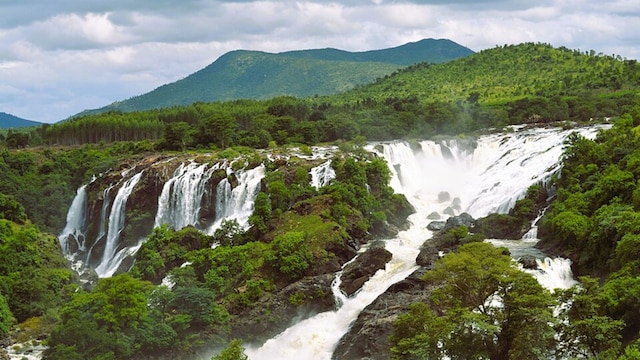
4/8Shivanasamudra Falls, Karnataka | Situated along the Kaveri River across Mandya and Chamarajanagar districts, the river divides around Shivanasamudra island to create two parallel torrents: the steep 98-meter drop of Gaganachukki (home to one of Asia’s earliest major hydroelectric stations built in 1902) and the wide, segmented fan of Bharachukki. Regulated outflows from the upstream Krishna Raja Sagara and Kabini reservoirs ensure powerful water levels well into the retreating monsoon season. Located roughly 130 kilometres south of Bengaluru, both cascades are reachable in under three hours via the Bengaluru-Mysuru Expressway. (Image source: Wikimedia Commons)
 5/8
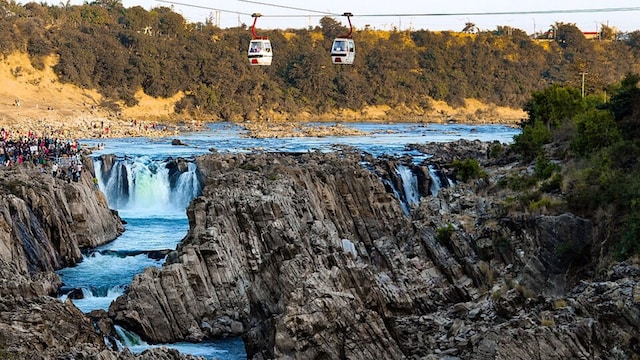
5/8Dhuandhar Falls, Madhya Pradesh | Famous for the iconic white marble rock backdrops seen in films like Asoka and Mohenjo Daro, this roughly 10-meter cascade on the Narmada River in Bhedaghat funnels colossal water volume through a narrow gorge, creating a continuous mist resembling rising smoke. As a massive perennial river, the Narmada guarantees heavy flow through September and October, best enjoyed from wide elevated promenades, riverside public viewing decks, or the overhead ropeway cable car. The site is located just 25 kilometres southwest of Jabalpur Junction and Dumna Airport, connected by road. (Image source: Wikimedia Commons)
 6/8
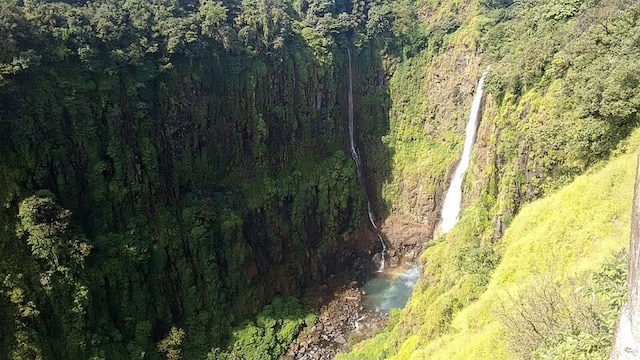
6/8Thoseghar Waterfalls, Maharashtra | Tucked into the steep Konkan edge of the Western Ghats in Satara district, Thoseghar is a network of cascades highlighted by a 200-meter vertical drop plunging into a deep, forested ravine. Mid-to-late September is prime visiting time because the Joint Forest Management Committee’s paved stone pathways and railed viewpoint platforms remain open while the surrounding hills line up with the nearby wildflower bloom. The falls are located roughly 25 kilometres from Satara town and railway station, accessible via an easy drive across the windmill-dotted Chalkewadi plateau. (Image source: Wikimedia Commons)
 7/8
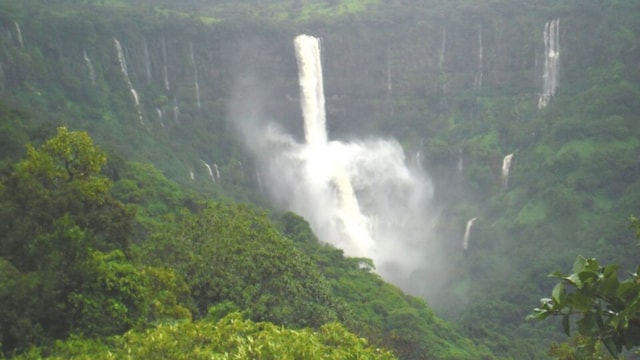
7/8Bhambavli Vajrai Waterfall, Maharashtra | Plunging roughly 260 meters across three tiers on the Urmodi River, Bhambavli Vajrai drops down a sheer green cliff face near the UNESCO-listed Kaas Plateau in Satara district. September offers the ideal travel window: the waterfall retains its vigorous monsoon plunge, and visitors can pair it directly with the peak flowering season of the Kaas flower carpets. A marked one-kilometre forest trail leads visitors to a designated, barricaded cliff viewpoint just 27 kilometres from Satara town along Kaas Road. (Image source: Wikimedia Commons)
 8/8
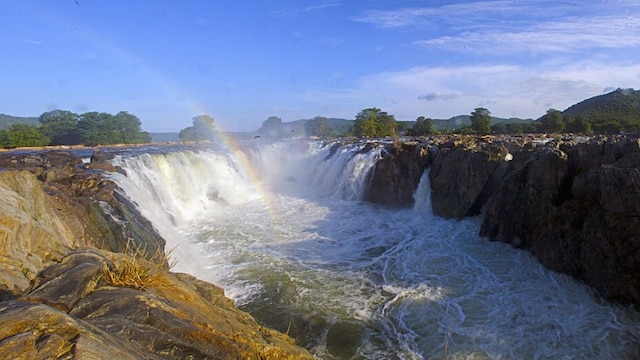
8/8Hogenakkal Falls, Tamil Nadu | Fed by the Kaveri River in Dharmapuri district, Hogenakkal—frequently used as a dramatic river filming location in movies like Mani Ratnam’s Iruvar and Raavan—plunges through deep carbonatite rock fractures into a churning, multi-channelled gorge. Sustained by late-season upstream reservoir discharges along the Karnataka–Tamil Nadu border, the river continues to surge with high velocity through October before filling the Mettur Dam downstream. Although coracle boat rides and water bathing are halted by local authorities during heavy flood releases, concrete pedestrian watchtowers and elevated riverbank promenades remain open so visitors can safely experience the force of the water, located 60 kilometres from Salem and 150 kilometres from Bengaluru. (Image source: Wikimedia Commons)