
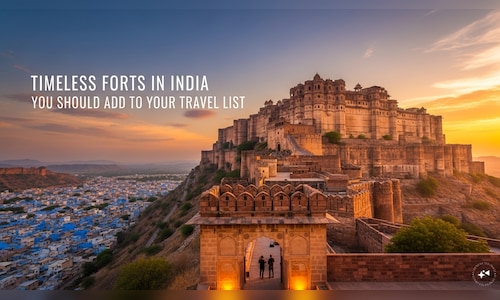
India’s timeless forts showcase centuries of history, royal grandeur, and architectural brilliance. From the Mughal-era Red Fort to the hilltop Taragarh Fort in Rajasthan, these iconic landmarks offer a glimpse into the country’s rich cultural heritage — perfect for history lovers and travel enthusiasts.

 1 / 6
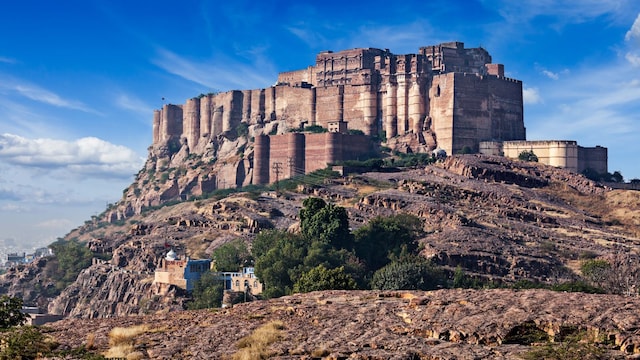
1 / 6India’s forts are more than just historic monuments. They reflect centuries of royal history, architectural brilliance and changing empires. From hilltop strongholds to colonial-era forts, these landmarks continue to attract travellers looking to explore the country’s rich past. Here are five timeless forts in India that deserve a spot on your travel bucket list. (Image: Canva)
 2 / 6
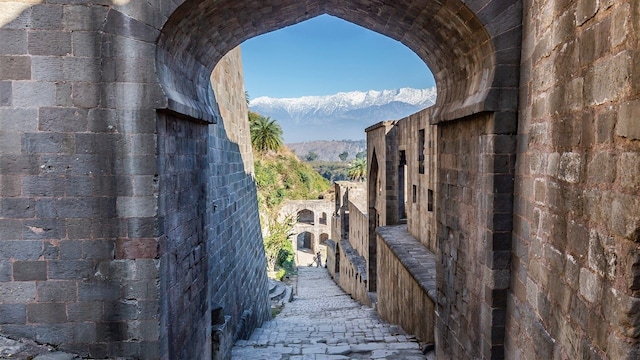
2 / 61. Kangra Fort, Himachal Pradesh | Located around 20 km from Dharamshala, Kangra Fort is considered one of the oldest forts in the Himalayas. The fort is linked to the ancient Katoch dynasty, which traces its roots to the Trigarta Kingdom. Built using locally available stone and sandstone, the massive structure has witnessed the rule of the Mughals, Sikhs and the British over the centuries. Today, the Archaeological Survey of India protects the fort, which offers panoramic views of the surrounding hills and valleys.
 3 / 6
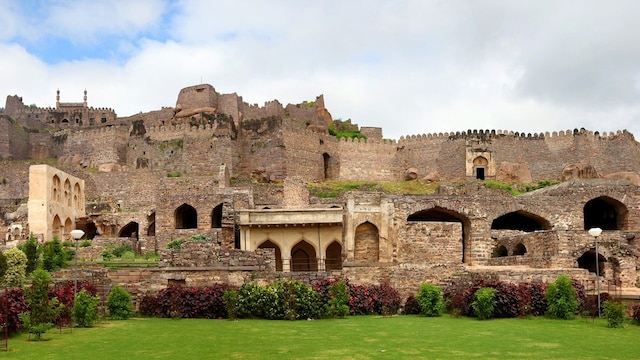
3 / 62. Golconda Fort, Hyderabad | Originally built by the Kakatiya dynasty in the 12th century, Golconda Fort was later expanded by the Bahmani rulers and the Qutb Shahi dynasty between the 14th and 17th centuries. The fort became an important centre for trade, culture and administration, especially during Hyderabad’s famous diamond trade era. Its architecture blends Persian, Islamic and Hindu influences and includes mounted cannons, drawbridges and eight grand gateways, including the well-known Fateh Darwaza.
 4 / 6
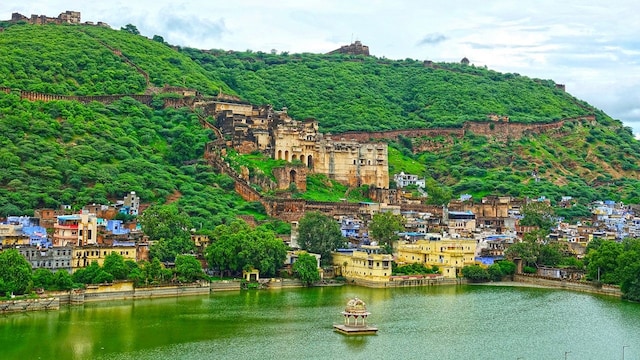
4 / 63. Taragarh Fort, Bundi | Perched on a steep hill overlooking Bundi, Taragarh Fort is considered one of Rajasthan’s oldest forts. Its origins are linked to the Hada Chauhan Rajputs, with major construction and expansion taking place between the 13th and 14th centuries. Over the years, the fort witnessed conflicts involving Rajput rulers, the Mughals and later the British. The fort is also known for its network of tunnels and reservoirs that were once used during battles and emergencies.
 5 / 6
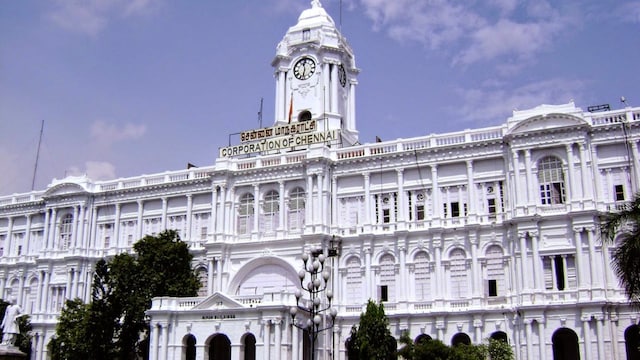
5 / 64. Fort St. George, Chennai | Built in 1644, Fort St. George was the first English fortress in India and later became the headquarters of the East India Company in southern India. The fort played a major role in the growth of Chennai during the colonial era. Important attractions inside the complex include St. Mary’s Church, considered the oldest surviving Anglican church in India, the Fort Museum and Clive House.
 6 / 6
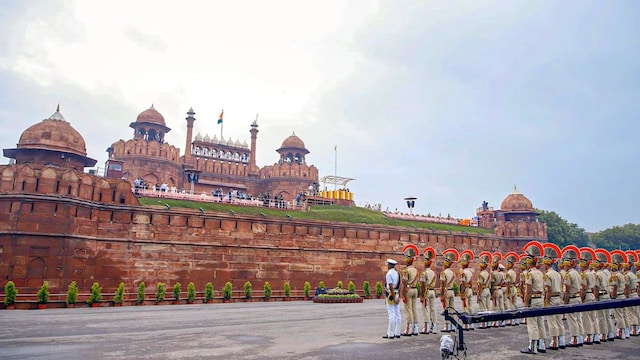
6 / 65. Red Fort, Delhi | Built in 1639 by Mughal emperor Shah Jahan after shifting his capital from Agra to Delhi, the Red Fort became the centre of Mughal power for nearly 200 years. Designed by architect Ahmad Lahori, the fort combines Persian, Timurid and Indian architectural styles. In 1947, Jawaharlal Nehru hoisted the Indian tricolour at Lahori Gate to mark India’s Independence. The fort was declared a UNESCO World Heritage Site in 2007 and remains one of the country’s most visited monuments.