
Last Updated:
The poll results point to a broader political reality: elections are increasingly being decided by efficiency in candidate selection, booth-level mobilisation, and vote transfer



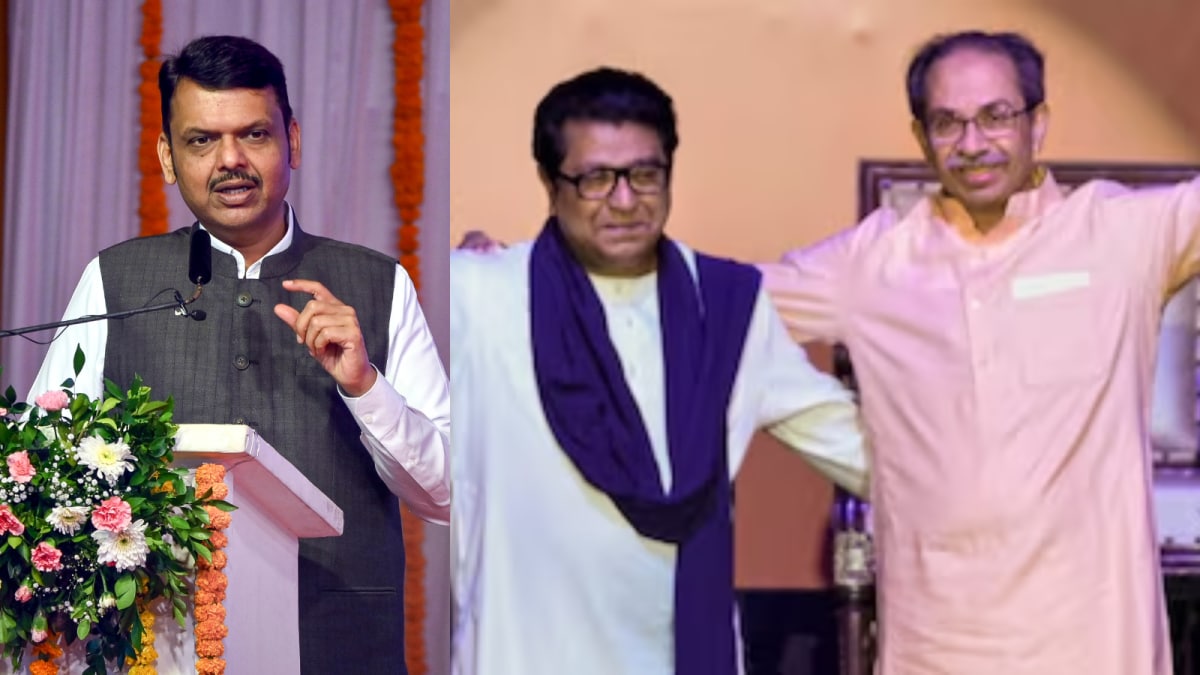
Maharashtra CM Devendra Fadnavis (L) and MNS chief Raj Thackeray with Shiv Sena (UBT) chief Uddhav Thackeray. File image
The 2026 Maharashtra municipal elections have delivered a decisive verdict, with the Bharatiya Janata Party (BJP) emerging as the most effective and expansive political force across the state, including in the high-stakes Brihanmumbai Municipal Corporation (BMC).
In Mumbai, the BJP recorded the highest strike rate among all parties, winning 89 of the 135 seats it contested—a success rate of 66 per cent. The party also led the vote-share chart with 45.39 per cent, underlining its ability to convert popular support into seats in a fiercely competitive civic contest.
The Uddhav Thackeray-led Shiv Sena (UBT), despite contesting the maximum number of seats (160), secured 65 victories, translating into a strike rate of 40.62 per cent. The Eknath Shinde-led Shiv Sena won 29 of the 90 seats it contested, with a strike rate of 32.22 per cent. Congress managed to win only 24 of its 151 seats, while smaller parties such as the MNS and the Sharad Pawar faction of the NCP failed to register significant gains.
Vote-share figures in Mumbai broadly mirrored the seat distribution. After the BJP, UBT stood second with 27.37 per cent of the votes, followed by the Shinde-led Shiv Sena at 10.28 per cent and Congress at 9.41 per cent. The MNS slipped to under 3 per cent, highlighting its continued electoral decline in the city.
Statewide trends further reinforce the BJP’s growing dominance. Compared to the 2017 municipal elections, the party increased its tally from 1,125 seats to 1,425 in 2026—a substantial expansion at a time when most rivals suffered losses. The undivided Shiv Sena’s 2017 total of 501 seats now stands fragmented between the Shinde faction (399) and UBT (154), while Congress fell from 486 seats to 324.
The Nationalist Congress Party registered the sharpest decline, dropping from 309 seats in 2017 to 167 this time, with the Sharad Pawar faction securing just 36 seats. The Maharashtra Navnirman Sena halved its presence, while independents saw a dramatic fall, indicating voter consolidation around organised parties.
Strike-rate data across Maharashtra offers a clearer picture of organisational strength. The BJP topped the chart with a success rate of 64.51 per cent, winning 1,425 of the 2,209 seats it contested. Congress, despite its reduced numbers, posted a relatively higher strike rate of 23.84 per cent, outperforming both factions of the Shiv Sena and the NCP. AIMIM emerged as a notable niche player with a strike rate of nearly 30 per cent, while the Aam Aadmi Party failed to win a single seat despite contesting extensively.
The municipal results point to a broader political reality: elections are increasingly being decided by efficiency in candidate selection, booth-level mobilisation, and vote transfer. In both Mumbai and the wider state, the BJP’s superior strike rate and vote conversion have placed it firmly at the centre of Maharashtra’s civic politics, while a fragmented opposition continues to struggle to translate presence into power.
January 17, 2026, 17:45 IST
Read More