
Last Updated:
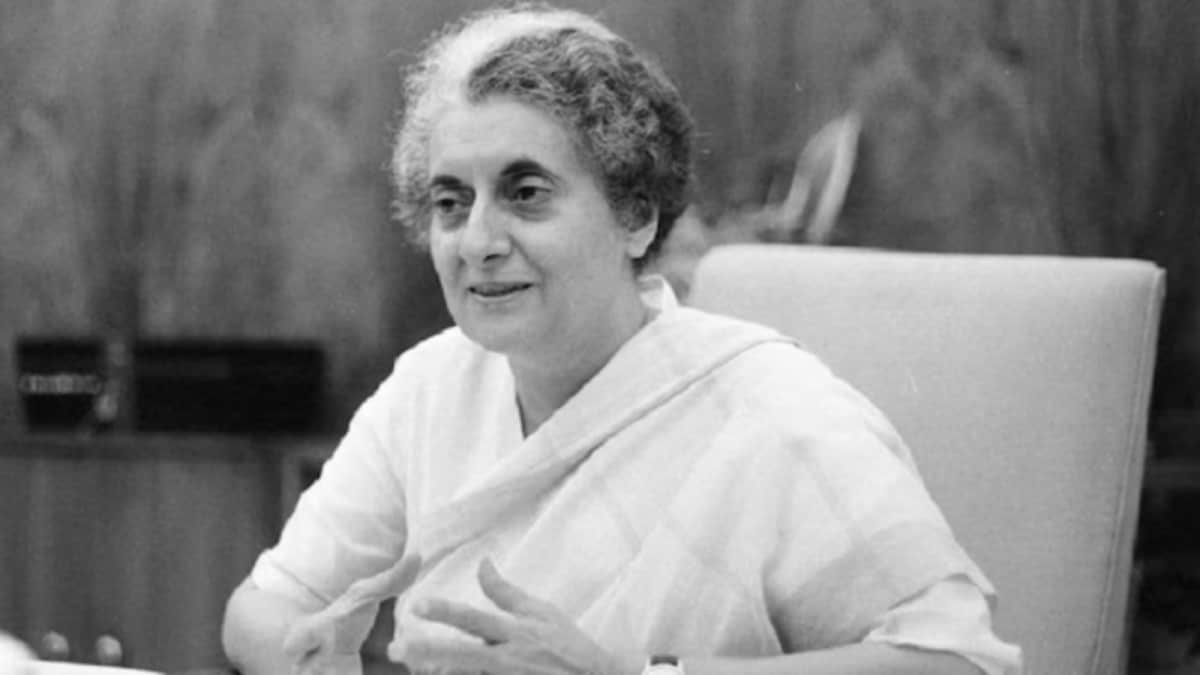
Indira Gandhi’s decision in 1978 remains a textbook example of political resilience; a leader rebuilding both her party and her national relevance from the ashes of defeat


As distances grew between Indira Gandhi and the Congress leadership under Devkant Barua and later Brahmananda Reddy, the party but split into two parts. (File Photo)
January 2, 1978 stands out as a pivotal moment in the country’s political history. Barely a year after the Emergency ended and the Congress party was voted out of power in the 1977 general elections, Indira Gandhi made a dramatic comeback move as she broke away from the parent organisation to form a new party, the Congress (I), or Congress (Indira), and declaring herself its president.
The shock defeat of 1977, which saw the Janata Party form the first non-Congress government at the Centre, triggered deep churn within the Congress ranks. Senior leaders questioned both the leadership and the political direction of the party. As distances grew between Indira Gandhi and the Congress leadership under Devkant Barua and later Brahmananda Reddy, the party but split into two parts, one backing collective organisational control, the other rallying behind Indira Gandhi, who still enjoyed significant public goodwill.
Amid rising dissent and open confrontation in several states, Indira Gandhi chose separation over compromise. On January 2, 1978, she announced the birth of Congress (I), asserting that the new party would uphold Congress ideology, social justice, the cause of the poor and a strong, centralised state. She made it equally clear that the party would function firmly under her leadership.
Behind the decision was a calculated political strategy. Indira Gandhi recognised that while the organisational machinery was weakened, her personal connect with the masses remained intact. She criss-crossed the country, addressed rallies and projected Congress (I) as the true inheritor of the Congress legacy, one aligned with farmers, workers and marginalised communities.
At the same time, the Janata Party government at the Centre was battling internal rifts and leadership turmoil. Gandhi attacked the ruling coalition over price rise, unemployment and what she called administrative drift. As public disillusionment with the Janata experiment grew, the space for her political return widened.
The impact of Congress (I) was swift. Within months, the party performed strongly in several by-elections, particularly in Karnataka and Andhra Pradesh, reinforcing the impression that Indira Gandhi still commanded mass support. By 1980, the tide had turned completely; Congress (I) swept back to power in the general elections and Indira Gandhi returned as Prime Minister. Over time, Congress (I) once again came to be recognised simply as the Indian National Congress, while older Congress factions faded from the national stage.
January 02, 2026, 18:40 IST
Read More