
The company has reportedly initiated consultations under Section 189 of South Africa’s Labour Relations Act over the proposed retrenchments, even though it has reportedly indicated that it will not implement any final decision until consultations with employees and their representatives are complete.
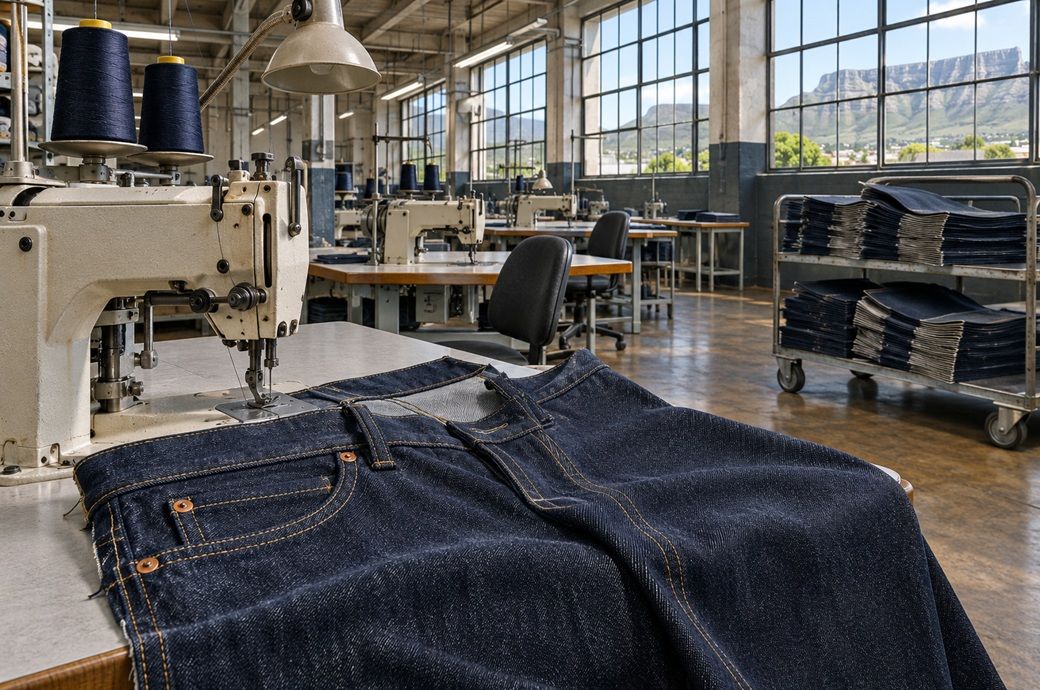
Levi Strauss has proposed closing its Epping facility in Cape Town, putting more than 400 jobs at risk, as per reports.
The company has begun Section 189 consultations under South Africa’s Labour Relations Act and says no final decision will be made before talks end.
AGOA uncertainty, rising costs and underused capacity are cited as pressures on local clothing and textile competitiveness.
Although the specific reasons behind the proposed closure have not been fully established publicly, industry stakeholders quoted in media reports do not believe it is linked to South Africa’s impending loss of benefits under the African Growth and Opportunity Act (AGOA).
Nevertheless, uncertainty over South Africa’s continued eligibility for AGOA benefits adds another layer of concern for stakeholders in the clothing and textile industry, particularly regarding export competitiveness, market access and investor confidence.
Meanwhile, broader concerns also seem to be coming into focus regarding the industry’s manufacturing competitiveness, investor confidence, and long-term prospects.
The Southern African Clothing and Textile Workers’ Union (SACTWU) has reportedly expressed concern about the prospect of prolonged unemployment, particularly after affected workers exhaust their severance payments, even as it has called for alternative employment opportunities and efforts to preserve manufacturing capacity.
The closure could also affect suppliers, service providers and other businesses linked to the facility.
Meanwhile, some stakeholders have highlighted how rising costs are eroding the competitiveness of local manufacturers, making it increasingly difficult for businesses to operate at scale and attract investment.
Electricity, logistics, labour, factory overheads, and productivity all influence manufacturing costs, and their combined impact determines whether production remains commercially viable, especially in product categories characterised by narrow margins.
Capacity utilisation is another area of consideration. Manufacturers need sufficient production volumes to spread fixed costs while maintaining productivity, quality, and delivery standards. Underutilised facilities, on the other hand, raise production costs and weaken competitiveness.
The Cape Chamber’s Scaled Labour-Intensive Manufacturing (SLIM) industrial parks initiative reportedly seeks to address some of these constraints through better asset utilisation, shared infrastructure, and more efficient factory operations. Its proposed model reportedly includes alternative working arrangements to increase production hours without compromising working conditions or creating permanent dependence on subsidies.
The proposed closure has also brought attention to the future of local manufacturing arrangements. Media reports indicate that the Cape Chamber believes alternative denim manufacturing options are available in South Africa and hopes Levi Strauss will continue sourcing from local manufacturers.
South Africa has an established clothing and textile manufacturing base. InvestSA describes the country’s clothing, textile, footwear and leather (CTFL) industry as a mature sector comprising approximately 4,500 manufacturers, supported by established wholesale and retail businesses. Preserving and strengthening this industrial base, stakeholders underline, will require sustained investment in technology, productivity, and efficient production systems, as well as an operating environment that enables manufacturers to achieve economies of scale and compete globally.
While minimising the impact on affected workers remains the immediate priority, the situation also provides an opportunity to reflect on the broader challenges facing the industry, particularly the need to create conditions in which domestic manufacturers can remain competitive, attract investment and sustain production.
Fibre2Fashion News Desk (DR)