
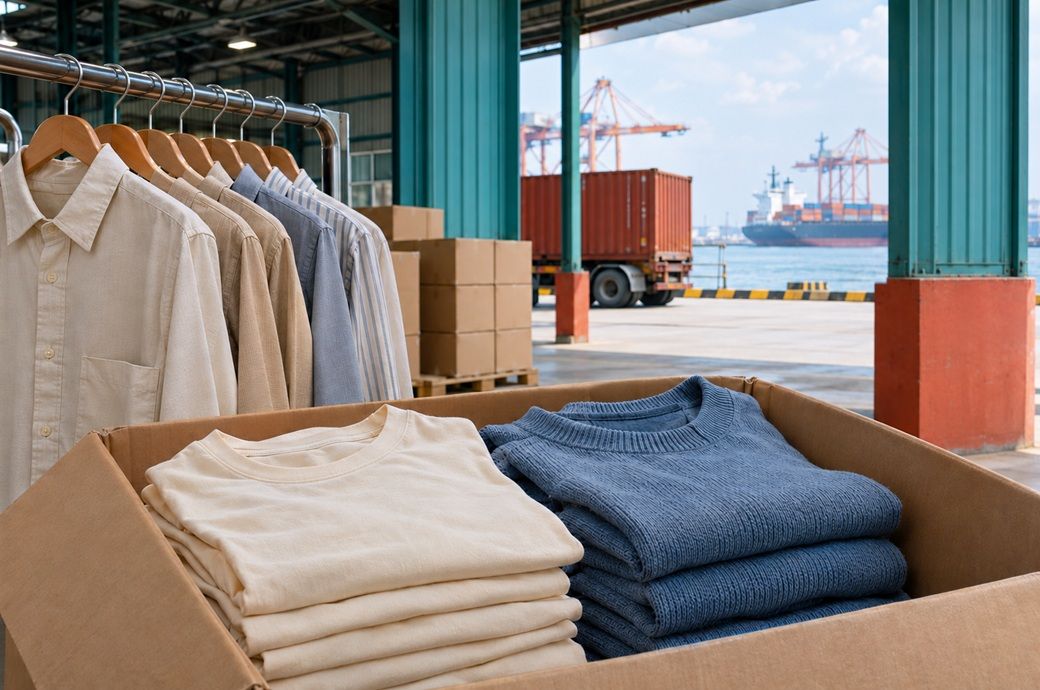
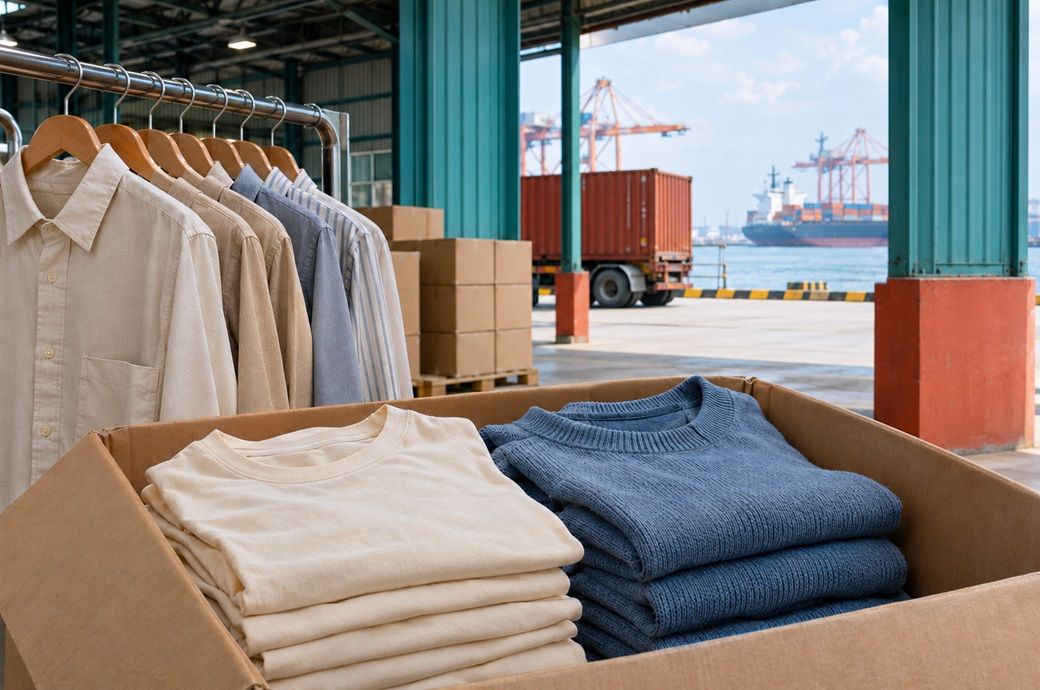
According to figures cited in media reports, Bangladesh’s RMG exports to non-traditional markets reportedly increased by 9.30 per cent during July–October of FY2026–27, reaching approximately $2.37 billion from $2.17 billion in the corresponding period a year earlier. Their share of the country’s total RMG exports reportedly rose to 17.25 per cent from 16.70 per cent.
Bangladesh’s RMG exports to non-traditional markets rose 9.30 per cent to about $2.37 billion in July-October FY2026–27, lifting their share of total RMG exports to 17.25 per cent.
Turkiye drove the increase, with shipments surging 107.05 per cent to $206.5 million and accounting for an estimated 53 per cent of overall growth.
Japan remained the top non-traditional market; India fell.
Turkiye recorded the strongest growth among the major destinations, with Bangladesh’s garment exports to the country reportedly surging by 107.05 per cent to approximately $206.5 million from $99.7 million.
The increase of approximately $106.8 million accounted for an estimated 53 per cent of the overall growth in RMG exports to non-traditional markets during the period.
The growth was reportedly evident across both major product categories. Knitwear shipments to Turkiye reportedly increased by 117.11 per cent to approximately $127.1 million, while woven garment exports reportedly rose by 92.74 per cent to around $79.3 million.
The strong performance continued in October, when Bangladesh’s RMG shipments to Turkiye reportedly reached approximately $59.8 million, marking a year-on-year increase of 75.96 per cent.
Meanwhile, Japan remained the largest non-traditional destination for Bangladeshi garments, with exports reportedly reaching approximately $437.3 million during July–October, up by 2.40 per cent from the corresponding period a year earlier. Japan accounted for around 18.44 per cent of Bangladesh’s total RMG exports to non-traditional markets.
Australia followed, with reported exports of approximately $264 million, registering growth of 3.01 per cent, while shipments to South Korea reportedly increased by 5.82 per cent to $151.3 million.
In contrast, Bangladesh’s RMG exports to India reportedly declined by 5.38 per cent to approximately $250.9 million during the four months.
Several other destinations also recorded positive growth, according to the reports. Exports to the United Arab Emirates (UAE) reportedly increased by 19.89 per cent, while shipments to Mexico and Brazil rose by 15.69 per cent and 36.79 per cent, respectively. Export earnings from these markets were reported at approximately $101.4 million, $113.3 million and $78.3 million, respectively.
Beyond the five largest non-traditional destinations, exports to other markets reportedly increased by 8.48 per cent to approximately $1.06 billion, accounting for around 44.76 per cent of total RMG exports to these markets.
Turkiye’s growing importance as a destination for Bangladeshi garments also coincides with renewed efforts by Dhaka and Ankara to deepen their longstanding economic relationship through greater trade facilitation and investment. The two countries have reportedly set an ambitious target of raising bilateral trade to $2.0 billion from the current level of approximately $1.3 billion.
Bangladesh is also seeking to advance discussions on a proposed free trade agreement (FTA) with Turkiye to secure improved market access for its products.
Earlier, industry representatives also pointed to changes in Turkiye’s domestic garment industry as a potential source of opportunity. Media reports quoting an industry representative have suggested that rising incomes and changing employment preferences are making it increasingly difficult for some garment manufacturers to attract workers, potentially creating production gaps that overseas suppliers could help fill.
Whether the sharp increase in shipments to Turkiye can be sustained in the coming months remains to be seen. Equally important will be Bangladesh’s ability to maintain growth across other non-traditional destinations, ensuring that export diversification becomes a broader and more sustainable trend rather than depending disproportionately on a handful of markets.
Fibre2Fashion News Desk (DR)