
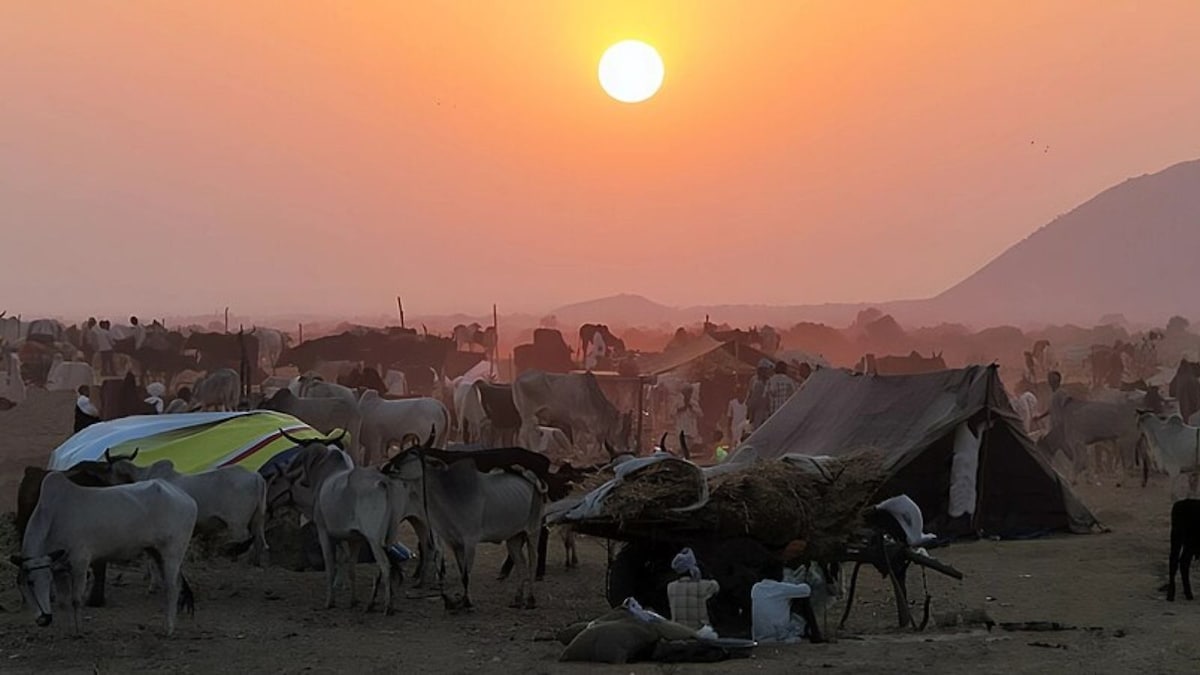
Rajasthan’s annual Pushkar Camel Fair is set to return from November 17 to November 24, 2026, bringing a blend of pastoral trade, rural sports, and temple rituals to the edges of the Thar Desert. While the formal festivities organised by the state tourism department span eight days, the gathering begins unofficially on November 10, when herders and horse breeders begin pitching camp across the dunes. The fair concludes on November 24 to mark Kartik Purnima, the auspicious full moon night when thousands of Hindu pilgrims arrive for a ritual dip in Pushkar Lake.
The 2026 edition introduces several new competitive showcases alongside traditional livestock trading. In response to a long-term decline in indigenous camel numbers, organisers have expanded the profile of equestrian events. For the first time, the fair will host a 60-kilometre endurance horse race divided into three 20-kilometre loops, with mandatory veterinary checks assessing heart rate, dehydration levels, and physical recovery after each leg.
The equestrian schedule also features a Rewal gait competition over a one-kilometre track to evaluate the stamina and signature pacing of Marwari horses, accompanied by trick-riding exhibitions. In addition, the animal husbandry department is reviewing plans for a formal camel-milk yield competition to award owners of top-producing livestock.
Also Read: From Bharatpur to Chilika: Where to see migratory birds in India this winter
The district administration has structured the official calendar into livestock showcases, cultural events, and religious ceremonies. The fair opens at 10 am on November 17 with an inaugural puja, flag hoisting, and nagada drum performances, followed by a Mandana folk art competition and an exhibition football match titled ‘Chak De Rajasthan’ between local players and foreign tourists. Subsequent mornings feature traditional games across the main fairgrounds: street games such as langdi taang, satoliya, and gilli-danda on November 18; kabaddi matches and horse dance showcases on November 19; and inter-panchayat rural sports finals running through November 21.
Heritage competitions remain a core fixture through the middle of the week. Camel decoration pageants and camel dance contests are scheduled for November 18, leading into the annual moustache contest and tourist turban-tying matches on the morning of November 21. Women’s rural contests, including water-pot balancing races and musical chairs, take place on November 22.
The cultural programme peaks on the morning of November 23 with the mela’s marquee novelty event: an exhibition cricket match played in period costumes inspired by the film ‘Lagaan’. The fair draws to a close on the morning of November 24 with a mega cultural procession, the Kala Jatha Yatra, and final prize distributions. A separate Bollywood music night is also being planned, with the date and performing artist to be announced once finalised.
Parallel to the fairgrounds, Pushkar’s religious traditions will run on a daily schedule along the 52 ghats of Pushkar Lake. Anchored by the historic 14th-century Brahma Temple, the water bodies will host the Pushkar Abhishek, Rangoli displays, and the evening Deepdan and Maha Aarti every day at 6 pm. The religious observances culminate on November 24 with the Kartik snan, when devotees gather before dawn for the ritual cleansing bath. To manage crowd safety during peak bathing days, the district administration is deploying State Disaster Response Force personnel, Civil Defence teams, and executive magistrates, alongside safety ropes and warning signage across all 52 ghats.
For travellers planning the route, connectivity centres on Ajmer and Jaipur. Pushkar does not have an active commercial airport; travellers typically arrive via Jaipur International Airport, located roughly 140 kilometres away, requiring a three- to four-hour road transfer. Kishangarh Airport near Ajmer sits roughly 45 kilometres away, though commercial flight options remain limited. By rail, Ajmer Junction is 14 kilometres from town and connects directly to Delhi, Mumbai, and Jaipur via regular express and Vande Bharat services.
Local authorities will deploy more than 2,000 police personnel and enforce a dedicated one-way traffic loop across the winding mountain pass between Ajmer and Pushkar to handle transit volume. Accommodations range from heritage properties overlooking the water to luxury tented colonies set up along the outer desert perimeter. Visitors travelling during the fair window should account for desert temperature swings, with daytime highs around 28 degrees Celsius dropping to overnight lows of 12 degrees Celsius.
Also Read: World’s largest bird sculpture: A traveller’s guide to Kerala’s Jatayu Earth Centre