
For Indian travellers, a holiday is increasingly about more than choosing a destination and taking a break. Wellness, value, digital detox, shopping and experiences are all becoming part of the decision-making process.
According to Skyscanner’s travel trends report, 58% of Indians plan to travel abroad more in 2027, even as consumer spending remains slower. At the same time, value is becoming an important factor in deciding where to go. Two out of three travellers, or 67%, have changed or considered changing a holiday destination for a better deal.
So, what exactly are Indian travellers looking for in 2027?
CNBC-TV18 spoke to Neel Ghose, Head of Skyscanner India, about the destinations attracting interest and the trends shaping how Indians plan and experience their holidays.
What are Indians looking for from travel in 2027?
One of the clearest changes is that travellers are looking beyond the destination itself.
Ghose said travel is increasingly about the experience, purpose and value a holiday offers. That is reflected in the destinations attracting interest on Skyscanner, with some less conventional names appearing at the top of the list.
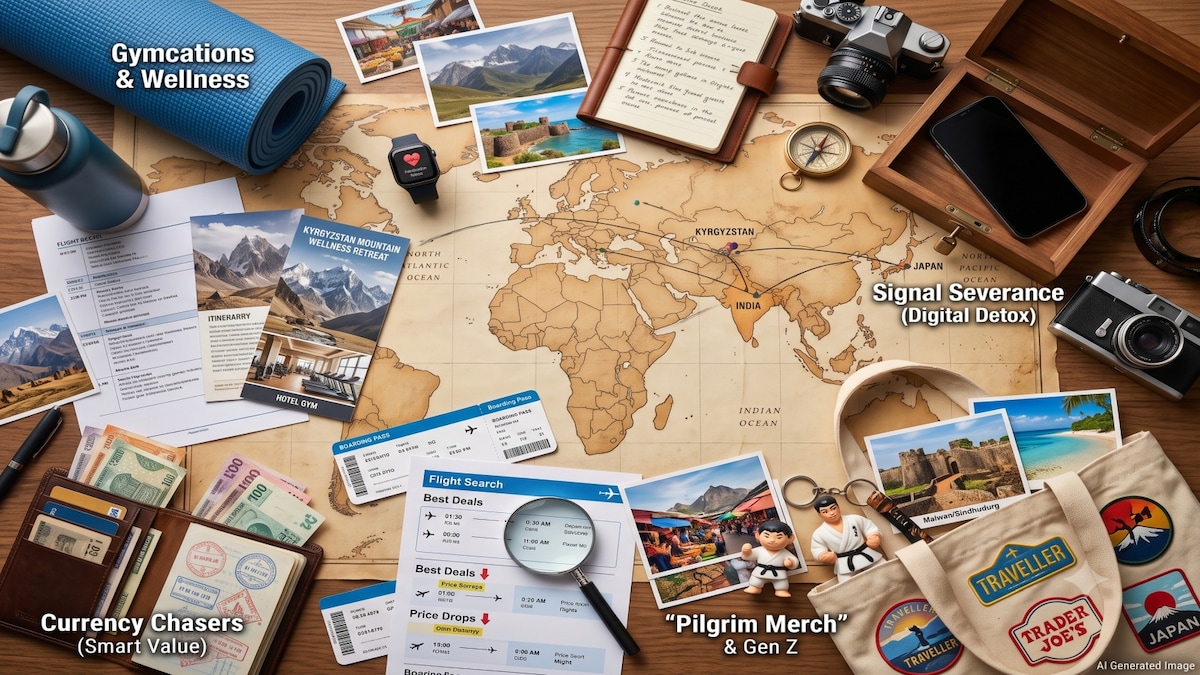
Bishkek in Kyrgyzstan is the top destination in Skyscanner’s list for Indian travellers for 2027, with searches up 748% year on year, according to Ghose. He said the destination is known for the Tien Shan Mountains and its vibrant market life.
Rupsi in Assam is second, with searches rising 502% year on year. Ghose said it was earlier a World War II commercial field and was transformed into an airport in 2021.
The other destinations in the top five are Okinawa in Japan, Malwan in India and Tirana in Albania.
Okinawa is known as a tropical destination and as the home of karate, while Ghose described Malwan as a quieter version of Goa, pointing to Sindhudurg Fort, which was made by Chhatrapati Shivaji.
The list suggests that travellers are not necessarily sticking to the most familiar holiday destinations when planning their next trip.
Why are wellness and ‘gymcations’ becoming part of holidays?
For some travellers, a holiday no longer means putting their usual routines on hold.
Ghose said 91% of Skyscanner’s travellers are looking for hotels that offer wellness options. That includes state-of-the-art gyms, nutrient-heavy breakfasts and other wellness facilities.
The trend is not simply about going on holiday to exercise. It is about maintaining aspects of everyday life while travelling.
“Travellers want to travel and replicate the way they live,” Ghose said.
That helps explain the rise of what is being described as “gymcations”. The gym, food and other wellness facilities are becoming part of what travellers consider when choosing accommodation.
Why do travellers want to disconnect?
At the same time, some travellers are looking for the opposite of constant connectivity.
Ghose’s favourite trend from the report is “signal severance”, which refers to taking a break from the digital world.
Two out of three Indian travellers, according to Ghose, want a digital detox. They want to step away from scrolling, messages, emails and WhatsApp and spend time reconnecting with nature.
The trend is being driven by Gen Z and is also being adopted by other travellers.
The contradiction is notable: travellers want to take elements of their normal lifestyle with them, such as fitness and wellness, while also looking for a deliberate break from the online part of that lifestyle.
Why is value influencing where Indians travel?
The destination is also becoming more flexible when the price or overall value is right.
Ghose described “currency chasers” as travellers who want to get more out of their money while travelling. He said people are gravitating towards destinations in Central Asia and Eastern Asia, including Japan and Vietnam, where they believe they can get better value.
That behaviour is reflected in the 67% figure from the Skyscanner report: two out of three travellers have changed or considered changing a destination for a better deal.
People don’t just want to travel more but they also want to spend betterNEEL GHOSE, HEAD, SKYSCANNER INDIA
The implication is straightforward. Travellers may have a destination in mind, but they are increasingly prepared to change those plans if another place offers a better experience for the money.
How is Gen Z changing the way Indians travel?
Gen Z is becoming an important influence on Indian travel, according to Ghose. He said the generation accounts for almost one in four Indians and is helping define how Indian travellers travel.
For Gen Z, travel is closely linked to lifestyle. That can mean spending more time travelling, looking for new experiences or finding ways to disconnect from the online world.
Ghose said 45% of Gen Z travellers want to adopt a job or career that allows them to travel more or move around the world.
Travel is also being treated as a priority worth setting money aside for. According to Ghose, one in three Gen Z travellers considers travel an investment alongside more traditional forms of saving and investment.
That changes the role of travel in their lives. It is not necessarily an occasional break; for some younger travellers, it is something they actively plan and budget for.
What is ‘Pilgrim merch’?
For Gen Z, the experience can also include bringing back something closely associated with the destination.
Ghose described this as “Pilgrim merch”. The idea is to travel somewhere with the specific aim of acquiring something that defines that place and then making an experience around it.
He gave the example of travellers seeking bespoke tote bags from convenience stores such as Trader Joe’s.
In this case, the purchase is not simply a souvenir. It becomes part of the reason for the trip and something that carries the memory of the destination afterwards.
Which destinations are offering better value?
The search for value is also showing up in individual destinations.
Ghose highlighted Jaisalmer, where he said prices have fallen 43% year on year. He said travellers are discovering Suryagarh as well as the Golden Fort.
Tashkent in Uzbekistan has seen a 30% year-on-year decline, according to Ghose.
For travellers focused on getting more for their money, these changes can make destinations more attractive.
How can travellers find cheaper flights?
Ghose’s advice for travellers looking for better deals is to remain flexible.
He said Wednesday has been the best day to book the cheapest flights on Skyscanner. But he believes flexibility around the destination, travel dates and timing can be more useful than sticking rigidly to one plan.
Skyscanner’s “price drops” feature is another option. Ghose said it surfaces flight routes where fares have fallen more than 20% from the previous week.
For travellers willing to change where or when they travel, that flexibility can open up more options.
What does this say about Indian travel in 2027?
The trends described by Ghose suggest that Indian travellers are becoming more specific about what they want from a holiday.
For some, that means a hotel with a proper gym and wellness facilities. For others, it means switching off from the digital world. Value is another major consideration, with travellers willing to reconsider their destination if they can get more for their money.

From gymcations to ‘currency chasers’: How Indians will travel in 2027
Gen Z is pushing some of these preferences further, treating travel as a priority, seeking careers that allow greater mobility and turning even purchases associated with a destination into part of the travel experience.
The result is a holiday that is less about simply going somewhere and more about what the traveller wants to get out of being there.
As Ghose put it: “I think the travel trends are here to stay.”
This is the excerpt of the interview
Question
I was going through the report. It’s quite interesting, and like I said, travel is something that everybody looks forward to. So I want to understand from you what the number one destination that has emerged is as far as Indians are concerned, and if you could help us with Skyscanner’s top five destinations for 2027.
Answer:
I think India has recently become Skyscanner’s largest market now globally. So this report is very meaningful to us because it’s actually like getting a bird’s-eye view of how our travellers are moving around. The number one destination is actually quite a surprise. It’s Bishkek in Kyrgyzstan, and searches on Skyscanner have gone up 748% year on year. This is a place which is known for the Tien Shan Mountains and just a very vibrant market life, and that’s way up. The number two is actually again a place which was probably not known three years back. It’s Rupsi in Assam, and Rupsi has grown 502% year on year. It was earlier a World War II commercial field, and now they have transformed that into an airport in 2021. The other ones which stand out are Okinawa in Japan, Malwan in India and Tirana in Albania. Okinawa is a tropical place in Japan, which is also the home of karate, and Malwan is a quieter version of Goa, which has Sindhudurg Fort, which was actually made by Chhatrapati Shivaji. So these are the top five when it comes to Indian travellers and what they are looking for on Skyscanner for 2027.
Question
A friend recently came back from a vacation, and I asked him what was the best part about his vacation—and he said, “I worked out every day, and that was my trip.” So I wanted to understand from you: are gymcations actually a real thing now, or is it just a flex? What are the key themes in your report like this?
Answer:
No, this is something which surprised me the most. I’ve seen it with my younger cousins when they work out before going out. But what I realise is that through the report, 91% of our travellers are looking for hotels which have wellness options. People want a state-of-the-art gym. They want a nutrient-heavy breakfast, and they want general wellness facilities. So essentially, what we’re seeing is that travellers want to travel and replicate the way they live. They don’t want to escape, but they want to kind of really embrace wellness as part of their travel experience.
Question
We spoke about gymcations, and there are other terms also. They are quite interesting: signal severance, currency chasers and many such interesting names. Could you please tell me more about currency chasers and signal severance? Because, the idea of a vacation is that you stay away from your phone. But, you know, everybody wants the world to know where they are vacationing, so they are putting stuff on social media. So, is it actually happening? Is a person able to cut the connection? Signal severance? Is it happening?
Answer:
No, I feel signal severance is probably my favourite out of all the trends. Between two out of three of our Indian travellers, they actually want a digital detox. They want to kind of quit their scrolling lives, or they’re constantly responding to messages or emails or WhatsApps, and just go to a place where they can disconnect and really truly connect with nature. So this is something which is very real, and it’s also being powered by Gen Z and replicated by a lot of other travellers. The other one, which is kind of standing out, especially in these times, is currency chasers. So what we realise is that people don’t just want to travel more, but they also want to spend better. So they’re naturally gravitating towards places like Central Asia or Eastern Asia, like Japan or Vietnam, etc., where the currency is relatively stronger, and they can get more value. So this is something where we are again seeing almost 67% of our travellers are happy to actually change their destination if they feel they can go to a place where they can afford more and have a better experience just through the power of currency.
Question
You spoke about Gen Z, and I’m quite curious to understand this generation better. So, what are they really chasing on their trips these days? Where are they travelling to? How are they travelling?
Answer:
That’s great. Even I am constantly enamoured by how they travel. It’s almost one out of four Indians, and they’re really defining the way Indian travellers are travelling. One thing which we’ve constantly seen is that for Gen Zs, it’s not just about an escape or a destination. It’s about truly, basically, extending the way they live in their travel. Now, whether that means relationships, whether that means generally the experiences they have, whether that means disconnecting from the online world, these are things which fundamentally define the way they’re travelling. 45% of our Gen Zs have said that they’d want to basically adopt a job or a career where they can travel more or actually move around the world more. Again, one fundamental trait we’ve seen is that we’ve grown up having FDs and SIPs and gold and different investments. For Gen Zs, one out of three of them, as important as these, is an investment in travel. So they literally carve aside investments for travel, which they kind of exercise on a religious basis. So this is something which we’re seeing constantly, and the last trend which we’re also seeing is something called Pilgrim merch. And Pilgrim merch is basically going to destinations where the sole agenda is to buy or acquire something which is defining of that place, and then make an experience around it. So a lot of Gen Zs have been travelling around with these bespoke tote bags from convenience stores like Trader Joe’s, and they basically travel for acquiring that, which is why Pilgrim merch is that trend which we are seeing. So very fascinating, but I think the travel trends are here to stay.