
The estimate was presented at the 5th Sustainability and Green Growth Working Committee meeting held on August 2, where the discussion centred on plastic recycling, the circular economy and policy measures needed to strengthen the plastic-to-textile value chain.
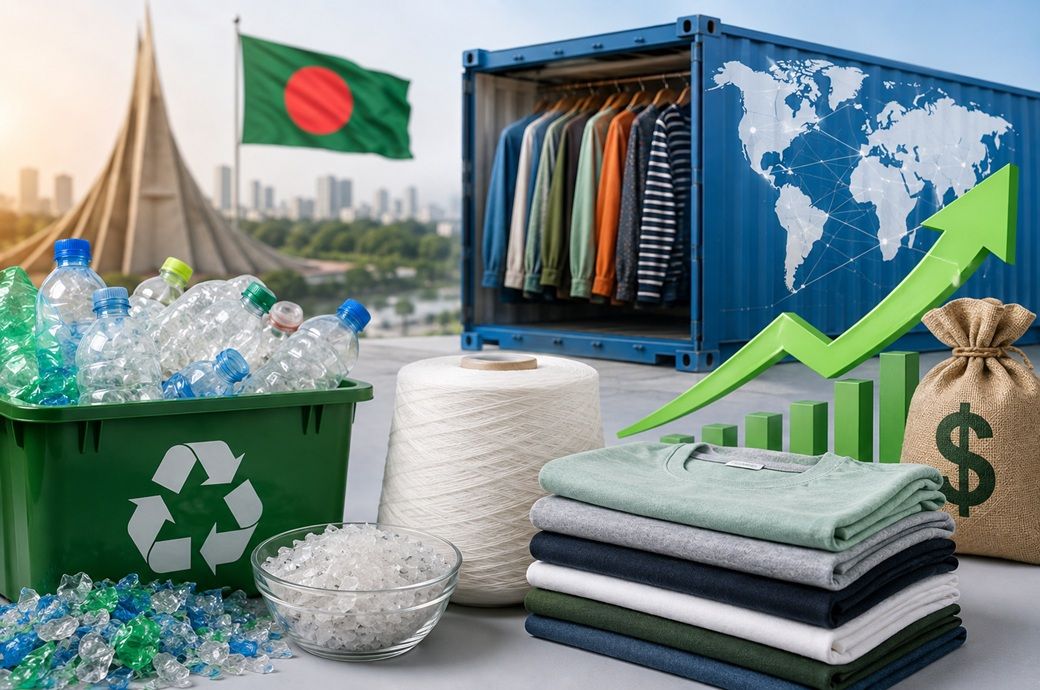
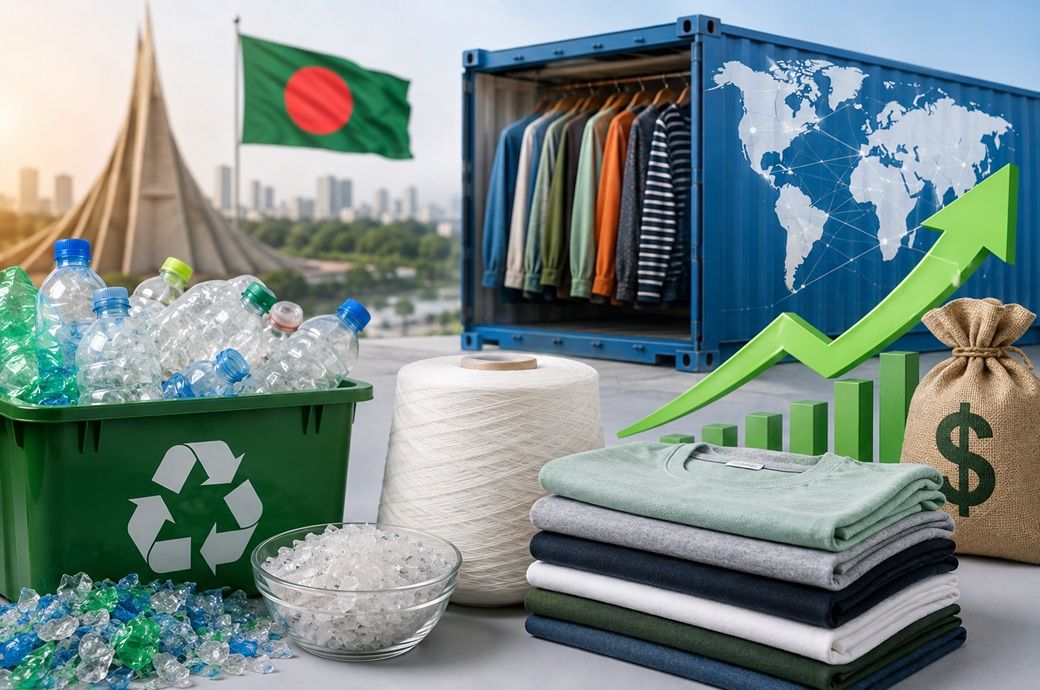
Bangladesh could add $4-5 billion in apparel exports by scaling plastic-to-textile recycling, BUILD has estimated.
The push targets lower reliance on imported man-made fibres and alignment with European Union’s circularity requirements.
Policy proposals include a circular economy policy, better collection, traceability, recycled PET standards and certification.
The Business Initiative Leading Development organised the meeting with the Ministry of Environment, Forest and Climate Change. Government officials, industry leaders and development partners attended the discussion, according to the report.
Dr Fahmida Khanam, Secretary-in-charge at the Ministry of Environment, Forest and Climate Change, said that Bangladesh needs circular economy principles to meet international environmental commitments and comply with European Union (EU) circularity requirements, according to a local media outlet. She also called for closer government-private sector co-operation to support green industrial growth.
Md Rezaul Karim, Joint Secretary at the Ministry, said that the government will introduce the Extended Producer Responsibility framework soon, adding that the ministry will work with the Bangladesh Standards and Testing Institution to develop standards for recycled PET.
In a policy paper presented at the meeting, BUILD chief executive officer Ferdaus Ara Begum said that the Bangladesh generates more than 821,000 metric tonnes of plastic waste annually, while only 36 per cent is recycled.
The paper said much of the recycling ecosystem depends on informal and underfunded collection, and that formalising plastic recycling could reduce reliance on imported man-made fibres, improve compliance with EU sustainability rules and create fresh export opportunities.
It also recommended a National Circular Economy Policy and a Circular Economy Council, alongside stronger waste collection, improved traceability, better recycling standards and ISO 15270 pre-shipment certification for imported PET scrap.
Sheikh Hossain Mohammad Mustafiz, director at the Bangladesh Garment Manufacturers and Exporters Association (BGMEA), called for designated waste collection centres, fixed pricing mechanisms and mandatory trade licences for waste collection businesses to formalise the recycling ecosystem. He said a more organised recycling system would ensure a steady supply of recyclable materials, attract foreign investment and support blended financing for the recycling sector.
Fibre2Fashion News Desk