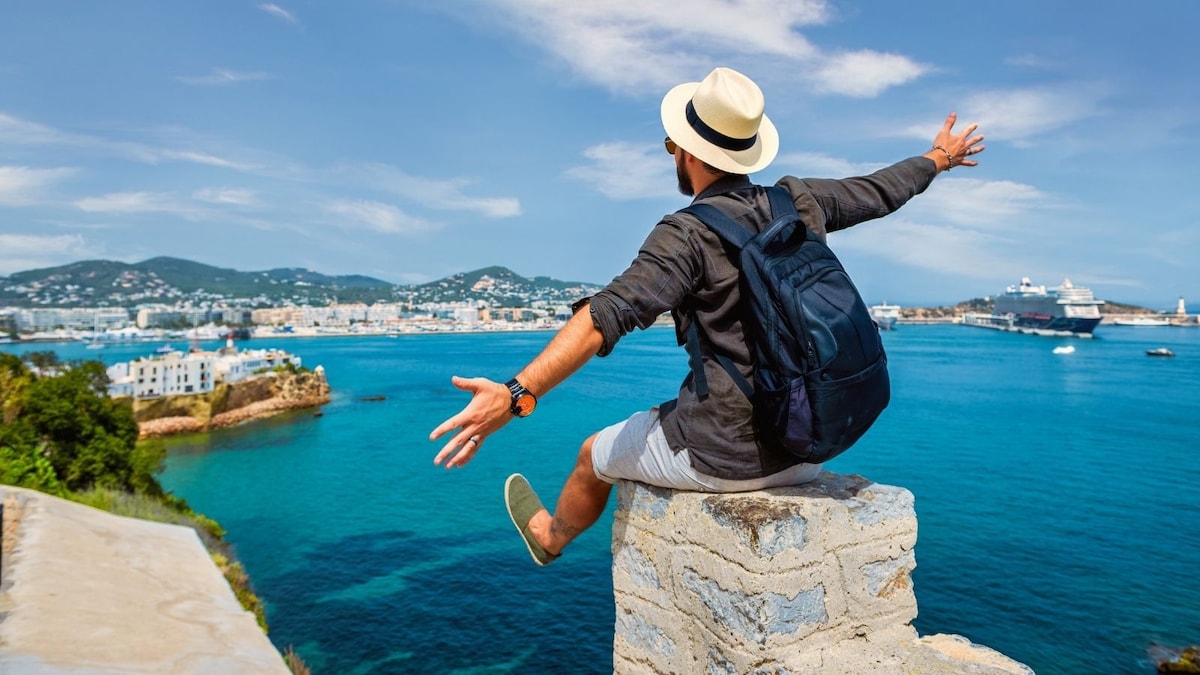


After a few years of living in Australia, the marketing specialist decided to return to her native Northern Ireland for work. Wanting a reset, and inspired by Australia’s wellness community, she stopped in Bali, Thailand, for a silent retreat. “I wanted to be sure of my decision,” she said of the 2024 move. “There’s no better way than being alone with only your own thoughts.”
On arrival, she handed in her phone and other devices — a move that she says made her anxious at first. “You have no concept of time as well, which I actually find the hardest part,” she says, adding that such retreats require the right headspace, as being silent for days requires adjustment. Other restrictions, such as no caffeine or sugar, also apply.
This retreat cost roughly £100 ($134) for three days, though others can cost thousands. “I do think it’s a luxury, but something that I value,” she says. Her latest retreat in April, which took place on the border between Northern Ireland and the Republic of Ireland, was a more structured silent meditation weekend that cost £400 ($537).
Although buying a home remains a long-term goal, Donnelly sees it as out of reach for now. In the meantime, she is focusing on what she can control — planning to attend at least one retreat a year, alongside shorter events. “I just like to enjoy my life now as well instead of always thinking of the future,” she says. “Travel kind of fills the hole for me.”
THE WIDER TREND
Younger generations are more likely to travel for wellness retreats — defined as trips intended to improve mental, physical or spiritual wellbeing — than older ones, according to McKinsey’s 2025 Future of Wellness survey, which found that Gen Z and millennials, who make up 36% of the US adult population, drive more than 41% of annual wellness spending.
Uchechi Kalu, a Los Angeles-based certified financial planner and founder of Greenlight Financial Planning, says wellness spending can be considered an investment, within reason. “Afterwards, people tend to feel a lot more clear, a lot less anxious, a lot more relaxed,” Kalu says of silent retreats. “They have an ability to actually move forward despite the challenges of life.”
Still, she says it is important to spend responsibly. “If it’s travel, don’t just think about the ticket cost — you’ve got to think about gas, hotels, food,” Kalu says. She also recommends making use of free activities or taking part in volunteering events.
KEY TAKEAWAYS
Wellness spending reflects a generational reality. For some young people, spending money on retreats is tied to economic uncertainty. It is a response to a world where housing, family and long-term security may feel harder to reach. “My wellness is in my control,” Donnelly says.
Don’t go into debt for it. Those who are financially unstable should be cautious about spending heavily on wellness travel. Financial stress can offset the benefits if someone returns home with added debt or insecurity.
Free and low-cost wellness can be equally effective. Local or more affordable alternatives may serve the same emotional need without creating new financial pressure. Kalu advises people to “really go line item by line …From there, you can either save for it or realise that’s not sustainable.”