
To harness this growing demand, South Korea launched the K-Tourism Innovation Task Force in September 2025 to strengthen fan-centric travel offerings. At the same time, the Korea Tourism Organisation (KTO) has outlined a strategy to expand K-culture tourism and encourage visitors to explore destinations beyond Seoul, helping boost regional tourism across the country.
One of the most distinctive aspects of South Korea’s tourism landscape is its fan cafe culture. These themed cafés, dedicated to K-pop idols and groups, feature custom beverages, exclusive merchandise, photo displays, and fan-created decorations. Beyond serving as attractions, they function as social hubs where visitors can connect with fellow fans from around the world and immerse themselves in the country’s vibrant fandom culture.

Image: Reuters
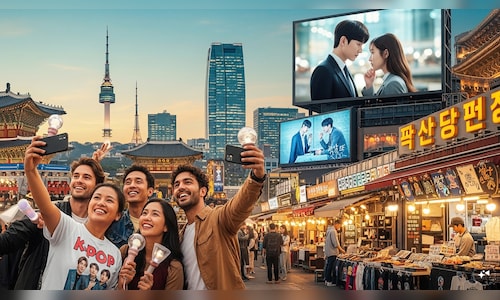
In Seoul, Myeongdong remains a cornerstone of K-wave tourism. Renowned for its concentration of K-beauty stores, entertainment merchandise outlets, and bustling street food scene, the district continues to feature prominently on K-culture travel itineraries. Visitors often combine their time in Myeongdong with trips to traditional food markets and nearby cultural attractions, creating a blend of contemporary pop culture and authentic local experiences.
Meanwhile, Jeju Island—long regarded as South Korea’s favourite domestic getaway for its volcanic landscapes, tangerine orchards, and scenic coastline—has experienced renewed interest following the success of the Netflix series When Life Gives You Tangerines. The drama became one of the most-watched shows in several countries, including Vietnam, Thailand, and the Philippines, inspiring fans to visit its filming locations. In response, the Jeju Special Self-Governing Province partnered with the Jeju Contents Agency to develop themed travel routes centred on key sites featured in the series.

Image: Canva
As the global popularity of Korean entertainment continues to rise, the line between fandom and travel is becoming increasingly blurred. Travellers are seeking deeper, more immersive connections with the culture they consume on screen. With government-backed initiatives and regional tourism campaigns, South Korea is positioning itself as a destination where entertainment extends beyond viewing and becomes a travel experience in itself.
(Edited by : Priyanka Deshpande)