
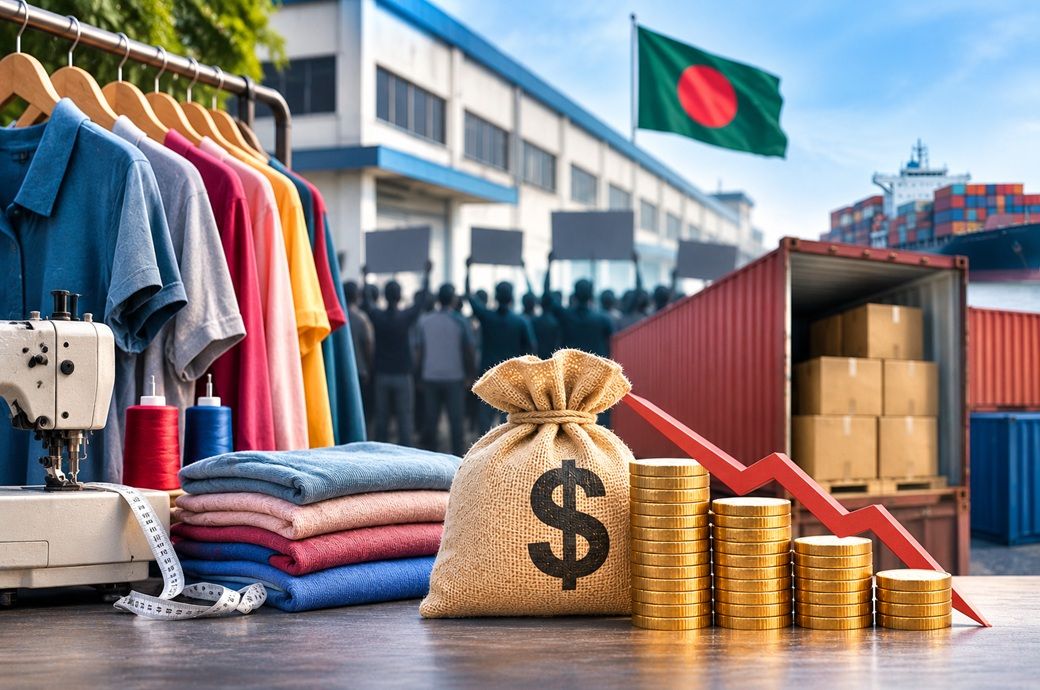
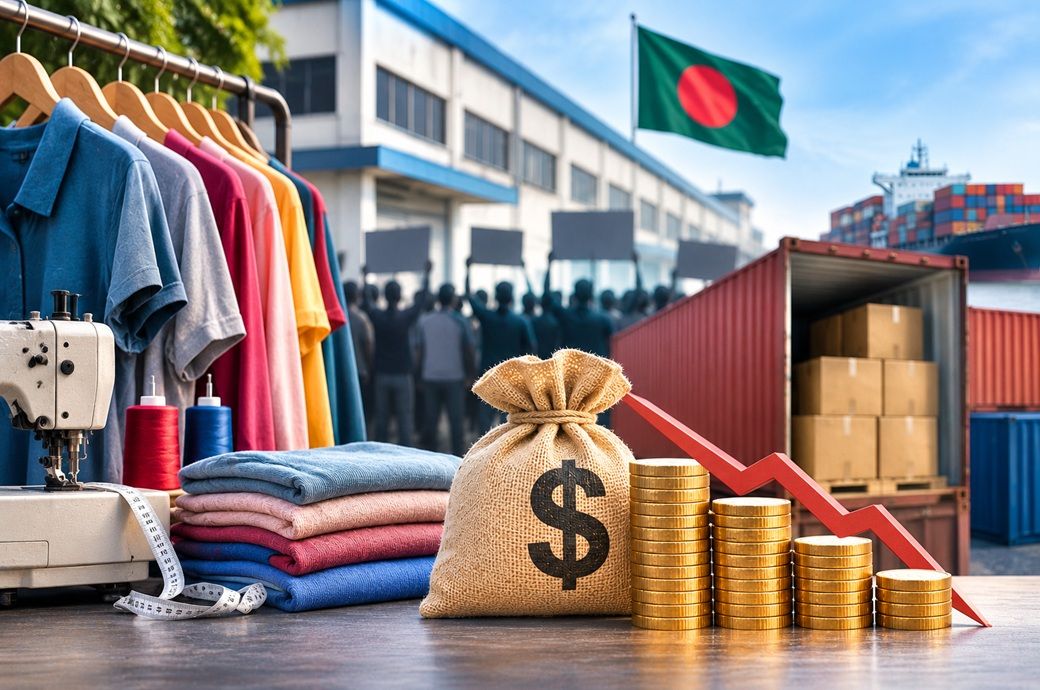
The association put cumulative losses from recent factory closures and road blockades across Savar, Ashulia, Mirpur and Gazipur at Tk 3,000-4,000 crore (~$240-320 million). BGBA president Md Abdul Hamid presented the estimates at a press conference at the association’s Uttara office in Dhaka recently, local media reported.
Bangladesh is losing Tk 2,000-2,200 crore (~$160-176 million) in daily output due to RMG production disruption, BGBA has said.
It put cumulative losses from factory closures and road blockades at Tk 3,000-4,000 crore (~$240-320 million).
The association warned export shipments, buyer confidence, future orders and factory operations could be hit unless the wage dispute is resolved.
Hamid called for an immediate settlement of the wage dispute through tripartite talks involving the government, workers’ representatives, the Bangladesh Garment Manufacturers and Exporters Association (BGMEA), the Bangladesh Knitwear Manufacturers and Exporters Association (BKMEA) and other stakeholders.
While recognising workers’ demands for higher wages amid rising living costs, the association said any wage settlement should balance workers’ livelihoods with factory commercial viability.
The disruption has affected factory production as well as transportation, logistics, banking and export shipments, according to BGBA. It said delayed deliveries could require exporters to pay extra freight charges and offer price discounts to international buyers.
Some buyers have become cautious about new orders, while order volumes have fallen in certain cases.
BGBA warned that prolonged instability could further damage Bangladesh’s standing as a reliable sourcing destination, putting future orders, factory operations and workers’ livelihoods at risk. The impact may become more visible in export earnings and industrial performance over the next three months, especially as Bangladesh faces growing competition from India and Pakistan, the association said.
The association urged the government, workers and industry leaders to take flexible and realistic positions to resolve the wage dispute without further delay. It also called on workers to return to work to help restore normal production, saying workers’ legitimate rights and industry sustainability both need to be protected to safeguard export earnings and the wider economy.
Fibre2Fashion News Desk (CG)