

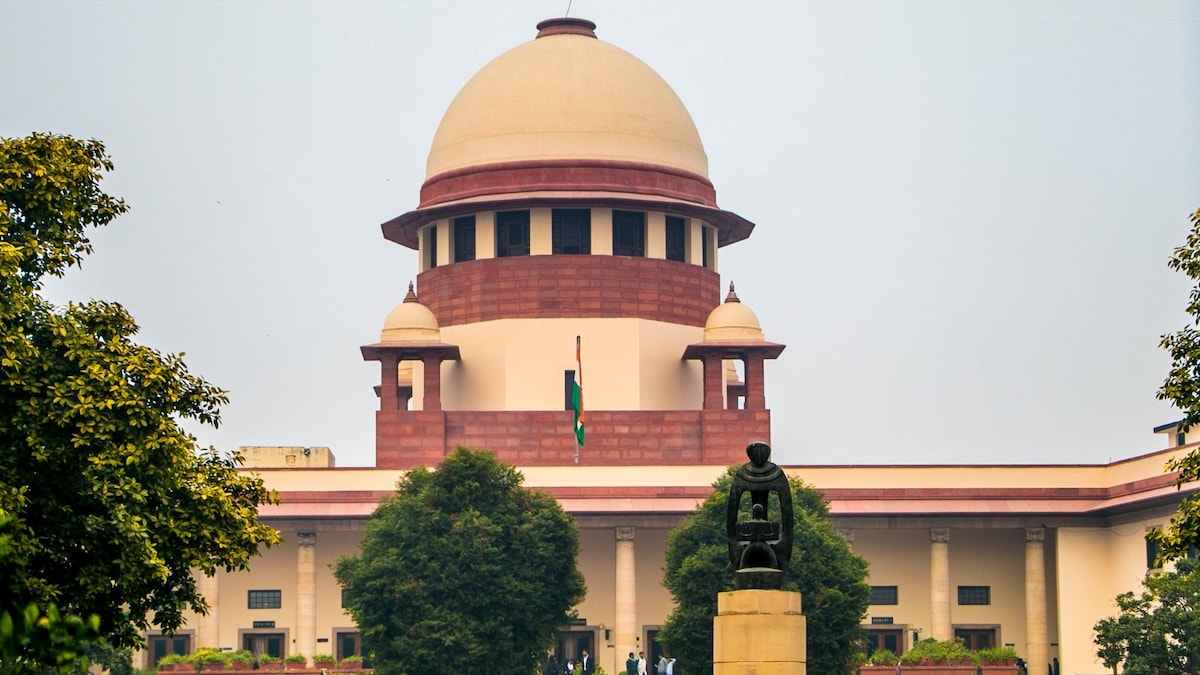
The Supreme Court on November 20 dismissed the Karnataka government’s appeal against a High Court order allowing bike taxi services to operate in the state, clearing the way for aggregators such as Ola, Uber and Rapido to continue their services, subject to regulatory requirements.
The apex court said bike taxis should be regulated rather than banned, citing their affordability and convenience, particularly for women commuters. It observed that bike taxis were already operating in 25 states and that a regulatory framework would be a better approach than imposing a blanket ban.
“Bike taxi is safer for young girls as it has GPS as well. It is better to regulate it than ban it. Bike taxi is already there in 25 states,” Justice Satish Chandra Sharma said while hearing the matter. He was part of a two-judge bench headed by Justice N Kotiswar Singh.
Justice Sharma also pointed out that young women working in his office preferred bike taxis because autorickshaw fares were significantly higher.
The bench dismissed a special leave petition filed by the Karnataka government challenging the January 23 order of the Karnataka High Court. The High Court had allowed appeals filed by ride-hailing companies, including Ola, Uber and Rapido, against restrictions on bike taxi operations.
The Supreme Court’s decision upholds the High Court’s directions allowing motorcycle owners and aggregators to approach the relevant authorities for vehicle registrations and the necessary permissions to operate bike taxi services.
What the Karnataka High Court had said
On January 23, a division bench of Chief Justice Vibhu Bakhru and Justice CM Joshi set aside an April 2025 order passed by a single-judge bench, which had effectively prohibited bike taxi services in Karnataka.
The division bench held that motorcycle owners could apply to register their vehicles as transport vehicles and seek permission to operate them as contract carriages. It directed the state government to consider these applications and clarified that permission could not be denied solely on the grounds that motorcycles could not be registered as transport vehicles or operated as contract carriages.
The High Court also said regional transport authorities could impose appropriate conditions under Section 74(2) of the Motor Vehicles Act, 1988. Further, it allowed aggregators to submit fresh applications, which the authorities would have to examine in accordance with the law.
Why were bike taxis banned in Karnataka?
The dispute began in April 2025, when the Karnataka High Court ruled that Ola, Uber and Rapido could not operate bike taxi services unless the state government notified guidelines under the Motor Vehicles Act and the rules framed under it.
The single-judge bench directed the state government to ensure that bike taxi operations ceased within six weeks. The deadline was subsequently extended until June 15, 2025, meaning services were required to stop from June 16.
Ola, Uber, Rapido and other aggregators challenged the order, arguing that the state’s restrictions violated their fundamental right to carry on trade and business. They maintained that while the government could impose reasonable regulatory conditions, it could not introduce a blanket ban when the law provided for vehicle registration and permits.
The Karnataka government, however, argued that motorcycles could not be classified as transport vehicles for carrying passengers for hire or reward. It also maintained that the state had the authority to regulate passenger and goods transportation through permits and schemes.
With the Supreme Court dismissing the state’s appeal, the High Court’s January 23 directions remain in force, allowing bike taxi operators and aggregators to seek the registrations and permissions required to resume or continue services in Karnataka.
SC clears Ola, Uber, Rapido bike taxis in Karnataka, says regulation better than ban