
The Indian Association of Tour Operators (IATO) expects the India Biennale 2026 to attract around 20–25 lakh foreign tourist visits during its 108-day run from December 4, 2026, to March 21, 2027.
The event is expected to boost India’s inbound tourism, increase international visitor footfall in Delhi and generate business opportunities for hotels, tour operators, transport companies, tourist guides, restaurants and other tourism-related service providers.
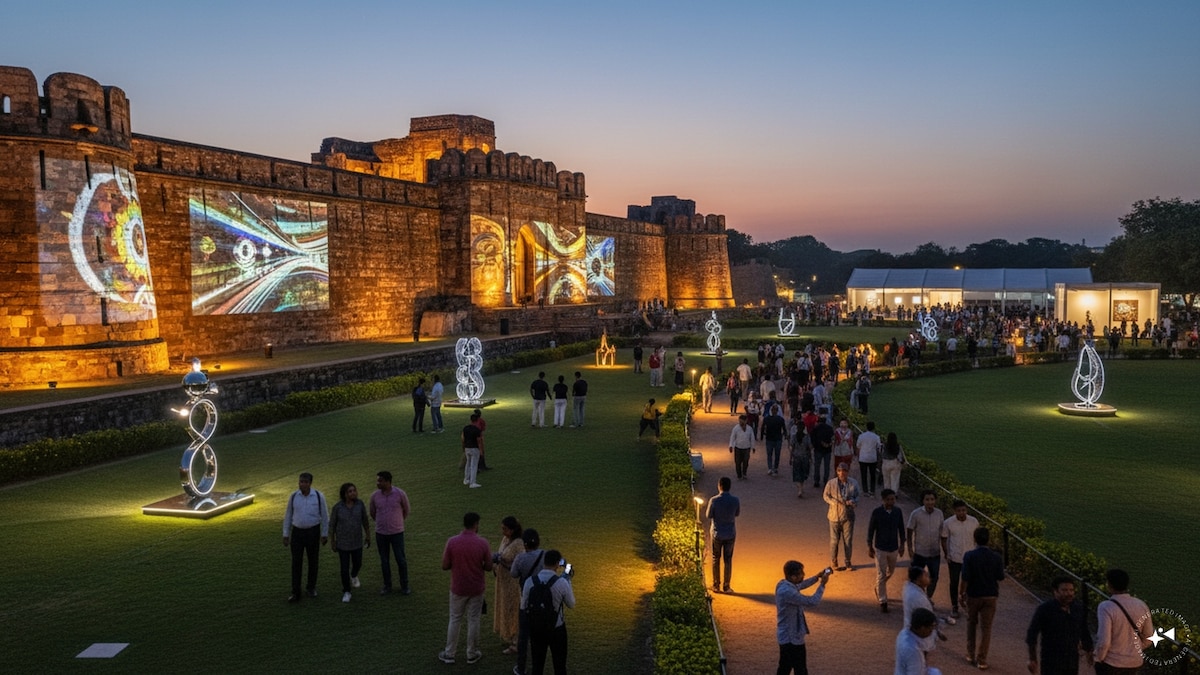
Organised by the Ministry of Culture in collaboration with the Delhi government and cultural institutions, the second edition of the India Biennale will bring together exhibitions, installations, performances and heritage programmes across more than 22 venues in the national capital.
Purana Qila will serve as the main venue, with historical monuments, museums, galleries and public spaces hosting events.
IATO President Ravi Gosain and Honorary Secretary Sunil Mishra conveyed the Association’s appreciation for the initiative during a meeting convened by Union Tourism and Culture Minister Gajendra Singh Shekhawat.
The Association believes the event could strengthen India’s cultural and heritage tourism offering by showcasing its historical legacy alongside contemporary creative expressions.
20–25 lakh visits
IATO expects the Biennale’s international appeal and extensive cultural programme to generate 20–25 lakh foreign tourist visits over the 108-day period. The Association believes the increase in visitor numbers could benefit several segments of the tourism industry, including hospitality, transport, travel services and local businesses.
The event is also expected to create opportunities for inbound tour operators to develop specialised cultural and heritage packages for international visitors. These itineraries could combine Delhi’s historical monuments with contemporary art exhibitions, performances and other cultural experiences.
Tour operators could also promote longer stays in the capital and include the Biennale in Golden Triangle packages covering Delhi, Agra and Jaipur, as well as wider India travel circuits.
Heritage meets art
The Biennale will follow the theme ‘Tat Tvam Asi (You Are That) – Reconnecting in an Age of Distraction’. Its programme will be organised around four themes: Reflection, Rejuvenation, Renewal and Resilience.
The participating venues will include the Red Fort, Qutub Minar, Humayun’s Tomb, Safdarjung Tomb, Lodhi Garden, Mehrauli, Hauz Khas and Agrasen ki Baoli. The National Gallery of Modern Art, National Museum and Lalit Kala Akademi will also host exhibitions and cultural programmes.
The programme will feature contemporary art, traditional art forms, photography, sculptures, installations, performances, workshops and discussions. One of its key attractions will be a rare 18th-century Mahabharata scroll, which is being presented after more than 100 years.
Other presentations will include ‘The Infinite Circle’ by Devi Art Foundation, ‘A Woven Line of Control’ by Gujral Foundation, ‘Kingdom of Earth’ by the Nita Mukesh Ambani Cultural Centre and ‘The Sacred Waters: Chhath Puja and Pind Daan’ by Bihar Museum.
The Student Biennale will feature 108 young artists selected from across the country, providing emerging talent with an opportunity to showcase their work.
Single-entry pass
A major initiative for visitors will be the India Biennale Pass, which will replace separate entry tickets at participating venues during the event. The integrated pass will allow visitors to access multiple monuments and cultural institutions through a single ticket.
The ticket prices have been set at ₹100 for a one-day pass, ₹200 for a three-day pass, ₹400 for a week pass, ₹3,000 for a season pass and ₹10,000 for a premium pass. Bookings can be made through the official India Biennale website.
IATO has welcomed the initiative, stating that it could make cultural exploration more convenient and affordable for international visitors. The Association also hopes the integrated ticketing model will be adopted at other major tourist destinations across India.
Transport and tourism plans
The Delhi government has directed departments to coordinate traffic management, public transport and last-mile connectivity around the participating venues.
The Delhi Traffic Police, Transport Department, Delhi Transport Corporation, Delhi Tourism and Transportation Development Corporation and Delhi Metro Rail Corporation have been asked to prepare traffic management plans, particularly for the inauguration and weekends.
A hop-on, hop-off heritage bus service connecting the venues is also being considered. The government plans to install signage at nearby metro stations and explore extending metro operating hours on busy days. Coordination with e-rickshaw operators and other last-mile transport providers is also planned.
Civic authorities have been directed to improve sanitation, waste management, public toilets, street lighting, footpaths and parking facilities around the venues. The government is also planning a single-window clearance mechanism for temporary exhibition structures and cultural programmes.
The Delhi Tourism and Art, Culture and Languages departments will prepare promotional campaigns to attract domestic and international visitors. Heritage walks, night tours and special Old Delhi tourism programmes will also be linked to the event.
The Biennale is being organised through a public-private partnership involving cultural institutions, corporates, foundations, artists and international partners. More than 200 proposals have been received for exhibitions, performances and knowledge-based programmes, with around 40 exhibitions confirmed. Collaboration efforts are also underway with 19 countries and international partners.
The second edition builds on the India Art, Architecture and Design Biennale held in 2023. IATO expects the event to strengthen India’s cultural tourism offering while encouraging international visitors to spend more time exploring Delhi’s heritage and contemporary art scene.