
Museums house the material memory of human history, art, and civilisation, often within buildings that are monumental works of architecture in their o…
 1/6
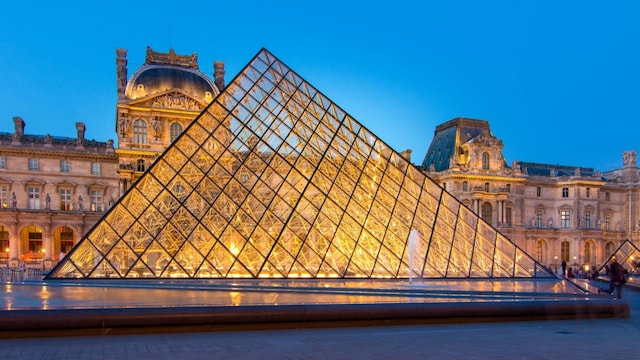
1/6Musée du Louvre, Paris, France | Set in a former 12th-century royal fortress along the Seine, the Louvre opened to the public as a national museum on August 10, 1793, during the French Revolution. Spanning 72,735 square meters of exhibition space, it is the world’s largest art museum, displaying roughly 35,000 catalogued works across eight curatorial departments. The Renaissance and Neoclassical palace facades surround I.M. Pei’s 21.6-meter-high glass-and-metal pyramid entrance, unveiled in 1989. Key treasures include Leonardo da Vinci’s Mona Lisa, the 2nd-century BCE Hellenistic sculpture Winged Victory of Samothrace, and the ancient Greek Venus de Milo. (Image source: Canva)
 2/6
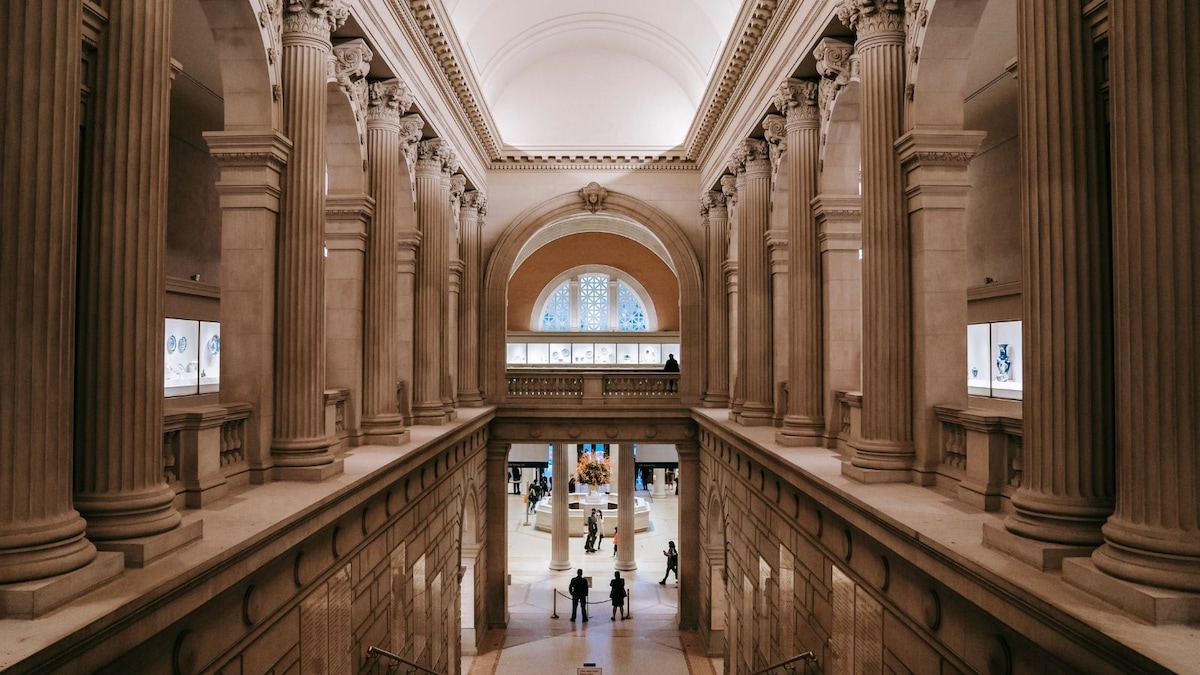
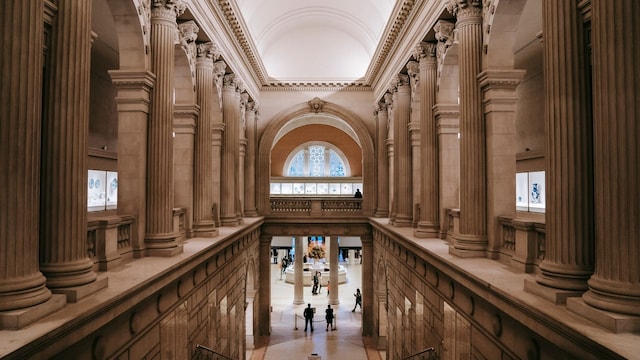
2/6The Metropolitan Museum of Art, New York City, United States | Founded in 1870, “The Met” opened at its permanent Fifth Avenue location in Central Park on March 30, 1880. While the initial High Victorian Gothic structure was designed by Calvert Vaux and Jacob Wrey Mould, the iconic neoclassical Beaux-Arts Fifth Avenue facade and Great Hall were designed by architect Richard Morris Hunt and completed in 1902. Spanning over two million square feet, the museum holds more than 1.5 million works spanning 5,000 years of art history, anchored by the sandstone Egyptian Temple of Dendur (c. 10 BCE) housed in its purpose-built glass pavilion. (Image source: Canva)
 3/6
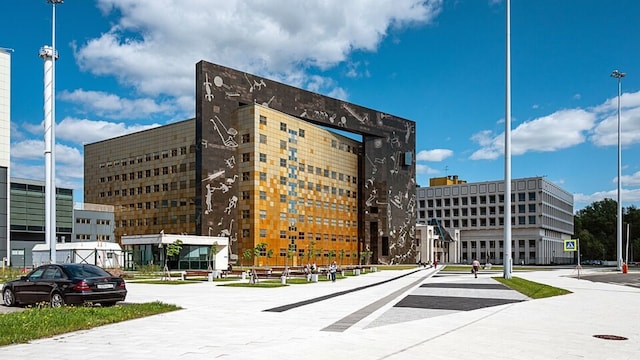
3/6The State Hermitage Museum, St. Petersburg, Russia | Founded in 1764 by Empress Catherine the Great through the acquisition of 225 European paintings from Berlin merchant Johann Ernst Gotzkowsky, the Hermitage complex lines the Neva River. Its architectural centrepiece is the baroque Winter Palace, designed by Francesco Bartolomeo Rastrelli between 1754 and 1762 as the official imperial residence. The collection encompasses over three million items, spanning prehistoric artefacts, classical antiquities, and a vast Western European painting gallery featuring works by Leonardo da Vinci, Rembrandt, and Titian. (Image source: Wikimedia Commons)
 4/6
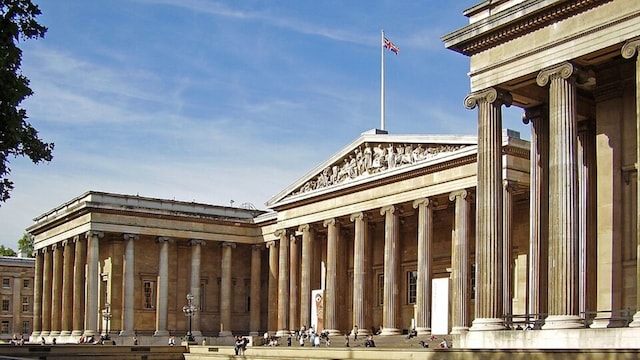
4/6The British Museum, London, United Kingdom | Established by an Act of Parliament in 1753 following the bequest of over 71,000 items from physician Sir Hans Sloane, the British Museum opened on January 15, 1759, as the world’s first free national public museum. Housed in Sir Robert Smirke’s Greek Revival building, the central courtyard was enclosed in December 2000 by Norman Foster’s glass-and-steel Queen Elizabeth II Great Court. Its vast holdings of roughly eight million objects include foundational archaeological records such as the Rosetta Stone, the Parthenon Sculptures, and the 6th-century BCE Cyrus Cylinder. (Image source: Wikimedia Commons)
 5/6
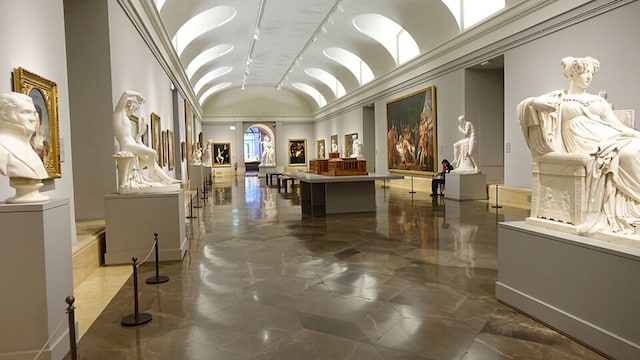
5/6Museo Nacional del Prado, Madrid, Spain | Designed in 1785 by Neoclassical architect Juan de Villanueva, this landmark was inaugurated under King Ferdinand VII on November 19, 1819, as the Royal Museum of Paintings and Sculptures. Built around the Spanish royal collection, the Prado holds the world’s preeminent concentrations of Spanish and European old masters, including Francisco de Goya (housing his Black Paintings and The Third of May 1808), Diego Velázquez (featuring Las Meninas), and Hieronymus Bosch (The Garden of Earthly Delights). (Image source: Wikimedia Commons)
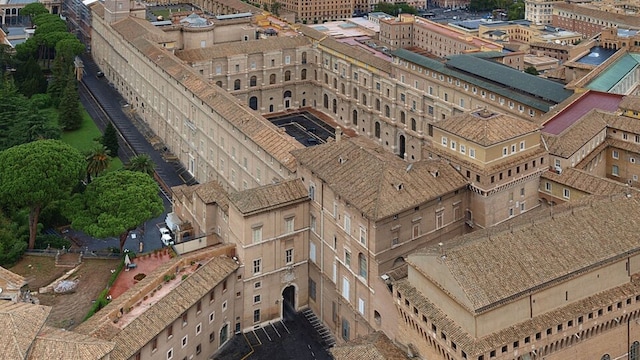 6/6
6/6Vatican Museums, Vatican City | The origins of the papal collections date to 1506, when Pope Julius II purchased and displayed the excavated marble sculpture Laocoön and His Sons in the Belvedere Courtyard. Today, the complex comprises 54 galleries covering approximately seven kilometres of public routes through the historic papal palaces. Key highlights include ancient Greco-Roman antiquities, the Raphael Rooms (housing The School of Athens), and the Sistine Chapel, featuring Michelangelo’s iconic ceiling frescoes (painted 1508–1512) and The Last Judgment (completed 1541). (Image source: Wikimedia Commons)