
Across hypersaline coastal lagoons and high-altitude salt pans, intense salinity combined with high solar radiation allows carotenoid-producing microa…
 1/6
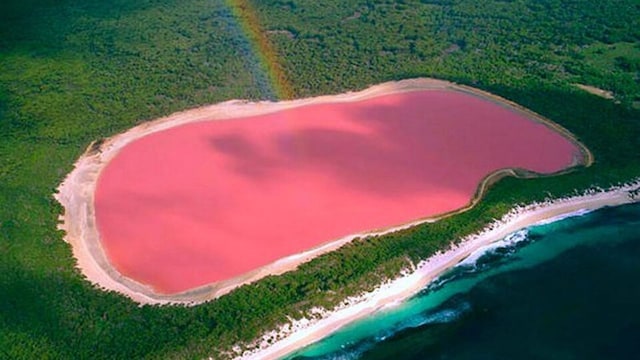
1/6Lake Hillier, Middle Island, Western Australia | Situated on Middle Island in the Recherche Archipelago off the southern coast of Western Australia, this 600-meter-long saline lake maintains a permanent bubblegum-pink hue that does not fade when bottled. The colour is produced by a stable microbiome of the microalga Dunaliella salina alongside red halophilic bacteria (Salinibacter ruber). Because Middle Island is a strictly protected nature reserve, the lake is inaccessible on foot and can only be viewed via scenic charter flights operating out of Esperance. (Image source: Wikimedia Commons)
 2/6
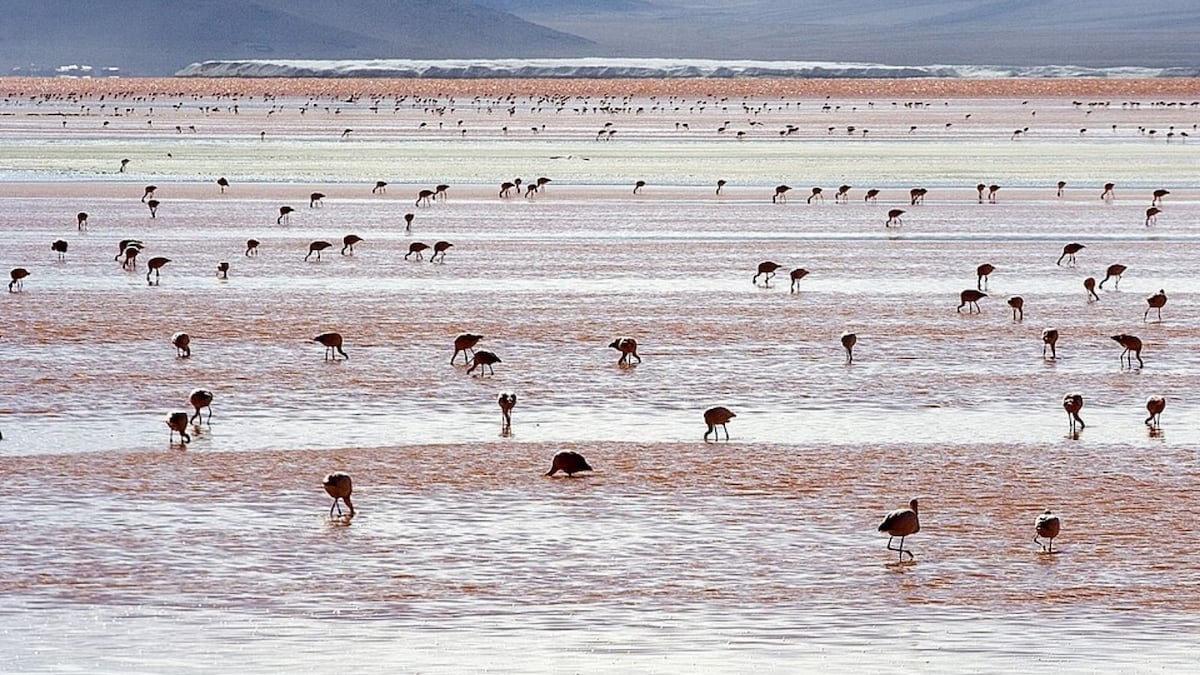
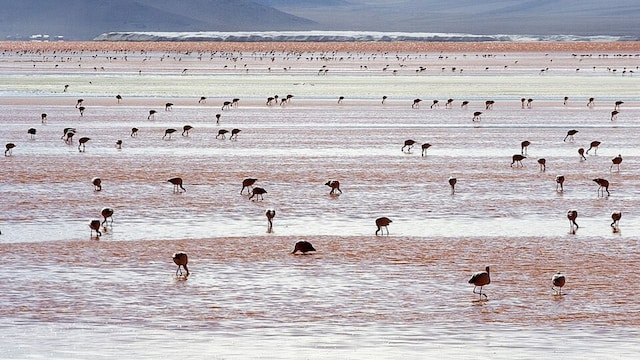
2/6Laguna Colorada, Eduardo Avaroa Reserve, Bolivia | Set at 4,278 meters above sea level in the southwest Altiplano, this shallow salt lake spans roughly 6,000 hectares within the Eduardo Avaroa Andean Fauna National Reserve. Its rusty crimson-to-pink shade is caused by red algae sediment blooms reacting with high mineral concentrations, punctuated by stark white borax deposit islands. The mineral-rich brine supports feeding colonies of three flamingo species: James’s, Andean, and Chilean flamingos. (Image source: Wikimedia Commons)
 3/6
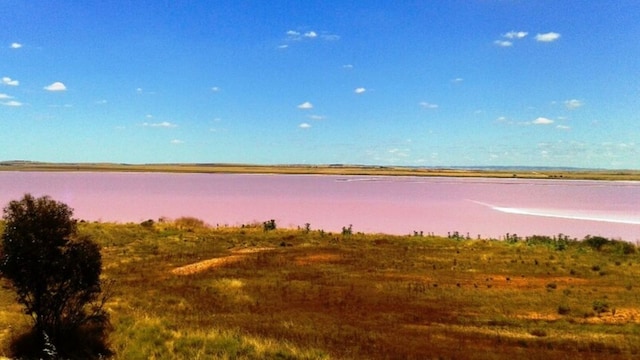
3/6Lake Bumbunga, Lochiel, South Australia | Located approximately 130 kilometres north of Adelaide near the town of Lochiel, this 15-square-kilometre salt lake shifts in colour from pale pink to magenta depending on water levels and seasonal salinity. Microscopic Dunaliella salina algae flourish in its hypersaline brine during warm months. Easily accessible just off the Augusta Highway, the shallow lake allows visitors to walk directly along the crystallised salt flats. (Image source: Wikimedia Commons)
 4/6
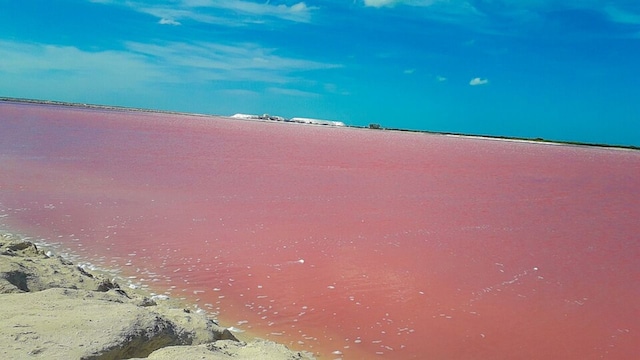
4/6Las Coloradas, Yucatán Peninsula, Mexico | Located within the Ría Lagartos Biosphere Reserve along the northern coast of the Yucatán, this series of pastel-pink and magenta lagoons functions as an operational sea salt evaporation facility. Seawater evaporates across shallow flats, concentrating brine shrimp (Artemia salina), red microalgae, and halobacteria that tint the water bright pink. The same carotenoid-rich organisms provide the resident Caribbean flamingos of Ría Lagartos with their deep coral plumage. (Image source: Wikimedia Commons)
 5/6
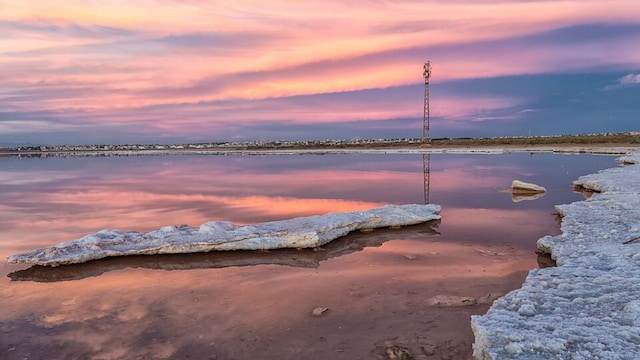
5/6Laguna Salada de Torrevieja, Alicante, Spain | Bordering the Mediterranean coast in the Valencian Community, this 1,400-hectare coastal lagoon forms the Natural Park of the Lagunas de La Mata and Torrevieja. Hypersaline conditions support vast populations of halophilic archaea and Dunaliella salina, creating a pastel-pink surface that shifts in intensity depending on water evaporation and direct sunlight. It remains an active salt production centre and an important migratory wetland for aquatic birds. (Image source: Wikimedia Commons)
 6/6
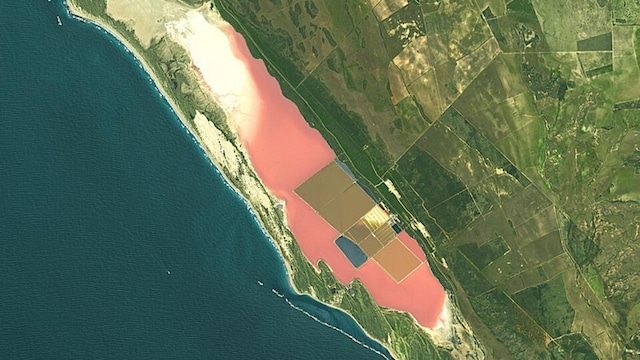
6/6Hutt Lagoon, Gregory, Western Australia | Stretched along the Indian Ocean coast near the mouth of the Hutt River, this 14-kilometre-long lagoon changes colour throughout the day from lilac and bubblegum pink to deep coral. Due to its exceptional natural concentration of Dunaliella salina, Hutt Lagoon hosts one of the world’s largest commercial microalgae farming facilities, dedicated to harvesting natural beta-carotene for dietary supplements and natural food dyes. (Image source: Wikimedia Commons)