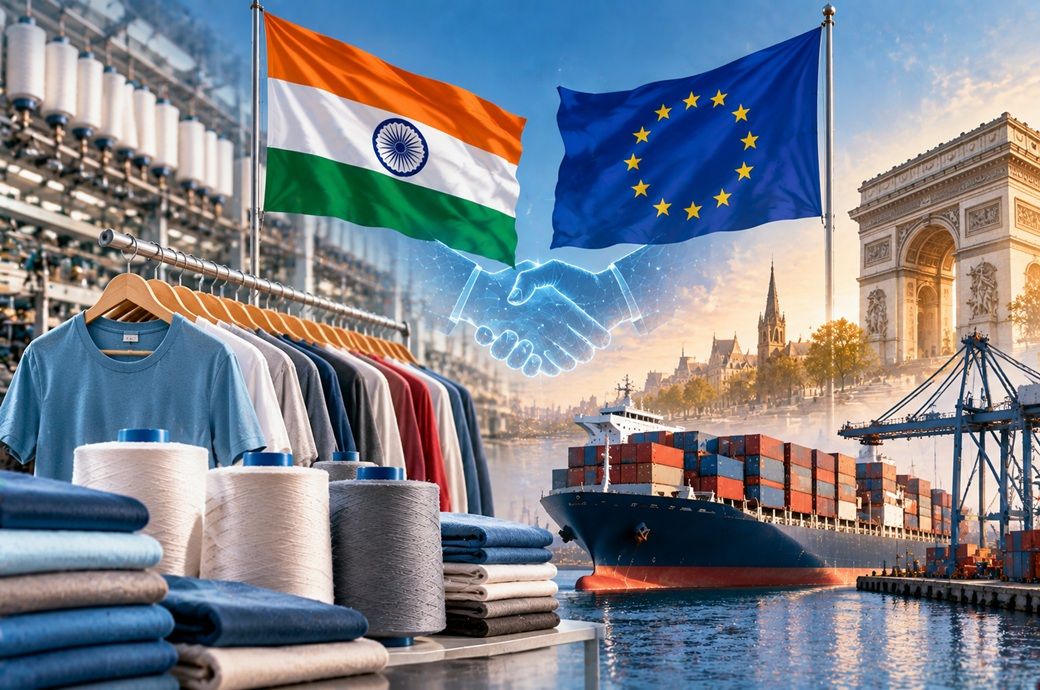



The challenge is particularly relevant as the India-EU Free Trade Agreement (FTA), what policymakers often describe as the “mother of all deals”, is likely to be implemented by this year end. Once it takes effect, the India-EU FTA is expected to reshape market access for Indian exporters, especially in labour-intensive sectors such as apparel and textiles. With Europe already showing stronger demand for Indian garments, the region is increasingly viewed as the most credible alternative growth engine.
However, the numbers highlight the scale of the task. India exported $*.** billion worth of garments to the US in fiscal ****–**, more than three times the value shipped to the UK and over five times exports to Germany. Even after a *.* per cent decline, the US remained by far India’s largest apparel destination, accounting for nearly one-third of total RMG exports.
Europe, meanwhile, offered a much broader growth story. Germany recorded a *.* per cent increase in imports from India, Spain grew by *.* per cent, France by *.* per cent, Italy by **.* per cent and the UK by *.* per cent. Combined, these gains demonstrate that Indian suppliers are steadily strengthening their position across the continent.
Italy’s double-digit growth is particularly noteworthy. As one of the world’s fashion capitals, Italy has traditionally sourced selectively from overseas suppliers. Rising imports from India indicate growing acceptance of Indian manufacturing capabilities beyond basic apparel categories. Germany’s performance is equally significant given its status as Europe’s largest consumer market.