

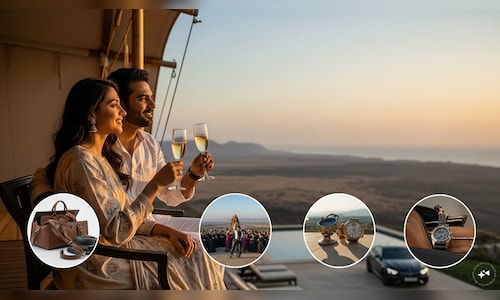
In its Visa Consulting and Analytics (VCA) Whitepaper, India’s Affluent Economy 2025–2026, the payments company said affluent consumers are shifting from ownership-led purchases to access-led experiences, with spending patterns closely tied to lifestyle choices and identity.
The study, based on a Visa-commissioned YouGov survey and VisaNet data across travel, dining, retail and lifestyle categories, notes that India’s affluent population is expanding rapidly. Individuals earning over ₹10 lakh annually have nearly doubled from 69 lakh to 130 lakh, indicating a broader base of consumers participating in discretionary spending.
Visa said affluence is also spreading beyond metro cities such as Mumbai, Delhi and Bengaluru, with emerging markets including Ahmedabad, Surat, Jaipur and Lucknow showing similar consumption behaviours.
According to the report, annual dining spends among affluent consumers are anchored at around ₹2 lakh, while cross-border spending penetration in elite segments stands at 63%.
Travel accounts for 58% of discretionary expenditure among Ultra Elite consumers, followed by retail and luxury at 28%.
The report also highlighted that nearly 4 in 5 affluent Indians dine at premium restaurants at least three times a year, while about 3 in 4 make high-end retail purchases every quarter. It added that 1 in 4 affluent consumers buy premium products as frequently as every two weeks.
Visa said credit cards remain a key enabler of premium consumption, particularly for categories such as travel, dining, wellness and luxury retail. It added that more than half of affluent consumers use cards for elite memberships, while 7 in 10 show interest in limited-edition or exclusive product drops.
Sushmit Nath, Head of Visa Consulting & Analytics, India and South Asia, said the findings reflect a structural shift in consumption behaviour.
“Our analysis shows affluence is no longer episodic. Discretionary spends are no longer reserved for milestones and are increasingly experience-led, driven by demand for exclusivity and seamless access across travel, dining, wellness and lifestyle,” Nath said.
The report added that affluent consumers are seeking integrated ecosystems that combine multiple lifestyle services, rather than standalone products, with convenience and access emerging as key drivers of premium spending decisions.