
According to a notice issued by the Ministry of Commerce and Industry, the newly formed group will track global developments that may disrupt production networks, logistics flows, and trade corridors. The initiative comes at a time when escalating conflicts, shipping route uncertainties, and volatility in energy and freight markets are beginning to influence sourcing decisions across the textile value chain.
India’s move to form an inter-ministerial group signals a proactive approach to managing export risks amid rising geopolitical uncertainty.
By closely monitoring supply chains, logistics routes and critical imports, the government aims to ensure faster policy responses and protect export competitiveness, particularly for sectors like textiles that are highly exposed to trade disruptions.
The inter-ministerial group will conduct sector-wise assessments to identify export vulnerabilities and potential disruptions in the supply of critical raw materials. For the textile industry, this includes monitoring inputs such as petrochemical derivatives used in synthetic fibres, dyes, and chemicals, as well as machinery components that are often sourced through complex global supply networks.
The group will also serve as a co-ordination platform among different ministries and government departments, enabling faster policy responses if disruptions escalate. Engagement with industry stakeholders, including Export Promotion Councils and trade bodies, will form an important part of this process. Through these consultations, the government aims to gather real-time feedback from exporters on logistical challenges, input shortages, freight cost pressures, and order uncertainties emerging from geopolitical tensions.
Alongside the inter-ministerial mechanism, DGFT has established an internal coordination framework to enable real-time tracking of trade-related developments. This system is intended to strengthen inter-agency communication and ensure that emerging issues affecting exporters are identified and addressed quickly.
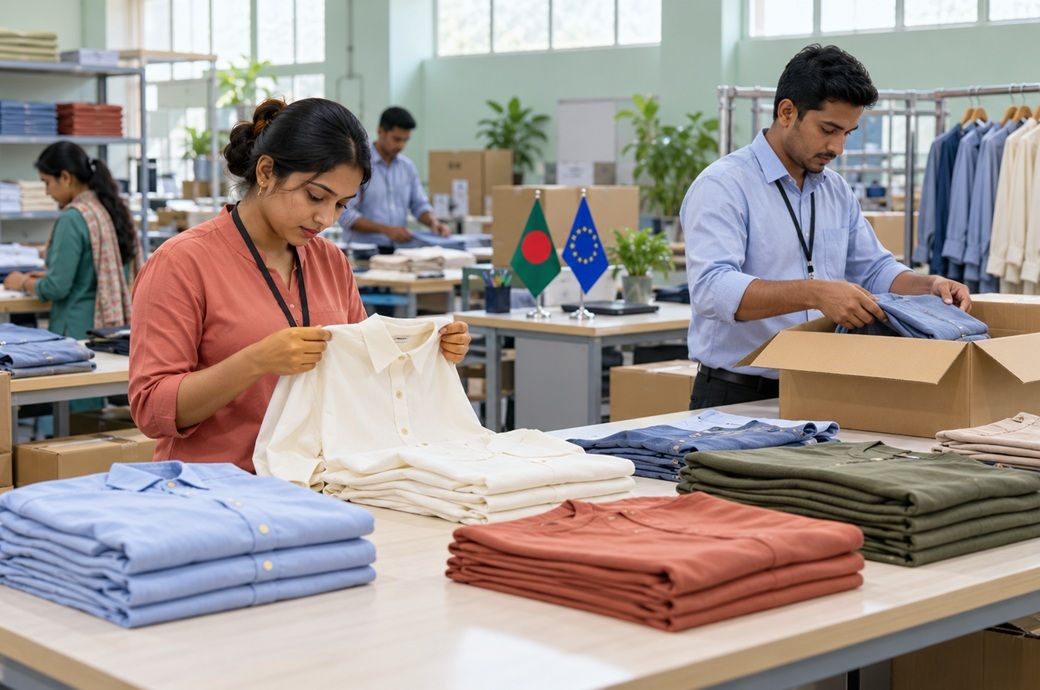
For India’s textile and apparel sector, one of the country’s largest export industries with extensive global supply chain linkages, the monitoring initiative is particularly significant. Disruptions in maritime routes, fluctuations in petrochemical feedstock availability, and shifts in sourcing strategies among global brands could all influence export competitiveness in the coming months.
By establishing both an inter-ministerial monitoring group and an internal co-ordination mechanism, the government aims to improve preparedness and policy responsiveness as geopolitical uncertainties continue to reshape global trade dynamics.
The move reflects a broader effort to safeguard export growth while maintaining stability in critical supply chains that support India’s manufacturing and textile industries.
Fibre2Fashion News Desk (KUL)