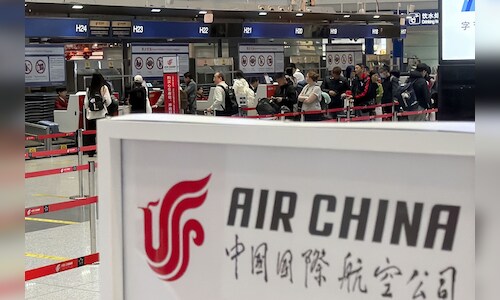

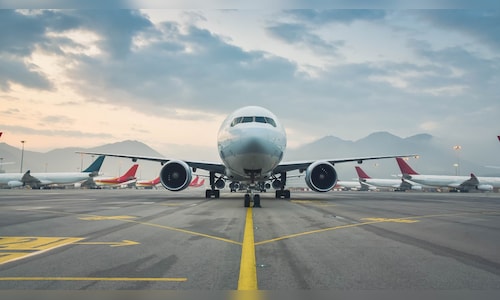
While flights have not been completely halted, schedules have become increasingly unpredictable, with frequent delays, cancellations, and rerouting affecting both international and regional travel.
Major transit hubs such as Dubai, Doha, and Abu Dhabi continue to operate, but at reduced capacity. For travellers, this means the need for heightened vigilance, flexibility in travel plans, and constant monitoring of flight statuses.
Despite the disruptions, governments and airlines are working to maintain essential connectivity, including operating special flights and adjusting routes to avoid high-risk airspaces.
However, longer travel times and higher fares have become increasingly common. As the situation develops, staying informed is crucial for ensuring safe and smooth travel in and out of the Gulf region.
On Monday, Air India and Air India Express will operate 20 scheduled and non-scheduled flights to and from West Asia.
Here’s a quick look at the key FAQs you need to know.
Are flights between India and the Gulf operating normally?
Flight operations between India and the Gulf (UAE, Saudi Arabia, Oman) are currently recovering, but some routes are still affected by airspace restrictions.
Which airspaces remain closed in West Asia?
Amid the ongoing tensions in the Middle East, the airspace of Bahrain, Kuwait and Iran remains closed, leading to rerouted flights and adjusted travel plans.
Are special flights being arranged?
Yes, extra flights are being operated to help stranded passengers and maintain connectivity. Airlines like Air India and Qatar Airways are running special services.
How are stranded Indian nationals returning home?
Stranded Indian nationals are being brought back through scheduled and special evacuation flights, with some routes diverted via Saudi Arabia when necessary.
Are flights taking longer now?
Yes, flights are being rerouted, leading to Longer travel times, higher ticket prices and possible missed connections.
Are airlines issuing travel advisories?
Yes, almost all are issuing advisories. Always check your flight before leaving for the airport.
Are Gulf airlines operating normally?
No, capacity is reduced. Major state-backed carriers in the region, like Emirates, Etihad, and Qatar Airways, are operating at reduced capacity.
How many people have returned to India so far?
As of March 18, around 2.6 lakh people have returned to India from the West Asia, since February 28, following escalating regional conflicts. The Ministry of External Affairs (MEA) noted active repatriation, with over 52,000 returning specifically between March 1 and March 7.
What is the status of Indian seafarers in the region?
Indian seafarers in the UAE are navigating a tense, high-risk security situation in the Persian Gulf, with approximately 540–600 Indian crew members on 20–22 Indian-flagged vessels under close monitoring by Indian authorities. The Directorate General of Shipping is monitoring the situation, with ongoing safe repatriation efforts, including over 635 seafarers brought home previously, due to regional conflict.
What should passengers do right now?
Passengers are advised to take extra precautions while travelling amid ongoing disruptions. It is important to check flight status before leaving for the airport, as schedules may change at short notice. Travellers should keep their plans flexible and be prepared for possible delays or cancellations.