
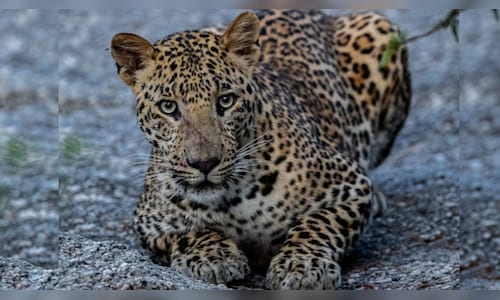
The interim order was passed by a division bench of Justice Pushpendra Singh Bhati and Justice Sandeep Shah while hearing a public interest litigation filed by Apoorva Agrawal. The petition flagged unregulated tourism in the Jawai area and its impact on wildlife, especially Indian leopards.
“Such time restrictions are being adopted by this court in line with the timings followed in Ranthambore National Park, which must be based on expert assessment and scientific considerations,” the order said, as per Live Law.
Rajasthan HC Cracks Down On Unregulated Jawai Tourism; Bans Night Safaris, Use Of Drones To Protect #Leopard Habitathttps://t.co/51nI7LGgu4
— Live Law (@LiveLawIndia) March 28, 2026
The court also ordered an immediate ban on the use of drones, spotlights, torchlights and other intrusive devices. Authorities have been directed to take prompt penal action against violators, including safari operators and hospitality staff.
The petitioner’s counsel argued that practices such as night safaris, artificial lighting and drone use have caused stress to wildlife and also pose safety risks to tourists.
Taking note, the bench directed authorities to ensure that no safari or wildlife spotting activity takes place outside the permitted hours. It said any person found disturbing animals using lights, drones or similar means must be stopped immediately and action taken.
In its order, the bench said strict regulation of tourism is needed in Jawai, often referred to as a ‘leopard country’, due to growing pressure on its ecosystem.
“These hills, marked by naturally formed caves, have for generations served as an ideal habitat for one of India’s most elusive predators, the Indian leopard, thus justifying the region’s evocative epithet,” the court said, as per Live Law.
It added, “The increasing footprint of unregulated development, manifested in expanding tourism infrastructure and habitat disturbance, has begun to encroach upon this shared ecological space. Commercial exploitation, often operating within regulatory gaps, has altered the natural landscape, placing both the leopard population and the traditional lifestyle of local communities at risk.”
The court spoke about the state’s duty under Article 48A to protect the environment and said that it is linked to the right to life under Article 21.
The state government and other respondents have been asked to file their replies before April 20, when the court will hear the matter again.