
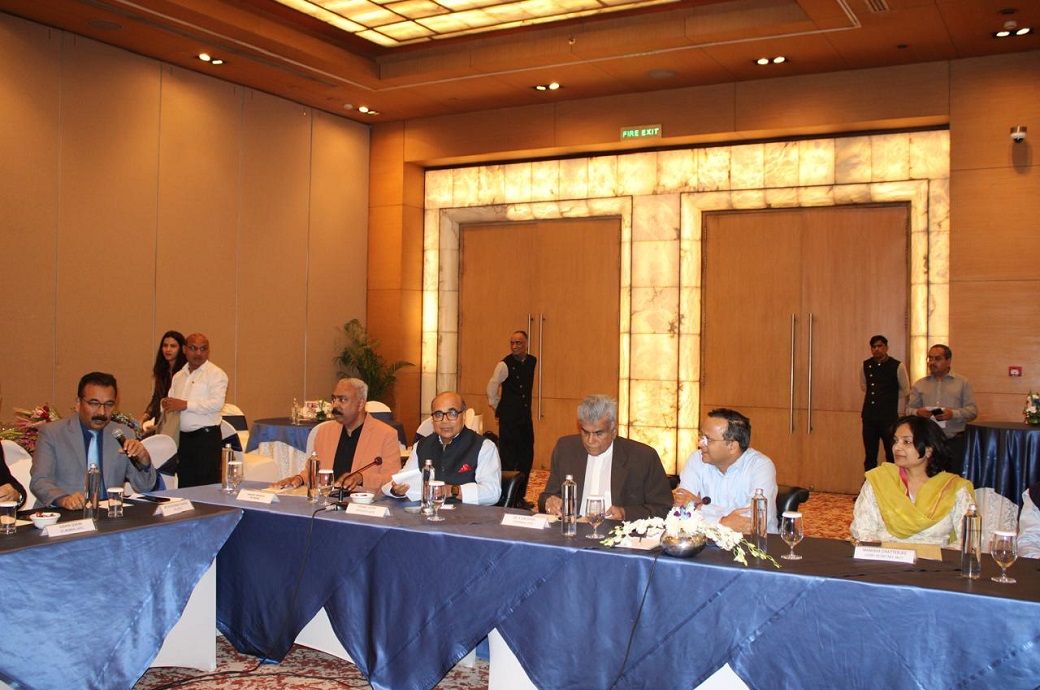
Delivering the keynote, Agarwal described free trade agreements (FTAs) as a transformative opportunity for the industry, urging exporters to expand both vertically and horizontally, strengthen Brand India, and build deeper alignment between government, exporters, and global buyers. He underscored that the industry must now move from resilience to acceleration, backed by co-ordinated efforts across stakeholders, while assuring continued government support to drive growth.
India’s Director General of Foreign Trade (DGFT) Lav Agarwal said India should target one-sixth of global apparel trade, citing its demographic advantage.
He highlighted FTAs as key growth drivers and urged exporters to scale capacity and strengthen Brand India.
Industry leaders called for policy support, MMF expansion, and collaboration to achieve the $40 billion export target by 2030.
AEPC Chairman Dr A Sakthivel highlighted that India has secured FTAs covering nearly 60 per cent of the world’s population, offering duty-free access to key apparel markets. However, he noted that exports have remained stagnant at around $17 billion for nearly a decade and called on the industry to rise to the challenge of achieving the $40 billion target by 2030. He pointed to increasing buyer visits and capacity assessments as a signal of growing global interest in India.
As Guest of Honour Manisha Chatterjee, Joint Secretary of the Ministry of Textiles, stressed that quality and sustainability remain critical for success in developed markets such as Europe and Japan. She called for stronger industry collaboration and feedback to shape policy, particularly for the man-made fibre segment, and highlighted ongoing efforts to engage Indian missions abroad to support export growth.
Industry stakeholders emphasised the need to rebalance India’s fibre mix towards man-made fibres, scale production capacity, and accelerate policy support through initiatives such as PM MITRA Parks and technology upgradation schemes.
Buyers flagged challenges in MMF and polyester supply chains, while also acknowledging India’s strength in fabric capabilities but gaps in global marketing and visibility.
The discussions concluded with a unified commitment from government, industry, and buyers to strengthen Brand India, enhance competitiveness, and position the country as a reliable and scalable sourcing destination in the evolving global apparel trade landscape.
Fibre2Fashion News Desk (KUL)