

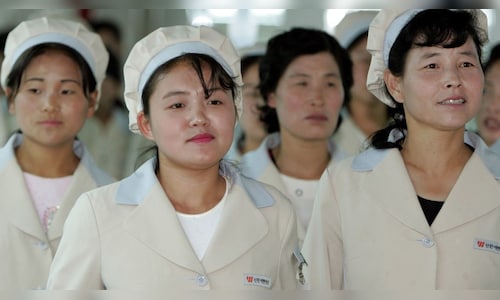
Women are more likely to work in either very rich or very poor countries than in middle-income ones, according to new ILO data. This International Women’s Day, we look at the countries with the highest female labour force participation — from North Korea and Madagascar to Iceland and New Zealand — and what those numbers reveal about work, policy and survival.
Women are upskilling fast, but India’s workforce gap remains
More women in India are entering skill pipelines, tech programmes and formal employment channels, but the overall workforce gap remains stubborn. Women now make up 28.1% of India’s workforce and 26% of learners in technology programmes, yet hold just 18% of leadership roles and a smaller share of organised jobs. New data from LinkedIn, Quess Corp and Masai shows a generation preparing for the future of work, even as structural barriers continue to shape outcomes.
India Inc still has very few women CEOs
Women may be increasingly visible in India’s workforce, but the corner office remains elusive. Data from Primeinfobase shows that only about 5% of NSE-listed companies have a woman serving as MD or CEO, and many of those leaders come from promoter families rather than professional management ranks.
From home kitchens to restaurant leadership: Women reshaping hospitality
In many Indian homes, cooking has long been seen as a woman’s responsibility, yet professional kitchens have historically been dominated by men. As more women step into roles as chefs, restaurateurs and hospitality founders, that dynamic is slowly shifting. This Women’s Day, we look at the barriers women have faced in the industry, and how changing ideas around leadership, storytelling and social media are opening new paths in the culinary world.
Jessie Buckley’s year: The performance powering the Oscar race
With a career built on risk rather than predictability, Jessie Buckley has quietly become one of the most formidable actors of her generation. Her searing turn in Chloe Zhao’s Hamnet — already rewarded with a BAFTA, Golden Globe, SAG Award and Critics Choice win — now places her firmly at the centre of this year’s Oscar race. A look at the performance and the career that brought her here.
The business of better health
Protein powders, collagen blends, probiotics and immunity boosters are no longer niche products tucked away in pharmacies. In urban India, supplements have become a mainstream part of everyday health spending. With the country’s nutraceutical market now estimated at over $4 billion and growing rapidly through e-commerce-led brands, the shift reflects a broader behavioural change: consumers are increasingly investing in preventive health, tracking biomarkers and managing wellness long before illness enters the picture.
India’s creator economy goes hyperlocal
India’s creator economy is no longer concentrated in a handful of metros. New data mapping over 56,000 verified creators across more than 10,000 pincodes shows rising creator clusters in cities such as Lucknow, Jaipur, Patna, Meerut and Bhopal. As digital platforms reduce reliance on traditional media gatekeepers, creators are increasingly building careers rooted in local communities — influencing neighbourhood markets, shaping regional trends and monetising through a mix of brand partnerships, subscriptions and local commerce.
The social media debate
Governments across the world are increasingly questioning how young people engage with social media. Australia became the first country to ban access for users under 16 in late 2025, and the ripple effects are now spreading. Indonesia has announced similar restrictions, while Indian states such as Karnataka and Andhra Pradesh are exploring age-based limits. In Europe, countries including Norway and Germany are debating tighter controls, and Britain has begun consulting parents and children on whether under-16s should be barred from social media altogether, alongside possible restrictions on gaming platforms and AI chatbots.
Travel watch: West Asia airspace disruptions
Air travel across parts of West Asia remains in flux after regional airspaces were closed following the escalation of tensions triggered by US–Israel strikes on Iran. In recent days, airlines and airports have begun cautiously restoring operations, with limited repatriation flights and select routes gradually returning. Israel has started reopening its airspace, while carriers such as Emirates, IndiGo and Akasa Air are resuming or adjusting services as conditions permit. For travellers, the picture remains fluid, with reroutes, suspended routes and reduced schedules continuing across several Middle East corridors as airlines assess safety and rebuild operations.
Chasing sakura: Japan’s cherry blossom forecast
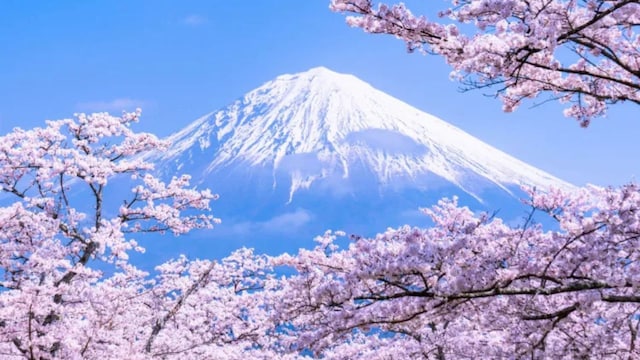
Spring in Japan is defined by the fleeting beauty of cherry blossoms, and the 2026 sakura forecast offers travellers a guide to catching the bloom at its best. From early blossoms in Okinawa to peak viewing across Japan in late March and April, and even May blooms in Hokkaido, the season unfolds gradually across the country, turning parks, temples and mountain landscapes into pastel pink panoramas.
A bibliophile’s world tour
From a former tango-era theatre in Buenos Aires to a flood-proof bookstore in Venice, some bookshops are destinations in their own right. This visual tour explores eight of the world’s most iconic bookstores — including Paris’s legendary Shakespeare and Company, New York’s enduring Strand, and Porto’s ornate Livraria Lello — each offering a glimpse into literary history, architecture and the enduring romance of reading.