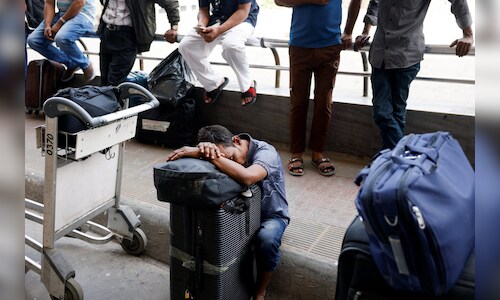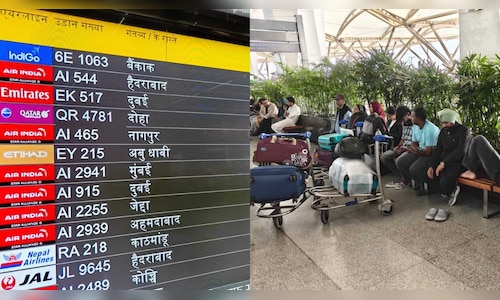


Major transit hubs including Dubai, Doha and Abu Dhabi scaled back or temporarily suspended operations as airlines rerouted aircraft to avoid affected corridors. Thousands of passengers, including many Indians connecting through Gulf airports, have been stranded as carriers cancelled services at short notice, citing safety concerns.
The fallout has meant missed connections, extended layovers and sharply higher rebooking fares.
As disruption spreads across air and sea routes, insurance has moved to the centre of the response.
Travel insurance: What it can, and cannot, cover
Insurers say claims are rising, largely linked to operational disruptions rather than medical emergencies.
Arun Ramamurthy, Co-founder of Staywell.Health, said travellers are seeking reimbursement for additional hotel stays, meals and rebooking expenses caused by cancellations and delays.
Comprehensive travel insurance policies typically provide trip delay and trip interruption benefits, which reimburse reasonable expenses once a delay crosses a specified threshold. Missed connection clauses may cover the cost of new tickets.
Most plans also include 24/7 assistance services to help rearrange travel, emergency medical cover for treatment abroad, medical evacuation support and personal liability protection.
However, policies generally exclude direct losses arising from war.
The key distinction lies in the trigger: if an airline cancels a flight for operational or safety reasons, claims may still qualify under delay or interruption cover, depending on the wording of the policy. Insurers advise travellers to retain cancellation notices and receipts to support claims.
War risk cover tightens in shipping and aviation
The impact is more structural in marine and aviation insurance.
Hari Radhakrishnan, an expert with the Insurance Brokers Association of India (IBAI), said the escalation could significantly affect marine cargo, hull and aviation segments. Reports of restrictions in the Strait of Hormuz, airspace closures and renewed threats in the Red Sea have heightened risk perceptions.
According to him, war risk cover for new exposures could become unavailable or prohibitively expensive in affected zones, pushing up shipping costs. For India, which depends heavily on crude oil imports from the Gulf, prolonged disruption could have broader economic implications, including inflationary pressure.
Aviation insurers may also raise war risk premiums for operations linked to impacted regions.
GIC Re withdraws marine hull war risk cover
Amid the heightened risk environment, state-owned reinsurer General Insurance Corporation of India (GIC Re) has decided to withdraw Marine Hull War Risk cover in several designated high-risk regions, according to media reports citing an official notice.
The move will take effect from 1900 hours IST on March 3, 2026.
The withdrawal covers parts of the Persian or Arabian Gulf, Gulf of Oman, certain Black Sea and Sea of Azov areas, stretches of the Red Sea and Gulf of Aden, and sanctioned jurisdictions.
As a reinsurer, GIC Re provides capacity to primary insurers underwriting marine risks. Its withdrawal signals tighter reinsurance support in high-risk corridors, which could translate into higher premiums or stricter underwriting for shipowners.
Gaurav Agarwal, Vice President – Marine Insurance at Prudent Insurance Brokers, noted that the Persian Gulf and Red Sea–Suez Canal corridor have already been classified as high-risk zones, attracting additional war risk premiums. Historically, such premiums react immediately to escalating hostilities. Any sustained tension could mean higher freight rates, longer transit routes and increased insurance outlays for exporters and importers.
A risk repricing moment
While insurance cannot prevent disruption, it can soften the financial impact within defined limits. At the same time, insurers and reinsurers are recalibrating exposure in real time, signalling how geopolitical instability translates into higher premiums, tighter cover and rising costs across travel and trade.