
Right now, the same journey can take two hours or more, depending on traffic.
Greater Noida to Faridabad in 30 minutes?
There is no straight road linking Greater Noida and Faridabad. Vehicles are forced to move through a wider loop – via Noida, Delhi stretches, Kalindi Kunj, or parts of the Eastern Peripheral Expressway, as reported by News18.
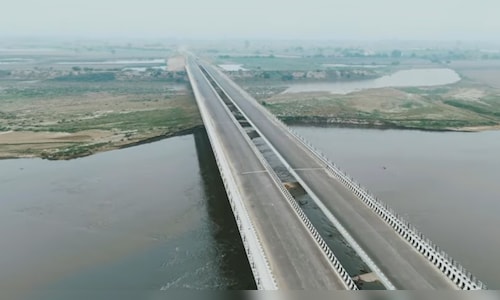
The new bridge will be a sigh of relief for daily commuters. It connects the two cities directly via the Yamuna.
Officials said that the road is being built as a four-lane link designed to handle regular commuter flow as well as freight movement.
Manjhawali bridge project timeline and delays since 1989
The Manjhawali bridge was originally proposed more than three decades ago. The foundation stone was laid in 1989 by then Union Minister Rajesh Pilot.
Construction remained uneven. Haryana completed its side of the bridge in 2014, but the Uttar Pradesh portion saw repeated delays. Land acquisition emerged as the main obstacle. Sections of the required land remained unavailable, slowing final road connectivity.
ALSO READ | NHAI accepts ₹6,220 crore bid to monetise 310 km highways in 2 states
Work has now accelerated. Authorities in Uttar Pradesh have pushed to complete the pending stretch so the bridge can open to traffic.
Land acquisition and cost still part of final stage
The overall cost of the four-lane project is estimated at around ₹66 crore. Officials said roughly 70% of the required land has already been secured. The remaining portion is still under negotiation, mainly involving compensation discussions with farmers, News18 reported.
Until that process is finished, some finishing work remains pending. But structurally, the bridge itself is largely complete.
ALSO READ | PM Modi to inaugurate Meerut-Delhi Namo corridor on February 22: Route, fares, key features
Wider impact on NCR travel
The new crossing is expected to improve movement beyond just Greater Noida and Faridabad. It will also offer an alternate link toward Gurugram through Faridabad – reducing dependence on existing congested routes.
For commuters, the biggest change is time. A journey that once meant navigating multiple expressways and city traffic will soon involve a single crossing that takes just 30 minutes.