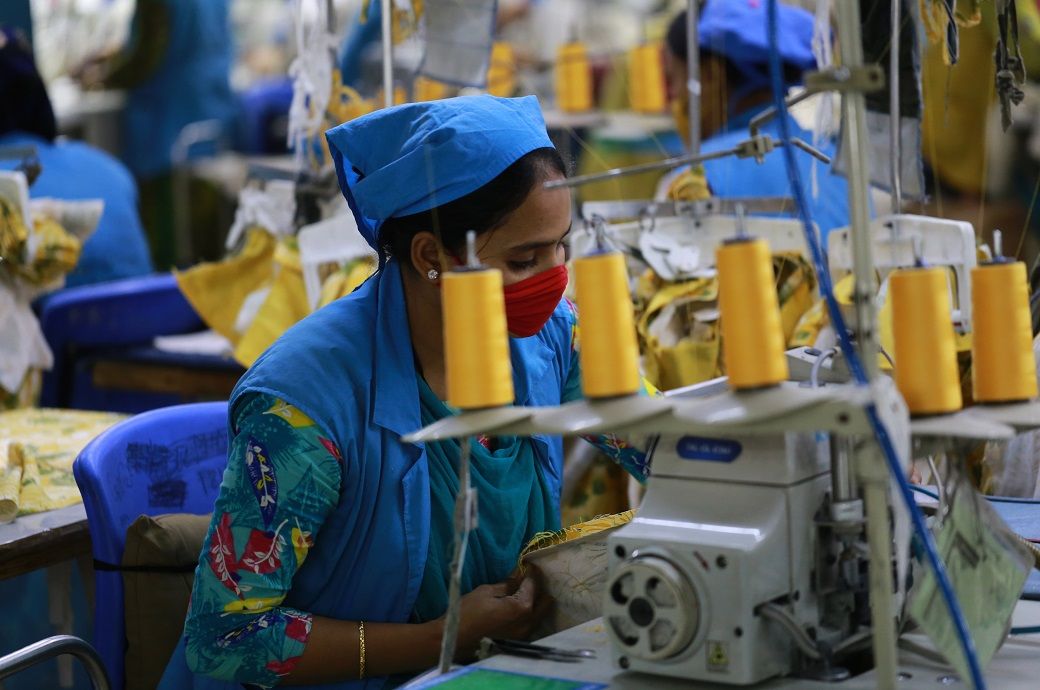

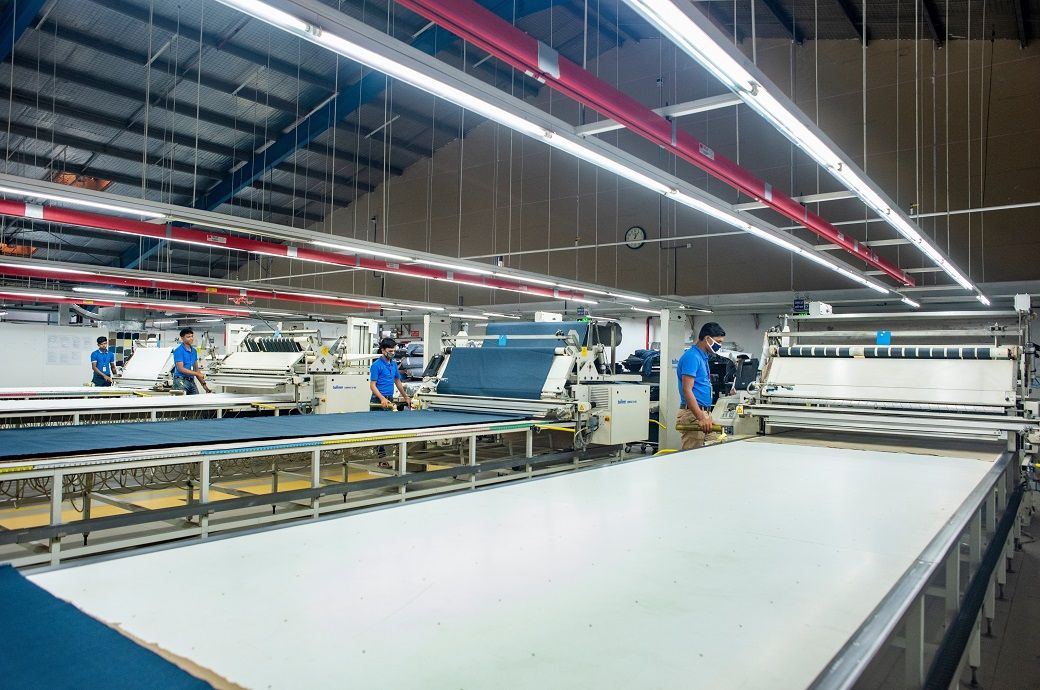
As labour costs rise across traditional apparel manufacturing hubs, Bangladesh is apparently quietly redefining the competitive edge that once relied on cheap manpower. Long known for its vast pool of low-cost workers, the country’s garment industry appears to be shifting towards technology and automation, signalling a strategic shift from labour-intensive production to machines, data, and speed.
Bangladesh’s garment industry is increasingly adopting automation and technology.
A study showed productivity grew 4.19 per cent annually during 2014–23, with automation-intensive segments like cutting, knitting and wet processing posting the strongest gains.
As technology adoption accelerates, policymakers now face the challenge of managing labour displacement.
Though gradual, the transformation is beginning to deliver measurable results now.
Media reports citing a study by a renowned autonomous multidisciplinary research organisation of the country, underlined that Bangladesh’s readymade garment (RMG) sector—driven by automation and technological upgrades—achieved average annual productivity growth of 4.19 per cent between 2014 and 2023.
At first glance, these gains may seem modest, but they are significant in an industry that employs millions and underpins a substantial portion of the national economy.
The RMG sector contributes an estimated 8.5–10.5 per cent of GDP and generates 80–85 per cent of export earnings, making even incremental improvements economically meaningful.
However, the productivity gains have not been uniform. Jackets reportedly led the way with 6.59 per cent annual growth over the decade, followed by knit lingerie at 6.43 per cent. Sweaters (6.05 per cent), home textiles (5.58 per cent), and T-shirts (4.39 per cent) also posted solid gains, benefiting from mechanisation, standardisation, and process automation.
By contrast, woven shirts, woven trousers, and denim reportedly recorded more modest growth of 3 per cent, 1.15 per cent, and 1.81 per cent, largely due to lower levels of automation.
Meanwhile, the automation-intensive segments of the RMG sector delivered the strongest gains. Cutting, knitting, and wet processing reportedly recorded annual productivity growth of 11.13 per cent, 9.85 per cent, and 6.11 per cent, respectively. Meanwhile, sewing—the least automated and most labour-dependent stage— reportedly posted the weakest growth at 3.57 per cent, while weaving and end finishing recorded growth of 4.43 per cent and 4.78 per cent over the decade.
The impact of technology is perhaps most visible in cutting. In the 1980s and 1990s, 10–12 workers using manual tools reportedly processed 4,000–5,000 pieces a day. Today, fully automated CAD- and CNC-driven systems allow just 2–3 operators to reportedly cut up to 10,000 pieces daily—three to five times faster and markedly more precise.
The report also notes a shift in knitting from low-gauge circular machines to microprocessor-controlled equipment with CAD/CAM integration, digital design functions, and fine-gauge capabilities, even as it highlighted wider adoption of automated cutting, semi-automatic sewing heads, laser or ozone finishing, auto-dosing dyeing systems, and digital quality-control tools across medium-scale factories.
However, most critically, the study also calls on policymakers to anticipate potential labour displacement as automation deepens and to plan for it proactively. In an industry that employs millions, the central challenge will thus be to balance efficiency gains with social stability, as the garment sector moves toward a more automated future.
Fibre2Fashion News Desk (DR)