
Last Updated:
In China, inexpensive power has helped AI companies develop high-quality AI models more cheaply than US competitors.

News18
Amid the intensifying role of artificial intelligence in today’s era, the US may have developed the most potent AI models and controls access to the most sophisticated computer chips, but China has an ace to play in the global AI contest.
China has developed the biggest power grid the world has ever seen. Giving a tough competition to the United States, China, from 2010 to 2024, increased its power production for more than the rest of the world combined.
According to a report published in The Wall Street Journal, China, in the previous year, took a competitive advantage via electricity and generated more than double the electricity compared to the US, giving some Chinese data centers an advantage of paying less than half for electricity compared to their American counterparts.
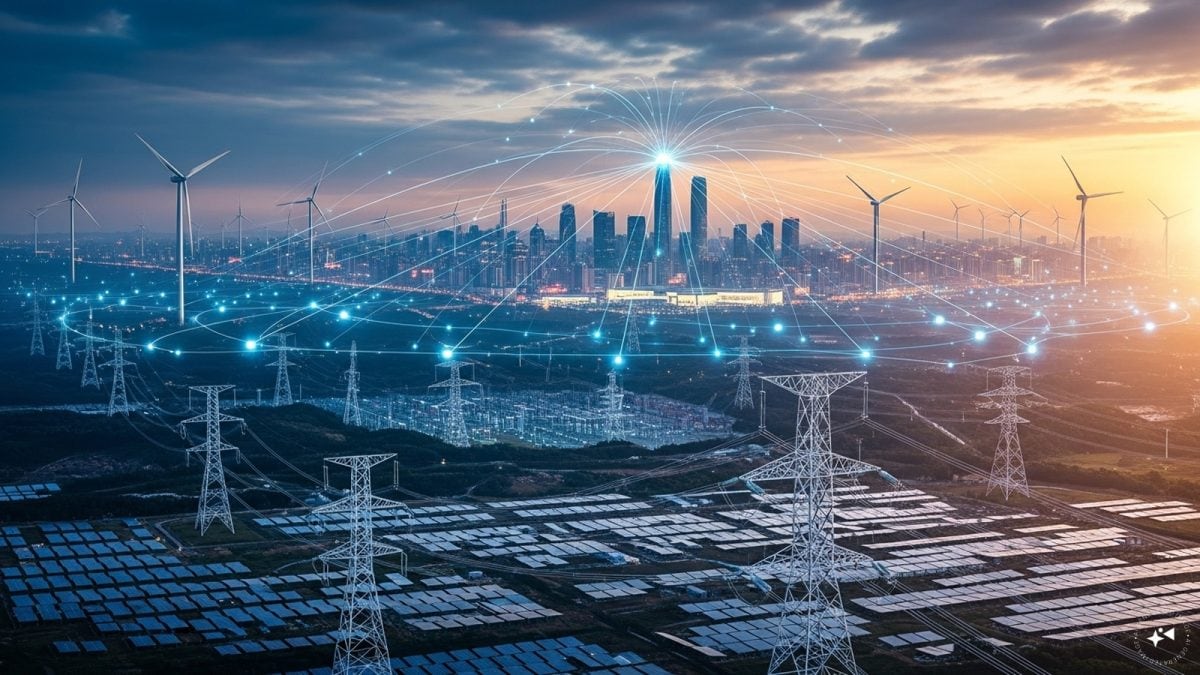
The push for power supremacy is transforming remote expanses of Inner Mongolia, a Texas-like landscape of wide-open spaces now dotted with thousands of wind turbines and crisscrossed by transmission lines. They provide electricity for what officials describe as a new “cloud valley of the grasslands,” with more than 100 data centers in operation or on the way.
As per Morgan Stanley, China will spend some $560 billion on grid projects in the five years through 2030. A clear escalation from the 45 percent from the previous five years.
China, by 2030, will have about 400 gigawatts of spare capacity, Goldman Sachs predicts. This is about three times the world’s expected data-center power demand at that time.
Meanwhile, several tech giants, including Microsoft Chief Executive Satya Nadella, are worried about the amount of power it would require to run the enormous number of chips it is buying. Some companies want Washington to do more to cut red tape or provide financial support to modernise America’s power grid, WSJ reported.
In the next three years, US data centres could face an electricity shortfall on a massive level, Morgan Stanley forecast, hinting towards a “daunting challenge” for the nation’s AI ambitions.
In China, inexpensive power has helped AI companies, including DeepSeek, develop high-quality AI models more cheaply than US competitors.
China’s power push dates back to 2021, when the government unveiled “East Data, West Computing.” It calls for harnessing abundant power resources in the nation’s west to meet AI-driven demand from the populous east.
The challenge that both countries — China and the US — are facing is that data centers, especially those required for AI, are consuming more power than ever before, and predicting the ultimate amount needed is difficult. Developing AI is an energy-intensive process, and every query from a chatbot user demands power for an AI model to respond.
By 2030, China’s data centers are projected to consume as much electricity annually as the entire consumption of France.
The power requirements of US data centers are even higher. Last year, American data centers accounted for 45 percent of global data-center electricity consumption, according to the International Energy Agency, compared to 25 percent for China.
China now has 3.75 terawatts of power-generation capacity, more than double the US capacity. It has 34 nuclear reactors under construction, according to the World Nuclear Association, and nearly 200 others planned or proposed.
In Tibet, China is building the world’s largest hydropower project, which could produce three times the power of its Three Gorges Dam.
 Click here to add News18 as your preferred news source on Google.
 December 11, 2025, 14:13 IST
Read More