

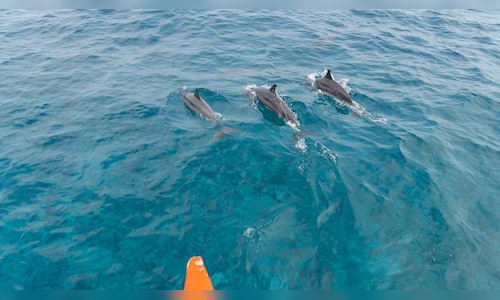
As throngs of tourist groups head to popular destinations like Goa, Jaipur and Shimla, travel operators are racing to invest in untouched corners of the country. From dolphin watching off a tiny Arabian Sea island to hidden waterfalls in the Himalayan foothills, the focus is on capturing high-spending travelers seeking fresh and authentic alternatives.
Indian Hotels Co., owner of the Taj brand, has been among the most aggressive. Last month, it acquired a majority stake in Sparsh Infratech Pvt., which runs the wellness retreat Atmantan in the Western Ghats, a UNESCO world heritage site known for its evergreen tropical forests and at least 325 vulnerable or endangered species. A three-night retreat here costs at least $1,260.
Also read | Now, you can go skating on Asia’s largest natural ice rink in Shimla
In August, it partnered with boutique chain Brij, known for properties in places like Jawai, a leopard-rich town in western India.
“Wellness-led experiences will be a major growth driver for the sector,” Managing Director Puneet Chhatwal told Bloomberg News, positioning the company to lead what he calls “the future of experiential travel.”
Outlying locations
Others are pivoting to keep up. Leela Palaces Hotels and Resorts Ltd. and boutique operators such as Untitled Hotels & Resorts Pvt., which runs The Postcard Hotel, are expanding into outlying locations.
Analysts say the segment could outpace the broader leisure travel market. Luxury properties in newer or lesser-known destinations provide an alternative to traveling overseas for rich Indians, according to Prashant Biyani of Elara Securities India Pvt.
The market potential is significant: local travel agency WanderOn projects the segment to reach $45 billion by 2027, mirroring global trends. India logged nearly 3 billion domestic tourist visits in 2024, up 18% from a year earlier, boosted in part by religious tourism. Outbound departures, a fraction of that at 31 million visits, have also seen rapid growth in recent years.
Also read | Winter tourism to Japan sees 15% rise as Indians flock to witness cherry blossoms and more
Cleartrip Pvt, backed by a Walmart Inc. unit in India, is seeing the shift firsthand. Its head of hotels, Akhil Malik, said the company’s portfolio of wellness-focused activities grew 300% in the July-September quarter compared with a year ago, twice as fast as the platform overall.
Cleartrip is planning to add activities like stargazing and guided heritage walks next year. The next frontier for local travel is “activities and experiences”, Malik said.
Makemytrip Ltd is also riding the trend. Packages featuring boutique properties are up 15% from a year ago, with nearly one in three local holiday packages now including at least one niche stay, said Rajesh Magow, co-founder and group chief executive officer.
“We’re trying to build where nobody has built before,” said Kapil Chopra, founder of The Postcard Hotel. Postcard Hotel’s dolphin watching activity in coastal Karnataka in southern India involves a boat ride to a remote island and costs upwards of 4,500 rupees, while the stays cost at least 39,000 rupees per night.
While the boom may be good for business, it carries the risk of ecological damage to vulnerable areas. India is now the world’s third-largest source of tourism-related greenhouse emissions, behind only the US and China.
Fragile ecosystems
Overtourism has also driven unregulated construction in fragile ecosystems, prompting scientists and academics to call on the government to put checks in place.
Still, demand is only growing as these locations provide a respite for city-dwellers. In northern India, Aahana Forest Resort, near the Jim Corbett National Park, has seen more travellers helped in part by worsening winter pollution in Delhi.
Visitors escape the capital’s toxic air by flocking to the resort, according to Avni Tripathi, the property’s chief marketing officer, who’s expecting at least 20% growth in revenue in the year ending March 31.
Meanwhile, these offerings boost hotel chains’ revenue per available room — a key industry metric — and help with consumer stickiness.
“The target audience may be small, but its profitability is higher,” said Elara’s Biyani.