
The approximately 210-kilometre expressway starts close to Delhi’s Akshardham Metro Station and connects to the Delhi–Meerut Expressway. It passes through districts in Uttar Pradesh, including Baghpat, Baraut, Shamli, and Saharanpur, before coming to an end in Dehradun, the capital of Uttarakhand.
Prime Minister Narendra Modi laid the foundation stone for the Delhi-Saharanpur-Dehradun Expressway
on December 4, 2021.
Built at a cost of approximately ₹11,868.6 crore to ₹13,000 crore, the project is expected to significantly reduce fuel consumption, travel time, and fatigue while providing travellers with a smoother and more picturesque highway experience.
#WATCH | Delhi | Delhi–Saharanpur–Dehradun Expressway opened for trial run as vehicular movement starts after removal of barricading. https://t.co/CIpJyg4TAb pic.twitter.com/o9LwN86bcc
— ANI (@ANI) November 30, 2025
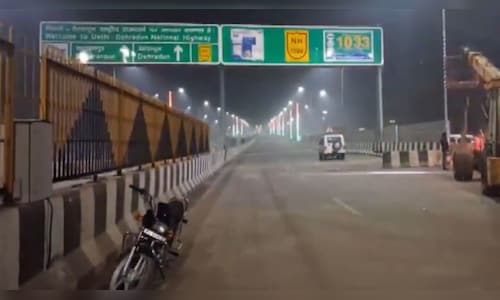
Although an official inauguration has not yet been announced, trial runs have already begun, with barriers lifted in the Geeta Colony area and vehicles permitted. The public inauguration of the expressway, built to significantly reduce travel times, is now one step closer.
The expressway has several underpasses, overbridges, service roads and interchanges, among other modern infrastructure. The project is currently being developed as a six-lane motorway, but as traffic grows, it might be expanded to eight lanes.
A 12-kilometre elevated wildlife corridor through the wooded regions close to Rajaji National Park and the Shivalik reserve is a key feature of the design that aims to minimise disturbance to wildlife. This environmentally sensitive section is meant to let animals roam freely while cars fly overhead.
The expressway is being delivered in four phases. The first phase has been prepared for more than six months. It starts at Akshardham, Delhi, and travels via Geeta Colony, Shastri Park, Mandola Vihar, and Khekra, Baghpat.
Several commuters also used this section to avoid the flooded city roadways during the local floods in Delhi in September, after barricades were removed.
With final touches applied to a few remaining places, the second phase, which stretches from Baghpat to Saharanpur, is nearly complete.
The third phase entails expanding the current route between Ganeshpur and Saharanpur Bypass. This segment is likewise in an advanced stage of construction.
The fourth phase, which includes the elevated section and tunnels, is now undergoing safety work and finishing activities close to Dehradun.
The new corridor between Baghpat and Saharanpur is set to be a revolutionary change for travellers accustomed to the current route, which frequently winds through crowded parts via Meerut, Muzaffarnagar, and Roorkee.
The expressway is expected to improve connectivity for tourists, especially those travelling to Uttarakhand’s hill stations and pilgrimage sites, and to make travel easier for regular commuters once it opens to the public, which is likely to occur by February 2026, according to recent official estimates.
According to authorities, the Prime Minister’s Office (PMO) directed the Ministry of Road Transport and Highways (MoRTH) to launch the project only once all four stages are completed and fully functioning.