

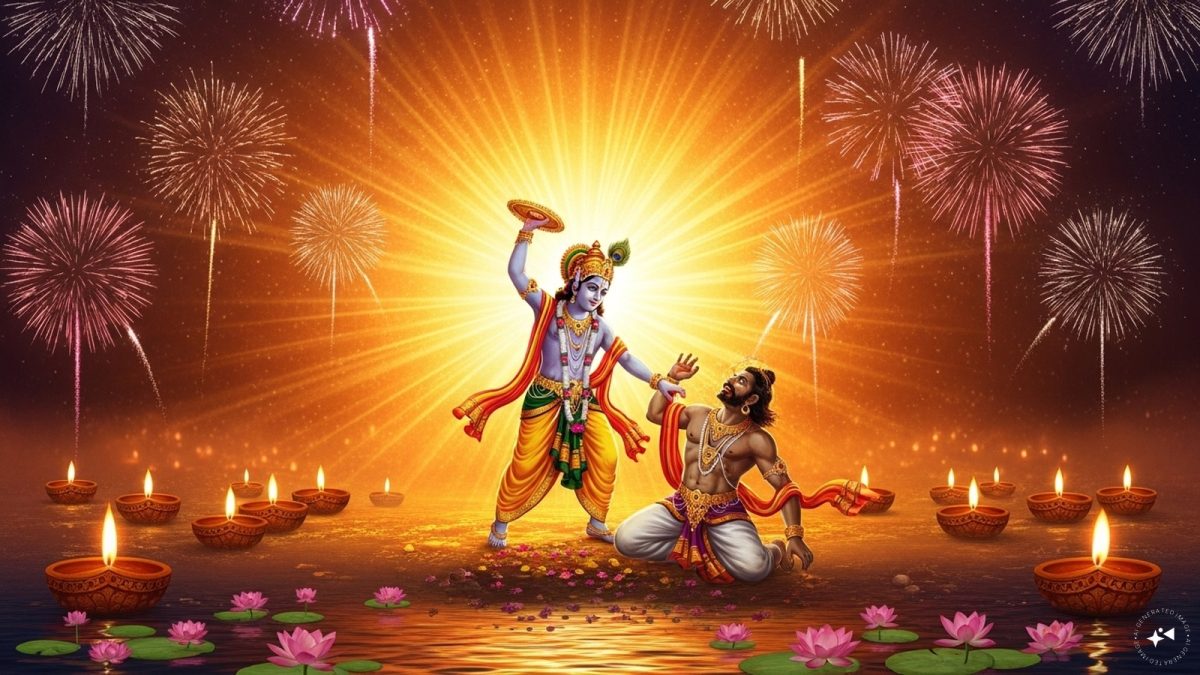

Choti Diwali, celebrated a day before the main Diwali festival, holds deep spiritual and mythological importance. Also known as Narak Chaturdashi, this day commemorates the victory of Lord Krishna over the demon Narakasura, symbolizing the triumph of light over darkness and good over evil. (Image: AI-Generated)

The tradition of lighting 14 diyas on Choti Diwali is linked to the worship of Lord Yamraj, the god of death. (Image: AI-Generated)
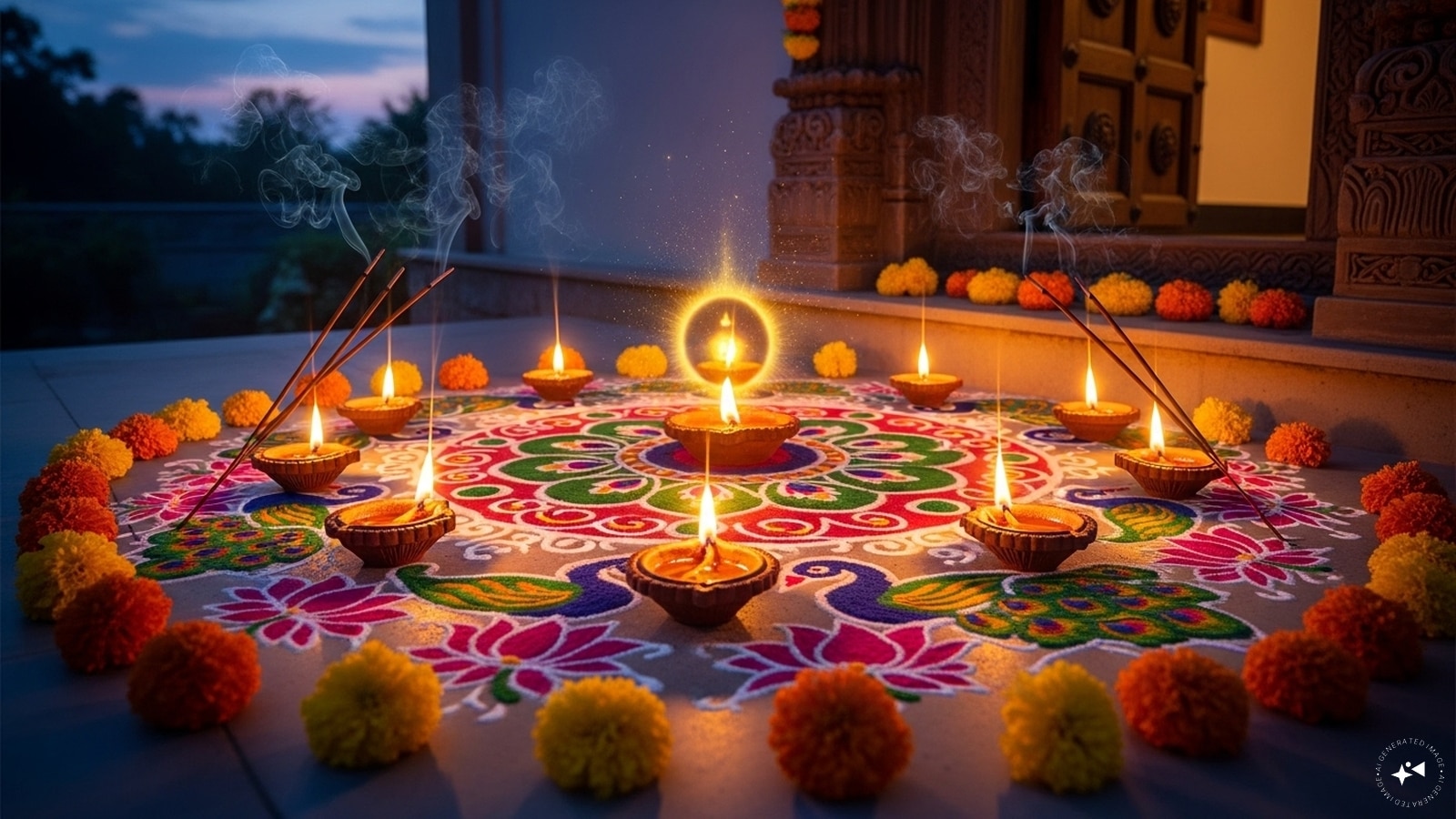
According to Hindu beliefs, lighting these lamps is a way to appease Yamraj and seek protection from untimely death, honor ancestors and departed souls, cleanse the home of negative energies, and invite health, prosperity, and longevity for the entire family. Astrologers and spiritual leaders emphasize that this ritual is not just symbolic; it’s a form of cosmic alignment that enhances the flow of positive energy in the household. (Image: AI-Generated)
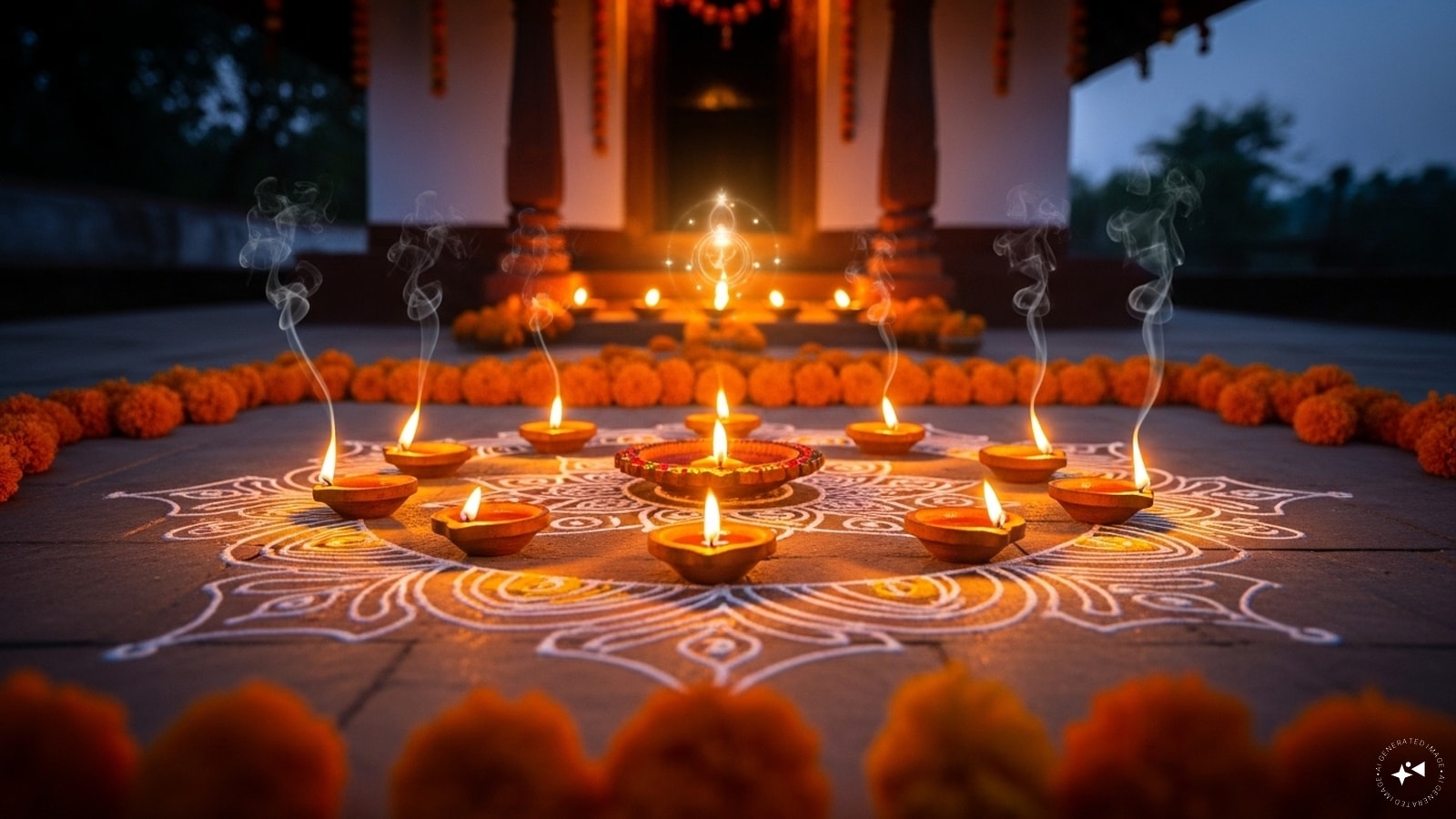
The ritual traces back to a legend in the Garuda Purana, where it’s said that lighting lamps for Yamraj on Narak Chaturdashi ensures that the souls of ancestors find peace and that the living are blessed with long life. This practice is also referred to as Yam Deep Daan, a sacred offering of light to the deity who governs life and death. (Image: AI-Generated)

Traditionally, the 14 diyas are lit after sunset on Choti Diwali. They are placed at different locations around the house – entrance, corners, balcony, kitchen, and near water sources. Often made of clay and filled with mustard oil, symbolizing purity and protection, the diyas are accompanied by a prayer to Yamraj and ancestors. Some families also light an extra diya the next morning at dawn, known as the Yam Deep, to complete the ritual cycle. (Image: AI-Generated)
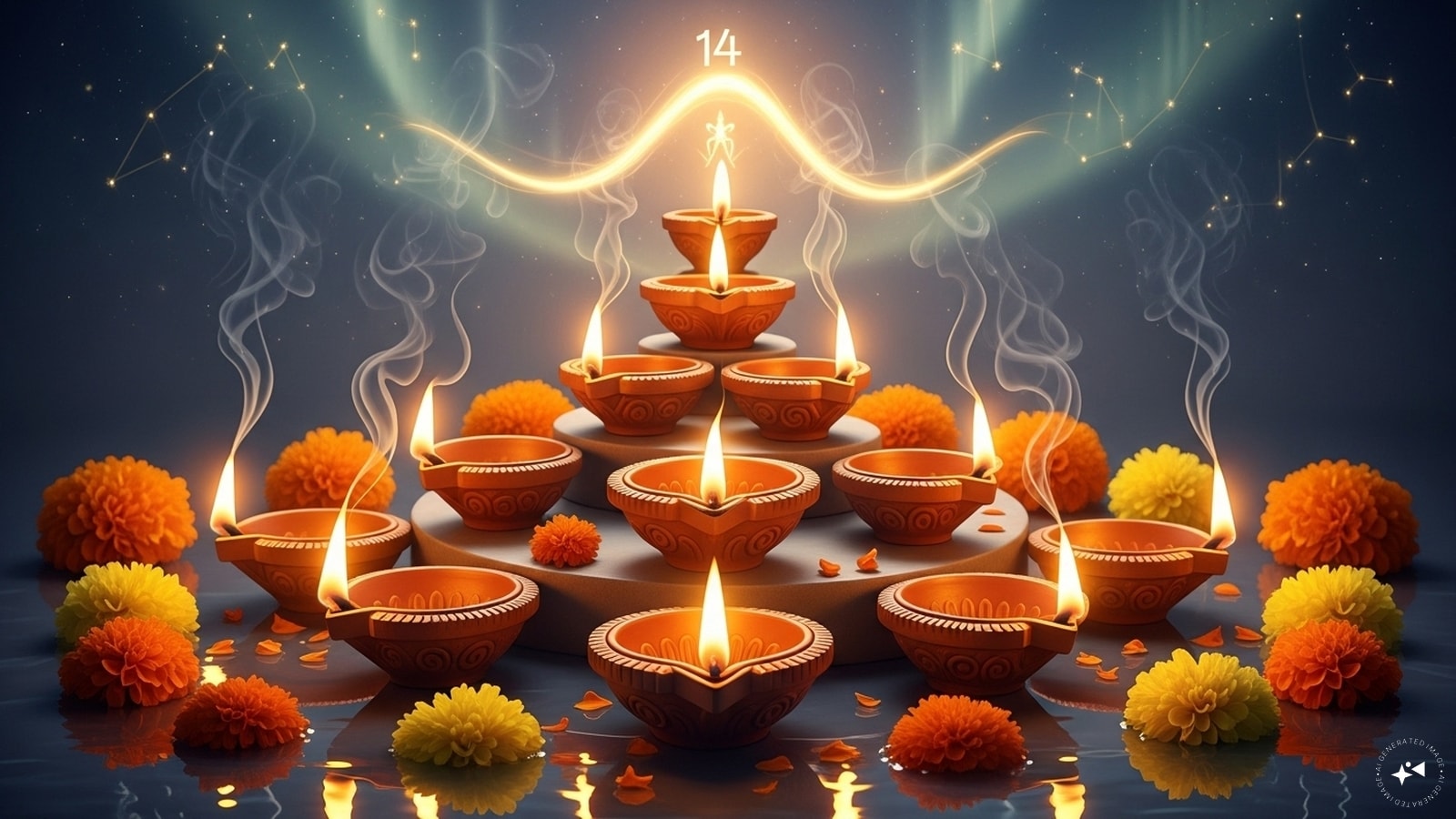
Lighting diyas is a metaphor for dispelling ignorance, fear, and negativity. The number 14 is believed to represent the 14 realms of existence in Hindu cosmology, and illuminating each one is a way to harmonize the spiritual and material worlds. (Image: AI-Generated)

In today’s context, this ritual serves as a moment of reflection and gratitude. It’s a way to connect with ancestral wisdom, practice mindfulness through ritual, and strengthen family bonds and cultural identity. Even in urban settings, many households continue this tradition, adapting it with electric lamps or tea lights while preserving its essence. (Image: AI-Generated)