
Last Updated:
Johnnie Walker is the world’s favourite Scotch whisky, known for its range from Red Label to the luxurious Blue Label, blending tradition, quality, and rich heritage


The distinctive slanted label of the Johnnie Walker brand was trademarked by Alexander Walker in 1877, becoming a hallmark of the brand. (News18)
Any special celebration calls for a unique drink. Often, people choose champagne or fine wine for such occasions. However, sometimes we want to gift our loved ones something that lasts beyond just one evening; something to display proudly in their home bar and enjoy over many days.
For that, there is no better choice than Johnnie Walker, and when it comes with a Blue Label, it becomes truly exceptional.
Johnnie Walker: A Global Favourite
Johnnie Walker is the world’s most beloved Scotch whisky, with millions of bottles sold each year. Yet, the finest of these is undoubtedly Johnnie Walker Blue Label. Anyone would be thrilled to receive a bottle of this exquisite Scotch, personalised with their name in a gift bag. But what makes Johnnie Walker Blue Label so special?
As Master Blender Dr Emma Walker, the first woman to hold this position in the brand’s history, explains, “Johnnie Walker Blue Label epitomises luxury, crafted using only the highest quality whisky-making skills.”
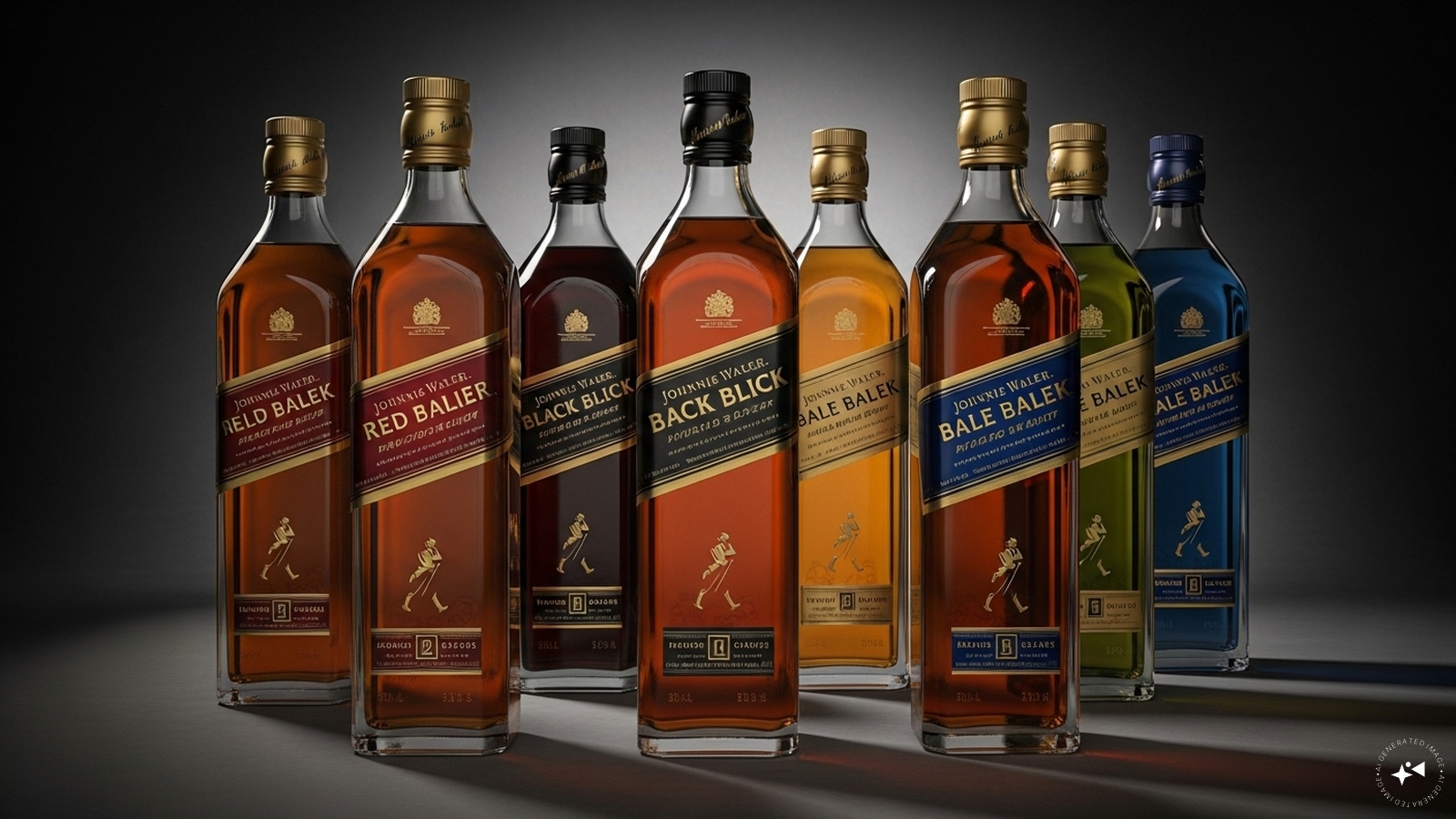
Johnnie Walker is a staple at restaurants, parties, and celebrations worldwide. It has marked its presence not only in the whisky market but also globally. The brand offers a range of blended whiskies catering to every taste, occasion, and budget, from the perfect cocktail mixer Red Label to the premium Blue Label, which blends old and rare whiskies.
The spirit itself is as extraordinary as expected from a premium Johnnie Walker blend, a true gastronomic experience. The Red Label and Black Label remain two of the most popular blended whiskies globally.
Founder And Early Years
The story of Johnnie Walker began with its founder John Walker, born on July 25, 1805 at Todrigs Farm near Kilmarnock, Scotland. Following the death of his father in 1819, John sold Todrigs Farm and invested in a grocery store in Kilmarnock in 1820, aged just 14. By 1825, he had expanded his business and started working as a spirit merchant selling rum, brandy, gin, and whisky. Despite not drinking alcohol himself, John Walker sold blended whisky and single malts prepared to order.
In 1850, he launched his own brand of blended malt, ‘Walkers Kilmarnock Whisky’. However, a devastating flood in 1852 destroyed his stock, nearly forcing the family business to close and significantly impacting Scotland’s blended whisky industry.
In 1856, John’s son Alexander Walker joined the business, forming John Walker & Sons. John Walker passed away in 1857, leaving the company to Alexander.
Alexander Walker’s Innovations
Under Alexander Walker’s management, the company became a dedicated whisky blender. In 1860, he introduced Johnnie Walker’s iconic square-edged bottle for exporting ‘Walkers Kilmarnock Whisky’. The square bottle was designed to allow more bottles to be packed in the same space and reduce breakage.
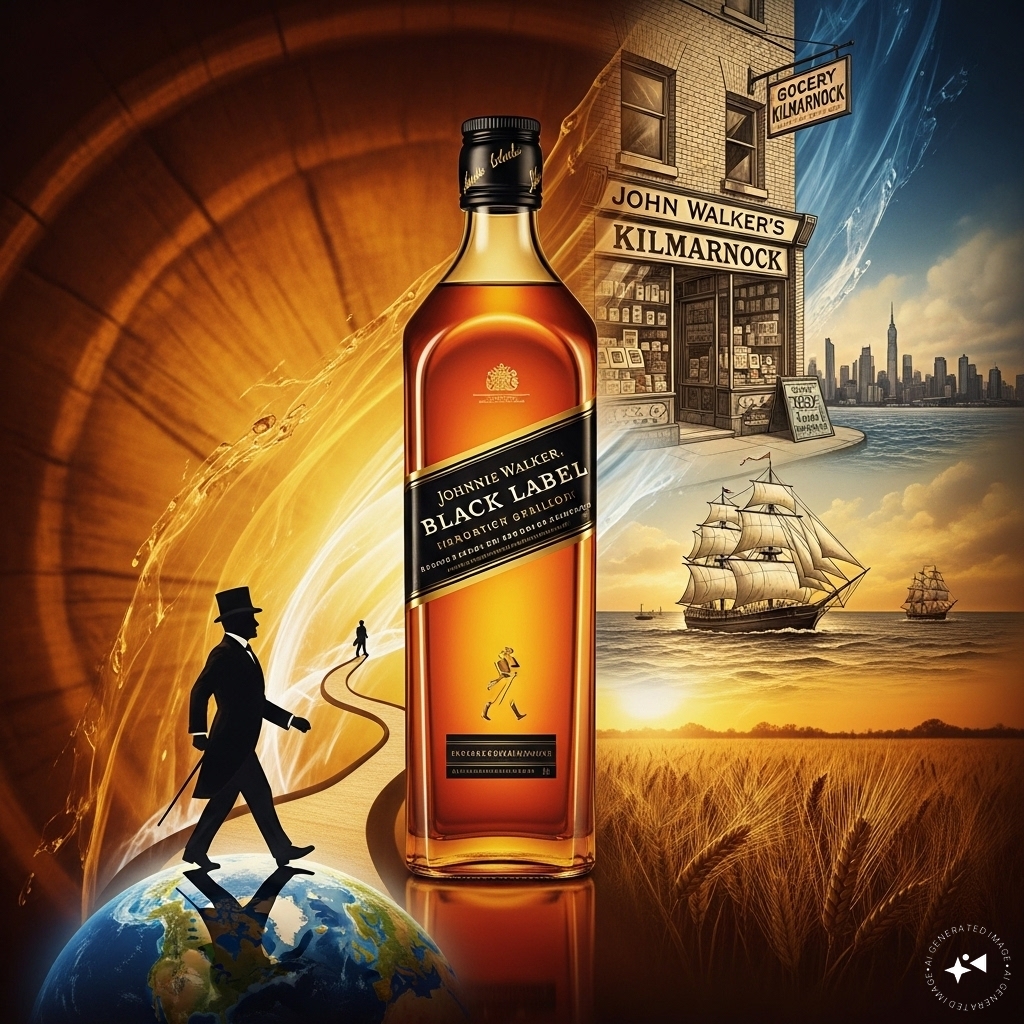
In 1865, Alexander prepared the ‘Old Highland Whisky’ blend and registered its copyright in 1867. By this time, John Walker & Sons was selling 100,000 gallons of blended whisky annually.
The distinctive slanted label of the Johnnie Walker brand was trademarked by Alexander Walker in 1877, becoming a hallmark of the brand.
Expansion And Distillery Acquisitions
Following Alexander Walker’s death in 1889, control of the company passed to his sons, Alexander II and George P. Walker. In 1893, John Walker & Sons purchased the Cardhu distillery to secure stocks for their blends. Cardhu remains a vital ingredient in Johnnie Walker whiskies today.
The brand continued its expansion by acquiring more distilleries during the 20th century, including Colburn (1915), Clynelish, Dieluain & Talisker (1916), and Mortlach (1923).
The 20th Century And Brand Development
The 20th century was a period of growth for John Walker & Sons. In 1906, the Old Highland blended whisky range was expanded to three versions. From 1909, the Old Highland range was renamed Johnnie Walker, with products named Red Label, Black Label, and briefly White Label.
The brand gained global recognition and became a pioneer of innovation in the Scotch whisky industry. In 1934, Johnnie Walker was awarded a Royal Warrant by King George V, recognising its quality and prestige.
Today, the main Johnnie Walker range includes eight different blends and special releases, some of which are exclusive to particular markets.
- Johnnie Walker Red Label: When the Johnnie Walker brand was created in 1906, it was initially released as Walker Special Old Highland. In 1909, its name was changed to Red Label. Since 1945, Johnnie Walker Red Label has been the world’s best-selling Scotch whisky, available in 180 countries. Interestingly, Red Label disappeared from the UK market between 1977 and 1983 before making a return.
- Johnnie Walker Black Label: Originally sold as ‘Old Highland Whisky’, the Black Label blend was created by Alexander Walker in 1865. When the Old Highland range expanded in 1906, it was renamed ‘Extra Special Old Highland’. Upon the creation of the Johnnie Walker brand in 1909, it was renamed Black Label.
- Johnnie Walker Black Label: It is aged for 12 years and blended from 40 different whiskies sourced from all four corners of Scotland.
- Johnnie Walker Double Black: A newer addition to the brand’s main range, Johnnie Walker Double Black is bottled in a semi-transparent black square bottle designed to keep the whisky’s dark colour intact.
- Johnnie Walker Green Label: Initially launched in 1997 as Johnnie Walker Pure Malt 15-Year-Old, the name was changed to Green Label in 2004. This blend combines malt whiskies from Speyside, Highland, Lowland, and Island regions, matured for at least 15 years.
- Johnnie Walker Gold Label: The 18-Year-Old Blend was added to the core range in 1995. Walker’s Centenary Blend was discontinued during World War II due to whisky shortages for blending. Johnnie Walker Gold Label was reformulated by blending 15 whiskies aged at least 18 years. Though popular, it was discontinued in 2011 and later returned as Platinum Label 18-Year-Old.
- Johnnie Walker Platinum Label: Introduced in 2011, initially for the Asian and Far Eastern markets, the Platinum Label joined the core range in 2012 as the brand’s oldest age statement expression.
- Johnnie Walker Blue Label: First released in 1992 as ‘Johnnie Walker Oldest’, it was rebranded as Blue Label in 1994. Blue Label is one of the most expensive blended Scotch whiskies on the market and is considered the pinnacle of the brand.
- Limited Edition Releases: Johnnie Walker has also produced collectible and rare limited editions. In 2007, the Johnnie Walker King George V Decanter was released, commemorating the Royal Warrant granted in 1934. In 2012, a limited-edition decanter was launched for the UK market to celebrate the Diamond Jubilee of Queen Elizabeth II.
Johnnie Walker Prices In India
Approximate prices for 750ml bottles of Johnnie Walker in India are as follows:
- Red Label: Rs 1,700 to Rs 2,200
- Black Label: Rs 3,310 to Rs 3,800
- Green Label: Rs 4,100 to Rs 5,200
- Double Black Label: Rs 3,200 to Rs 5,400
- Gold Label Reserve: Rs 7,650 to Rs 8,250
- Platinum Label (now known as Johnnie Walker 18 Year Old): Rs 7,865 to Rs 11,450
- Blue Label: Rs 31,760 to Rs 35,000
view comments