
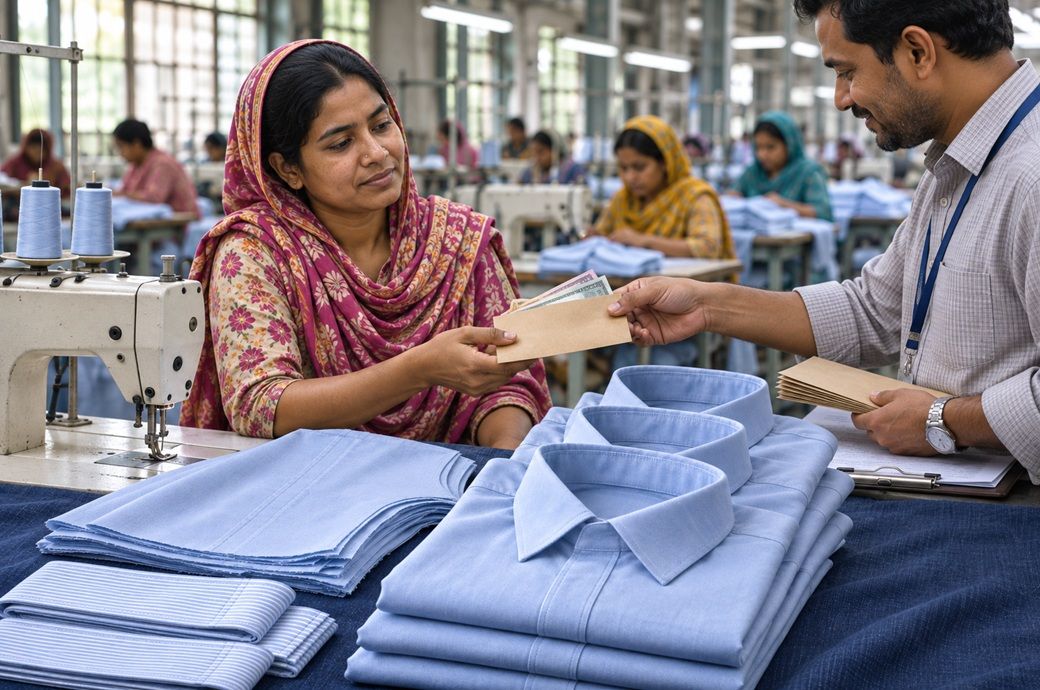
In a joint statement issued recently ahead of the ongoing wage review, the organisations said the current minimum wage remains well below an estimated living wage of about Tk 33,000 (~$265). Workers’ representatives on the board have proposed a minimum wage of Tk 32,000 (~$257) for skilled workers and Tk 30,000 (~$241) for trainees, according to the statement.
Nine international labour rights organisations have urged Bangladesh’s RMG Minimum Wage Board to set wages in line with living costs during the ongoing review.
They cited a living-wage estimate of about Tk 33,000 (~$265), alongside worker proposals of Tk 32,000 for skilled workers and Tk 30,000 for trainees.
The groups also asked buyers to absorb increases and avoid shifting orders.
The nine organisations are amfori, Ethical Trading Initiative, Ethical Trade Denmark, Ethical Trade Norway, Ethical Trade Sweden, Fair Labour Association, Fair Wear, Green Button and Mondiaal FNV. The existing minimum wage, set in late 2023 and adjusted annually since then, was already inadequate for basic living costs, while inflation has further widened the gap between wages and expenses, the groups said, local media reported.
The statement linked the wage review to the economic role of garment workers, noting that Bangladesh’s RMG exports reached $38.70 billion in FY2025-26 and accounted for around four-fifths of the country’s merchandise exports. The organisations said workers should share in that progress.
The wage board was formed on November 1 and is expected to complete its work in December. The organisations said the process offers an opportunity to address the living-wage gap in Bangladesh’s largest export-oriented manufacturing sector.
They also called for protection against dismissal, blacklisting, criminal charges and arrest for workers peacefully exercising legitimate labour rights. Effective social dialogue and meaningful consultation with workers’ representatives should be part of the wage-setting process, the groups said.
On sourcing practices, the organisations said international buyers have a responsibility to help suppliers pay higher wages and pledged to encourage their members to adopt responsible purchasing practices. They urged buyers to reflect any minimum wage increase in both existing and future orders placed with Bangladeshi suppliers.
The groups also called on international brands and retailers not to cancel or reduce orders or shift sourcing away from Bangladesh in response to wage increases. A transparent wage-setting process that takes workers’ demands seriously and upholds core labour standards would strengthen sourcing confidence among international brands and retailers, they said.
According to the joint statement, the organisations’ member companies source a significant share of their products from 2,900 factories in Bangladesh.
Fibre2Fashion News Desk (SG)