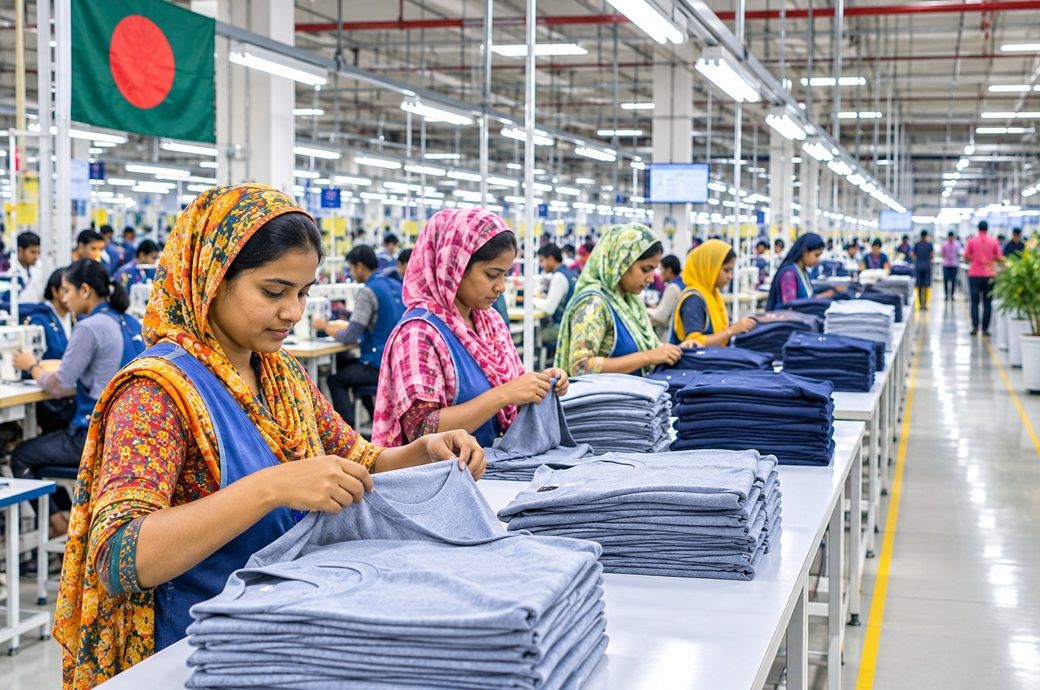

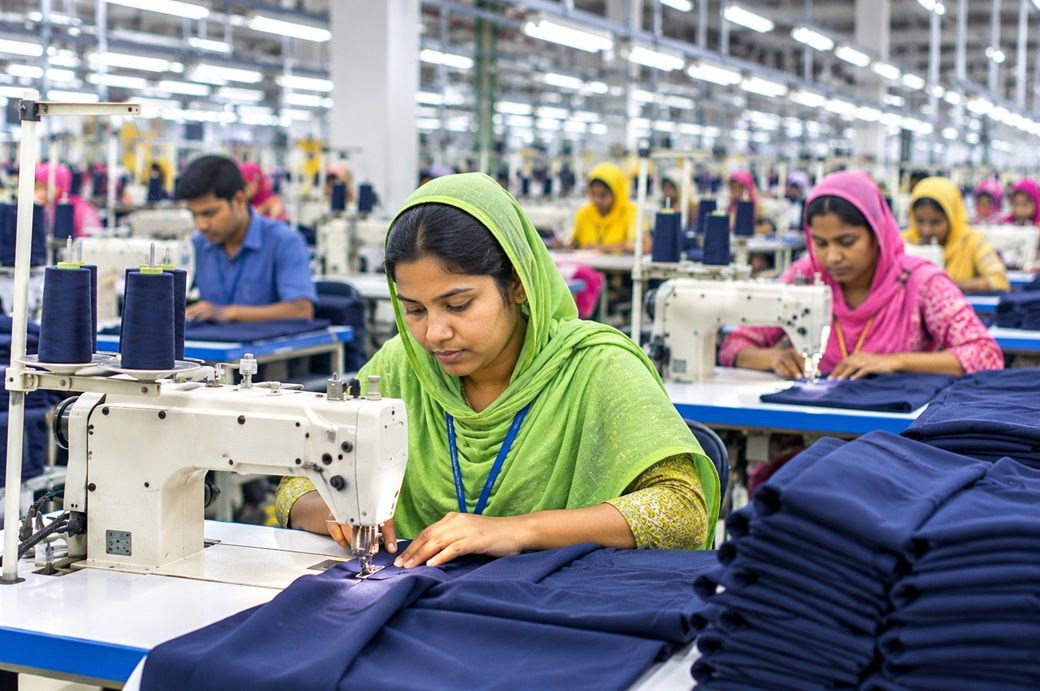
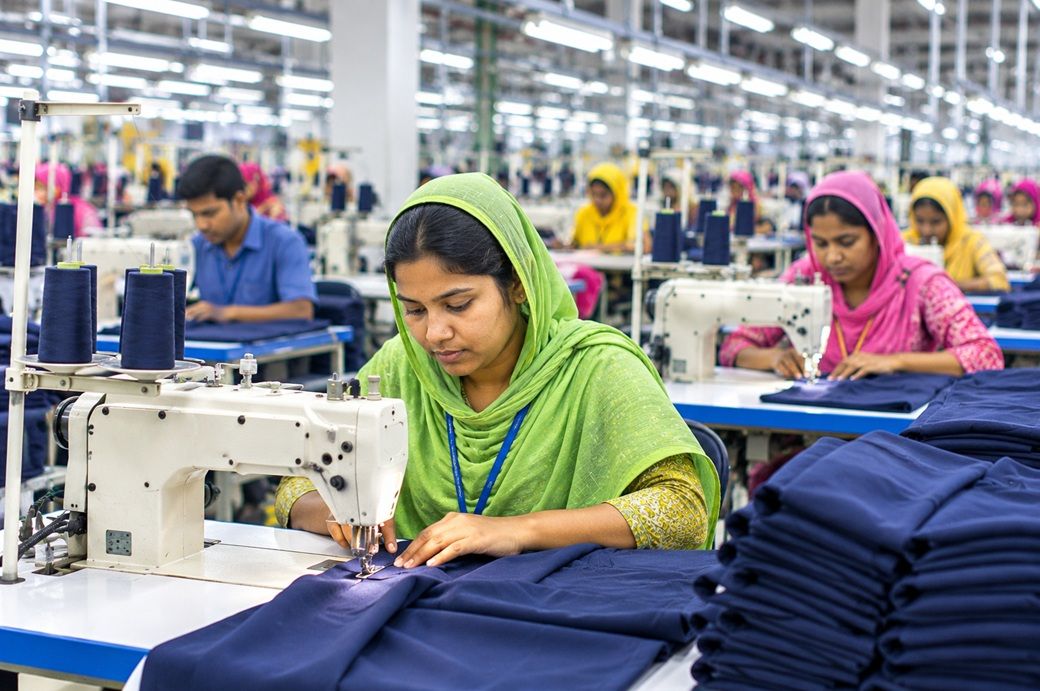
Bangladesh’s ready-made garment (RMG) factories resumed operations after widespread closures and production disruptions triggered by workers’ demands for higher wages, as industry bodies and trade unions urged protesters to return to work and allow a newly formed wage board to review minimum pay.
Bangladesh’s garment factories resumed operations after protests over workers’ demands for a minimum monthly wage of 30,000 taka ($243), up from 12,500 taka.
More than 400 factories remained shut on November 2, raising concerns over production and shipments.
A government wage board is reviewing pay, with revised wages due from December 1.
Industrial Police data showed that more than 400 factories remained shut on November 2.
The Bangladesh Garment Manufacturers and Exporters Association (BGMEA) and Bangladesh Knitwear Manufacturers and Exporters Association (BKMEA) urged the Home Ministry to strengthen security and restore normal operations in major industrial zones.
BGMEA vice-president Rezwan Selim warned that continued disruptions could delay production and shipments, increase air freight costs and lead to order cancellations, local media reported.
The unrest has affected key manufacturing hubs, raising concerns about export shipments and buyer confidence in Bangladesh, the world’s second-largest apparel exporter after China. Workers are demanding a minimum monthly wage of 30,000 taka ($243), up from the current 12,500 taka, amid rising living costs and persistent inflation.
The government formed a six-member minimum wage board on November 1 to recommend a revised pay structure for more than four million garment workers. Under the amended Labour Act 2026, the revised wage structure must take effect from December 1.
At an emergency meeting, Home Minister Salahuddin Ahmed urged trade union leaders to persuade workers to return to their jobs and warned that those involved in violence would face legal action. Workers’ representative Babul Akhter also called on protesters to resume work, while union leaders said the wage board should have been formed earlier to prevent the unrest.
Protests on November 2 followed road blockades in several industrial areas a day earlier, when police in Dhaka used tear gas and water cannon to disperse demonstrators. The BGMEA said protests in multiple cities had affected nearly one million workers.
BGMEA president Mahmud Hasan Khan said factory owners expected workers to allow the wage review process to proceed. He warned that manufacturers could invoke the ‘no work, no pay’ provision if further protests forced factories to close.
The RMG sector accounts for more than 80 per cent of Bangladesh’s export earnings, employs about four million people and contributes around 10 per cent to gross domestic product.
Factory owners have also cited rising operating costs, energy market uncertainty linked to the Middle East conflict and slowing demand in key export markets as challenges facing the industry.
Fibre2Fashion News Desk (CG)