

While Australia’s Great Barrier Reef commands most of the global spotlight, the world’s oceans hide equally vast, biodiverse underwater ecosystems. Fr…
 1/8
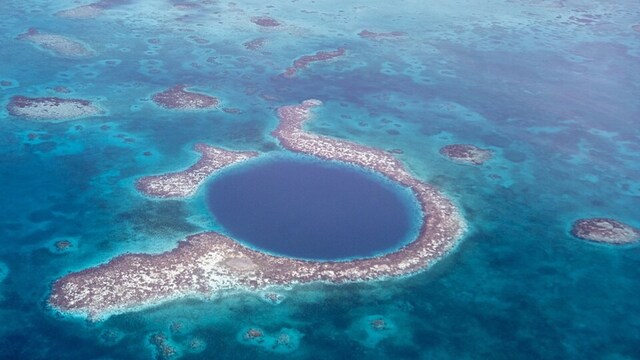
Belize Barrier Reef Reserve System, Belize | Inscribed as a UNESCO World Heritage Site in 1996, this 300-kilometre reef is the largest barrier reef in the Northern Hemisphere. Comprising seven marine reserves, 450 sand cayes, and three offshore atolls, it shelters over 500 fish species, 65 stony coral varieties, and the 124-metre-deep Great Blue Hole sinkhole. Travellers access sites like Hol Chan Marine Reserve and Shark Ray Alley via daily dive boats departing Ambergris Caye and Caye Caulker. (Image source: Wikimedia Commons)
 2/8
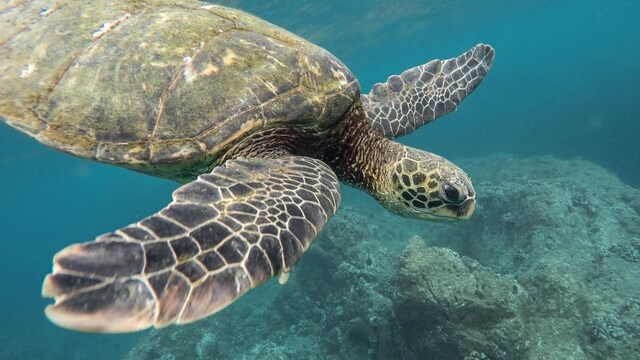
Tubbataha Reefs Natural Park, Sulu Sea, Philippines | Inscribed as a UNESCO World Heritage Site in 1993, Tubbataha is a remote, 970-square-kilometre no-take marine reserve centred around two massive atolls and a 100-metre perpendicular coral wall. Protecting over 360 coral species and 700 fish species, it holds one of the highest known densities of whitetip reef sharks globally. Dive access is strictly regulated and limited to a three-month window (mid-March to mid-June) via liveaboards departing Puerto Princesa, Palawan. (Image source: Pixabay)
 3/8
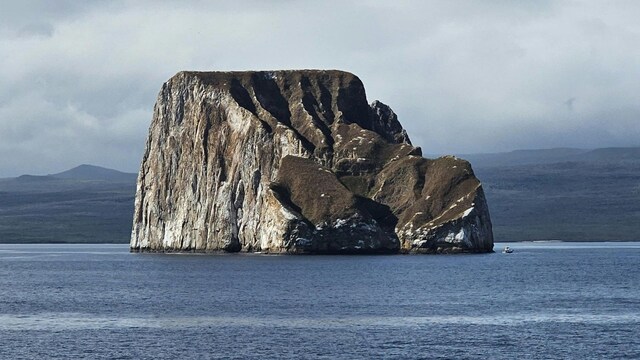
Galápagos Marine Reserve, Galápagos Islands, Ecuador | Extended into the UNESCO World Heritage listing in 2001, this 133,000-square-kilometre marine reserve sits at the collision point of four major ocean currents, including the nutrient-dense Humboldt Upwelling. This produces an evolutionary blend of tropical corals and cold-water pelagic life, where divers encounter schools of scalloped hammerheads, marine iguanas grazing on underwater algae, and Galápagos penguins. Certified liveaboard dive vessels depart from San Cristóbal and Santa Cruz for outer sites like Darwin and Wolf Islands. (Image source: Canva)
 4/8
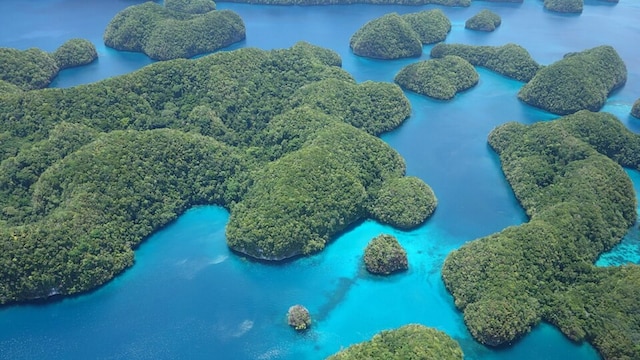
Rock Islands Southern Lagoon, Palau | Inscribed as a mixed UNESCO World Heritage Site in 2012, this 100,000-hectare marine expanse encompasses 445 limestone islands surrounded by a barrier reef supporting over 385 coral species. The protected lagoon features iconic drift dives along current-swept outer walls like Blue Corner and Ulong Channel, reachable via daily day-boat charters and liveaboards operating out of Koror. (Image source: Wikimedia Commons)
 5/8
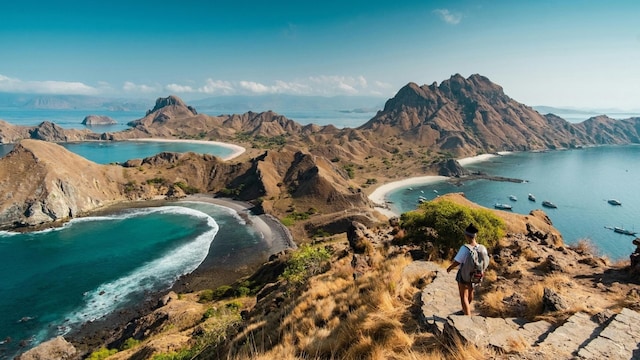
Komodo National Park, East Nusa Tenggara, Indonesia | Inscribed as a UNESCO World Heritage Site in 1991, Komodo’s marine reserve sits in the Wallacea biogeographic zone, where powerful tidal currents funnel between the Flores and Savu Seas. The resulting nutrient upwellings sustain over 1,000 fish species, 260 reef-building corals, and resident reef manta cleaning stations. Visitors explore premier dive sites like Batu Bolong and Castle Rock via daily dive boats or multi-day liveaboards departing Labuan Bajo. (Image source: Canva)
 6/8
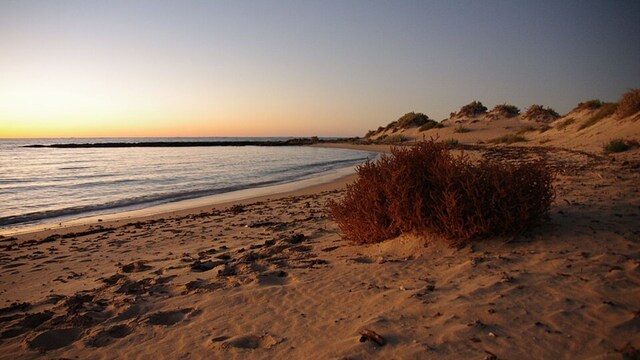
Ningaloo Coast, Western Australia, Australia | Inscribed as a UNESCO World Heritage Site in 2011, Ningaloo Reef stretches 260 kilometres along Western Australia’s North West Cape, standing as the world’s largest fringing coral reef. Because the reef sits just metres from the shore, snorkelers can walk straight off beaches like Coral Bay and Turquoise Bay to see over 300 coral species. Between March and August, licensed boat charters out of Exmouth run regulated open-water swims with migrating whale sharks and manta rays. (Image source: Wikimedia Commons)
 7/8
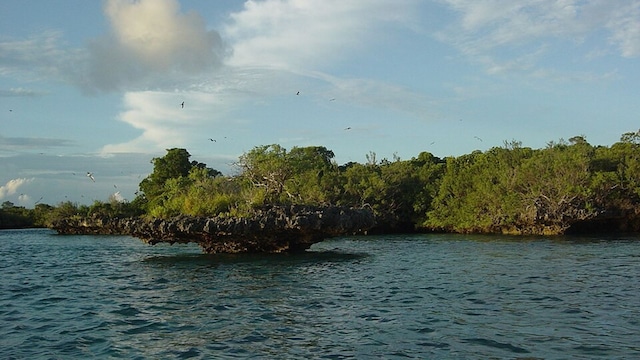
Aldabra Atoll, Outer Islands, Seychelles | Inscribed as a UNESCO World Heritage Site in 1982, Aldabra is the world’s second-largest raised coral atoll. Composed of four large coral islands enclosing a massive tidal lagoon, its sub-aquatic channels support unblemished coral gardens, blacktip reef sharks, manta rays, and green turtle nesting populations. Strictly managed by the Seychelles Islands Foundation, visitor access is capped and accessible via permitted eco-expedition cruises and liveaboards departing Mahé. (Image source: Wikimedia Commons)
 8/8
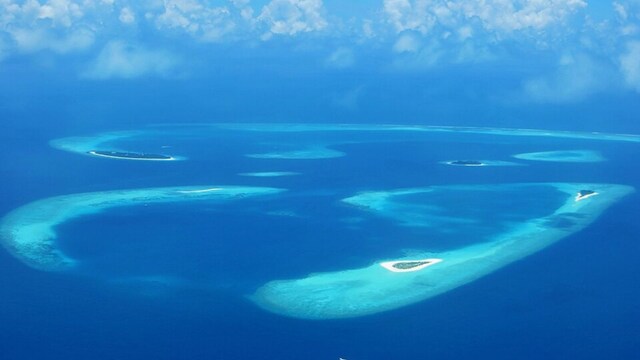
Baa Atoll Biosphere Reserve, Maldives | Designated a UNESCO Biosphere Reserve in 2011, Baa Atoll encompasses 75 islands supporting some of the richest coral reef systems in the central Maldives. Its crowning marine feature, Hanifaru Bay, has a unique funnel shape that traps massive plankton blooms between May and November, triggering rare “cyclone feeding” where dozens of reef manta rays and whale sharks gather in shallow waters. Regulated snorkelling excursions run daily from eco-resorts and local guesthouses across the atoll. (Image source: Wikimedia Commons)